England's railways move into public ownership: who has transferred and what it means for tickets
On 13 October 2026 the Department for Transport confirmed to the Commons that Chiltern Railways is in public ownership. Ten of fourteen operators have now transferred, Great Western Railway follows on 13 December and Avanti West Coast on 7 March 2027. Here is what changes for passengers and when Great British Railways starts.
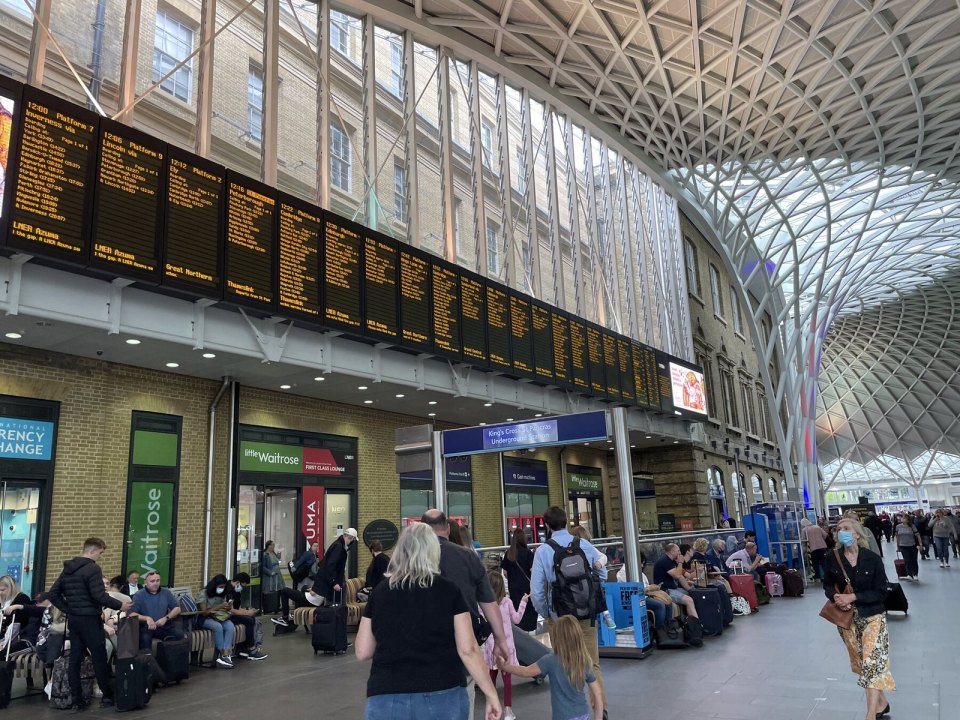
On 13 October 2026 the Transport Secretary, Heidi Alexander, laid a written statement before the House of Commons: Chiltern Railways' services are now in public ownership. The transfer itself happened earlier, on Sunday 20 September 2026, but the statement closes the procedure and sets out the dates for the next two operators. For passengers this is not an abstract reform — who runs a route decides the timetable, the number of seats and what happens when a train is cancelled.
What was announced on 13 October 2026
Chiltern Railways' trains are now run by Chiltern Rail Limited, a subsidiary of DfT Operator Limited, a public corporation within the Department for Transport. The transfer was made under the Passenger Railway Services (Public Ownership) Act. DfT Operator Limited now runs more than 12,000 passenger services a day and delivers over one billion journeys a year.
 ADV · A001ONLYWAY JEWELRY — gold, silver and platinumRings, chains, bracelets, earrings and pendants. Delivery across the UK.Advertise here
The statement also gives the running total: ten of the fourteen English train operators holding Department for Transport contracts are now publicly owned.
Which operators have transferred, and which are next
The programme published on GOV.UK runs as follows. South Western Railway transferred on 25 May 2025, c2c on 20 July 2025, Greater Anglia on 12 October 2025, West Midlands Trains on 1 February 2026, Govia Thameslink Railway on 31 May 2026 and Chiltern Railways on 20 September 2026.
Two large operators follow: Great Western Railway on 13 December 2026 and Avanti West Coast on 7 March 2027. The transfer of all remaining Department for Transport contracted passenger services is expected to be complete by the end of 2027.
Who does Chiltern Railways serve
Chiltern links London Marylebone with communities in Buckinghamshire, Oxfordshire, Warwickshire and the West Midlands, including the Chiltern Mainline between London and Birmingham. Almost 20 million passengers a year use the network.
What changes for passengers right now
The practical change is what happens when a train is cancelled: passengers can travel on another operator's service at no extra cost. This is a network-wide measure rather than a perk of one company.
 ONLYWAY NEWSLIVELife · 13.10NHS prescriptions in England: £9.90 an item and how to pay lesslegal · 13.10Lasting power of attorney in England: £92, 8–10 weeks and two separate documentsTravel · 13.10England's railways move into public ownership: who has transferred and what it means for ticketsLife · 13.10EHC plans in England: who can request an assessment and how long the council hasMarkets · 13.10Full fibre reaches 3,880 premises in rural North OxfordshireHousing · 13.10England to pilot certificates showing how well a home stands up to floodingMoney · 12.10Council tax in England: 63 days before you lose the right to pay in instalmentsMarkets · 12.10Trivial benefits: when a gift of up to £50 to an employee is tax-freeLife · 11.10UK egg recall over salmonella: check the shell for code 3UA1012066Life · 11.10A free display of Samuel Palmer's visionary landscapes has opened at the V&AONLYWAY NEWS · appInstall the ONLYWAY NEWS appFresh UK news, classifieds, key dates and exchange rates on your home screen, one tap away. Free.NewsClassifiedsCalendarRates
Tickets bought earlier remain valid — the owner of the company changes, not your ticket. On services already transferred, GOV.UK says fares have been frozen for the first time in 30 years.
What changes on Chiltern from December 2026
The December 2026 timetable adds 25 services each weekday, including half-hourly trains on the Chiltern Mainline. The Department for Transport estimates this means about 10,000 extra seats each weekday, nearly 5,000 on Saturdays and more than 3,000 on Sundays.
Six new Chiltern Explorer trains enter service with the same timetable, taking the fleet to thirteen. A £12 million refurbishment of the Class 168 fleet continues and is due for completion by 2028. Stations are promised refurbished toilets, cleaning and graffiti removal, new signage at five of the busiest stations, and about 200 closed car park spaces reopening at Haddenham and Thame Parkway.
What is Great British Railways and when will it start
Great British Railways (GBR) is the future publicly owned body that will bring track and train together. It is created by the Railways Bill, introduced in the House of Commons on 5 November 2025 and currently being scrutinised in the House of Lords. The Bill runs to 102 clauses; it lets GBR set fares and sell tickets, requires a 30-year Long Term Rail Strategy and sets up five-year funding and planning cycles.
A separate passenger watchdog is created, with a rail ombudsman for disputes between passengers and operators. It will set consumer standards that become licence conditions, collect data on complaints and performance, publish scoreboards and refer poorly performing operators to the regulator, the ORR.
The Department for Transport expects GBR to be operational roughly twelve months after the Bill receives Royal Assent. A single GBR app is promised, putting tickets, train times and support in one place.
Will tickets get cheaper
There is no direct promise of lower prices. The documents talk about simplifying fares: extending Pay As You Go, trialling long-distance fares and freezing prices. For now the cheaper ticket is still found the old way — booking early, using a Railcard and splitting the journey.
ONLYWAY NEWS is following the programme; the next checkpoint is 13 December 2026, when Great Western Railway transfers into public ownership.
- Money UK sanctions Cryptomus, Heleket and VexPay: what it means for money transfers
- Life Free English with a native speaker: how Russian speakers can find a language partner
- Life A London concert cancelled back in March is still on sale for 4 October — and the full Russian-language listings for October
- Law A jury summons has arrived: what to do, how long it lasts and what it pays
- Housing Hosepipe bans in England: ten companies, 30 million people, six reservoirs exceptionally low
- Law Courts in England and Wales must now record domestic abuse in the sentence: what changed on 5 October
- Travel Jubilee line part suspended to Stanmore after fire alert