Tax
HMRC, VAT, corporation tax, self assessment and payroll — when to file and what happens if you do not.
Self Assessment tax return in the UK: the deadline is 31 January 2027, and what late filing costs
If you file a Self Assessment tax return in the UK, your online return for the last tax year must be filed — and the tax paid — by 31 January 2027. Miss it and the penalty starts at £100.

Marriage Allowance in 2026: how couples can cut their tax by up to £252 a year
If one spouse earns little and the other pays basic-rate tax, Marriage Allowance can cut the couple’s tax by up to £252 a year — and you can reclaim it for past years too.
How to register as an employer for PAYE in the UK
Before you pay a first salary, you must register as an employer with HMRC. Here is when and how to do it, and what to do if payday arrives before your reference does.

Capital allowances and the Annual Investment Allowance explained
Buying equipment, machinery and tools for your business cuts your tax through capital allowances. Here is what the Annual Investment Allowance is and what it covers.
 ONLYWAY NEWSLIVEImmigration · 05.11Already living in Britain: do the new settlement rules apply to me?Law · 05.11Noisy neighbours in the UK: where to complain and how to act within the lawMoney · 05.11Prepayment meters: when a supplier cannot force one on youImmigration · 05.11Settlement in Britain must now be earned: three years, five or tenLife · 05.11Free NHS mental health support: you can refer yourself, no GP neededMoney · 05.11Child Trust Funds in the UK: government to ease access to savings for young disabled peopleMoney · 05.11Bank of England raises Bank Rate to 4%: what borrowers and businesses should checkTravel · 05.11Next-generation airport scanners in Britain: what changes and what can be searchedTravel · 05.11Driving in winter: what the law requires in snow and iceLife · 05.11HRT for menopause in the UK: what it is, who it helps and how to get it on the NHSONLYWAY NEWS · appInstall the ONLYWAY NEWS appFresh UK news, classifieds, key dates and exchange rates on your home screen, one tap away. Free.NewsClassifiedsCalendarRates

How to register as a sole trader in the UK: steps, deadlines, tax
The income level at which you must register as a sole trader, the deadline, the National Insurance you pay and the Self Assessment dates you cannot miss.

How to register for VAT in the UK: the £90,000 threshold
When a business must register for VAT, what counts as taxable turnover, the deadline to register and what changes once you are registered.

Which expenses the self-employed can claim in the UK
If you work for yourself, some costs reduce your taxable profit. Here is what counts as an allowable expense, how to split mixed costs, and what the simplified and trading allowances mean.

UK dividend tax and allowance: 2026/27 rates explained
The dividend allowance is £500 a year, and dividend rates rose from 6 April 2026. We explain the amounts, a worked example and reporting, using GOV.UK.
HMRC personal tax account: what it is and how to sign in
The HMRC personal tax account is an online hub for checking your tax code, pension and income. We explain its features and sign-in routes using GOV.UK.

Marriage Allowance: how couples can save up to £252 in tax a year
If one spouse earns little, they can transfer £1,260 of their tax-free allowance to the other — saving the household up to £252 in tax a year. You can claim free and backdate it several years.

How to reclaim overpaid Income Tax in the UK — free and without middlemen
Many people in the UK overpay Income Tax because of a wrong code, a change of job or work expenses. You can get the money back yourself through HMRC for free — there is no need to pay a middleman.

Capital Gains Tax on selling property in the UK: rates and the 60-day deadline
Selling a second home or a buy-to-let in the UK means paying Capital Gains Tax on the profit — 18% or 24%. The first £3,000 of gains a year is tax-free, and you must report and pay within 60 days.

UK tax codes explained: what the numbers and letters on your payslip mean
A tax code such as 1257L sets how much Income Tax is taken from your pay. Here is what its numbers and letters mean and how to fix a wrong code so you do not overpay.

High Income Child Benefit Charge: when you have to pay Child Benefit back
If your income is over £60,000 a year, you repay part of your Child Benefit through the HICBC tax charge. Above £80,000 you repay all of it. Here is how it is worked out and what is best to do.
 ADV · A001ONLYWAY JEWELRY — gold, silver and platinumRings, chains, bracelets, earrings and pendants. Delivery across the UK.Advertise here
Simple Assessment: what to do if HMRC sends you a tax bill — deadlines and how to pay
HMRC is issuing around 1.8 million Simple Assessment letters for 2025/26. It is a bill for tax that could not be collected automatically. Here is who gets one, how to check it and by when to pay.

Working from home tax relief in the UK: what changed from April 2026
From 6 April 2026 employees can no longer claim tax relief for working from home. But backdated claims for the four previous years may still be possible.

Split pay? Check the tax
HMRC has named two more arrangements where part of a worker’s earnings is presented as ordinary salary while the remainder is paid without tax deductions. The worker may still face tax, interest and a penalty.

Sold a second property: 60 days to report it to HMRC
UK residential property has its own HMRC deadline: report and pay within 60 days of completion, not next spring with the tax return. Rates of 18% and 24%, a £3,000 tax-free allowance.

Your tax code: how to check it and how to get overpaid tax back
1257L, BR, 0T, W1 — what your code means and why a new job almost always starts on an emergency one. The letters, the numbers and how a refund reaches you.
 ADV · A003We build websites for tradespeople and sole traders — £219Customers see your work and prices and message you straight away. Ready in 3 days, £219 instead of £438.Advertise here
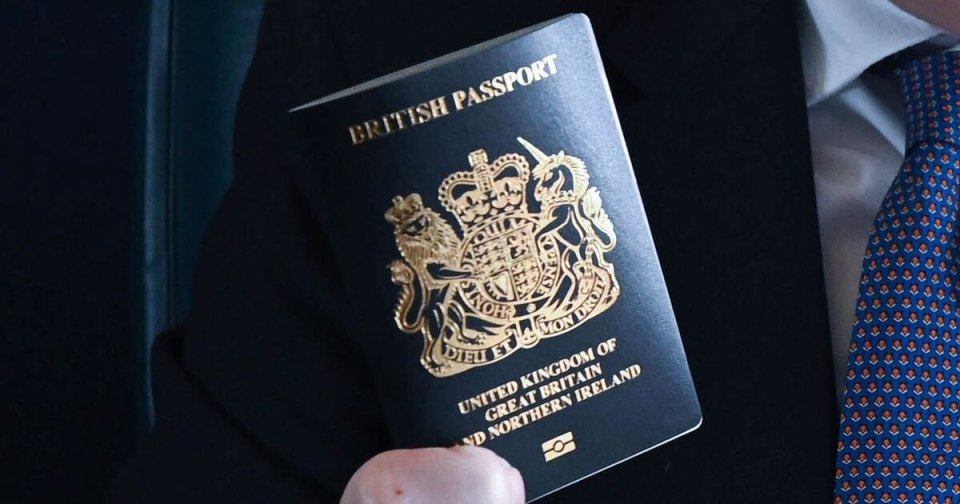
Leaving the UK: What You Can Reclaim Besides the P85 Tax Refund
Great Britain no longer refunds VAT at the airport, and the immigration health surcharge is never repaid for the visa years you do not use. Vehicle tax, a VAT-free car and a pension transfer are a different story — with strict deadlines.

Leaving the UK: how to claim back overpaid Income Tax with form P85
PAYE taxes you as though you will work the whole year. Leave mid-year and part of your Personal Allowance goes unused. Who files a P85, what you need besides a P45, and why you should keep a UK bank account open.

HMRC visits: how to check an officer's identity under the rules updated on 7 October
On 7 October 2026 HMRC rewrote the process for confirming the identity of its staff during an in-person visit. You now note the name and serial number from the officer's card and call 03000 565 656, a 24-hour line used only for these checks. Debt collectors have a separate number, 0300 200 3862, and their own hours: 8am to 6pm, Monday to Friday.

Register for Self Assessment by 5 October: side income over £1,000, rent, selling on Vinted and eBay
Monday 5 October is the deadline to register for Self Assessment for anyone who received untaxed income for the first time in the tax year from 6 April 2025 to 5 April 2026: a side hustle over £1,000, letting out property, dividends, crypto gains. Online platforms — eBay, Vinted, Airbnb, Uber — already report their sellers' data to HMRC. Registration is free and takes minutes, while a late tax return starts with a £100 penalty.

Marriage Allowance: how couples can get up to £1,260 of tax back — who qualifies and how to apply
If one spouse earns under £12,570 a year and the other pays basic-rate tax, HMRC will cut the couple’s tax by £252 a year. Applying online takes minutes, and you can backdate the claim to 6 April 2022. Who qualifies, how to apply for free and when you must cancel.
ONLYWAY NEWSLIVEImmigration · 05.11Already living in Britain: do the new settlement rules apply to me?Law · 05.11Noisy neighbours in the UK: where to complain and how to act within the lawMoney · 05.11Prepayment meters: when a supplier cannot force one on youImmigration · 05.11Settlement in Britain must now be earned: three years, five or tenLife · 05.11Free NHS mental health support: you can refer yourself, no GP neededMoney · 05.11Child Trust Funds in the UK: government to ease access to savings for young disabled peopleMoney · 05.11Bank of England raises Bank Rate to 4%: what borrowers and businesses should checkTravel · 05.11Next-generation airport scanners in Britain: what changes and what can be searchedTravel · 05.11Driving in winter: what the law requires in snow and iceLife · 05.11HRT for menopause in the UK: what it is, who it helps and how to get it on the NHSONLYWAY NEWS · appInstall the ONLYWAY NEWS appFresh UK news, classifieds, key dates and exchange rates on your home screen, one tap away. Free.NewsClassifiedsCalendarRates
Corporation Tax in 2026: the 19% and 25% rates, deadlines, penalties and the Marginal Relief trap
In the UK, companies work out their own profit tax — HMRC will never send you a bill. The rate depends on profits: 19% up to £50,000, 25% above £250,000, and a sliding Marginal Relief scale in between. The tax is due before the return, and a late return now costs £200 from day one. Here are the rules, in order.

VAT for small business: the £90,000 threshold, deadlines, rates and the Flat Rate Scheme — how to avoid paying tax out of pocket
Turnover of £90,000 over any rolling 12 months means you must register for VAT within 30 days; late means paying the 20% yourself. The GOV.UK rules: the zero-rate catch in counting the threshold, when voluntary registration pays, the Flat Rate Scheme up to £150,000 and the £88,000 deregistration threshold.

Working for yourself in the UK: register by 5 October, sole trader taxes in 2026 and HMRC's digital rules
Started working for yourself in 2025/26? You must register for Self Assessment by 5 October or risk a penalty. The HMRC rules: the £1,000 threshold, 6% and 2% contributions, a free pension record from £7,105 of profit, and the Making Tax Digital quarterly updates already mandatory above £50,000.
HMRC is signing up sole traders and landlords to Making Tax Digital automatically — next deadline 7 November
Since 6 April 2026, anyone with more than £50,000 of income from self-employment and property must report four times a year. Those who did not sign up are now being enrolled by HMRC itself: letters started going out in September, after the event. 436,000 people have filed a first update; the next deadline is 7 November 2026.

HMRC to issue tax calculations on bank interest from late September: what to check in P800 and PA302
HMRC says it will start issuing P800 calculations and Simple Assessment notices (PA302) from late September 2026 for tax due on bank and building society interest earned between April 2025 and April 2026. A second notice for the same year may include tax already paid, so the figures should be checked against bank statements before payment.

UK tax return: you must tell HMRC by 5 October or face a penalty for staying quiet
Self-employment above £1,000, rent, savings interest, dividends or money from abroad in 2025/26 means registering for Self Assessment by 5 October 2026. The return comes later — 31 October on paper, 31 January online. The penalty for registering late is calculated on the tax you still owe and lands separately from late filing penalties.

Going self-employed in the UK: registering, your UTR and what you pay in 2026
Register if you earned more than £1,000 in a tax year, and tell HMRC by 5 October. Class 2 is no longer compulsory; Class 4 is 6% and 2%. Unregistered subcontractors lose 30% instead of 20%. From 6 April 2026, turnover above £50,000 means quarterly reporting. And the part that catches people out: a Student visa bars self-employment, while a Skilled Worker visa allows 20 hours a week.

Making Tax Digital: the next quarterly update is due by 7 November
Digital reporting has been compulsory since April for sole traders and landlords earning over £50,000. Year one carries no penalty points — but the annual return has not gone away.