Council help when you are homeless: what they must do and why 56 days matters
Approach the council before you are on the street: the law requires it to work with people threatened with homelessness within 56 days. The prevention duty, the relief duty, interim accommodation, and how all of it differs from the council housing waiting list.
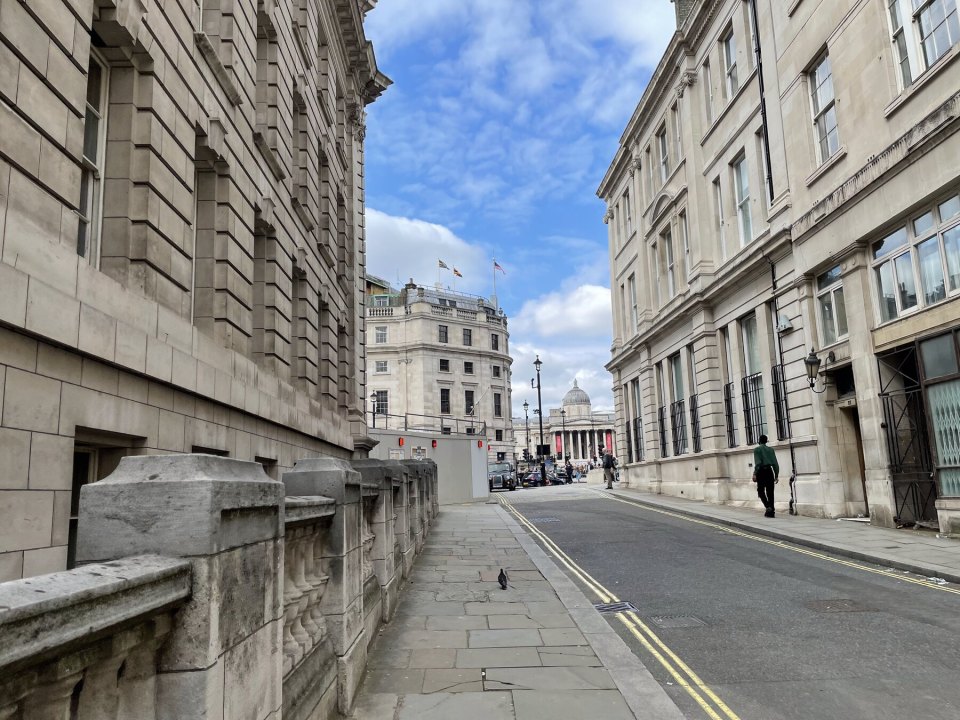
If you have nowhere to live or are about to lose your home in England, the place to go is not a charity but your local council: it has direct legal duties towards you. The key number is 56 days. What follows is the process as set out in the Homelessness Code of Guidance and on GOV.UK: when the council must help, what interim accommodation is, and how all of this differs from the council housing waiting list.
When should you approach the council — once homeless, or before?
Before. The law creates a separate prevention duty under section 195 of the 1996 Act: the council must work with people who are threatened with homelessness within the next 56 days to help prevent it. A notice from your landlord, rent you can no longer afford, a tenancy coming to an end — that is the moment to apply, not the day your belongings are on the pavement.
 ADV · A003We build websites for tradespeople and sole traders — £219Customers see your work and prices and message you straight away. Ready in 3 days, £219 instead of £438.Advertise here
If homelessness is more than 56 days away, the council may still help: the guidance explicitly encourages authorities not to delay support that could be effective.
Under the prevention duty the council first tries to keep you in your current home, and only if that is impossible helps you secure somewhere else — in a planned way rather than an emergency. One detail matters: at this stage the council cannot refer you to another district, even where the conditions for a referral would otherwise be met.
What must the council do if you are already homeless?
Then the relief duty under section 189B applies. The council must take reasonable steps to help you secure suitable accommodation — with a reasonable prospect that it will be available to you for at least six months. A single night's roof does not meet that test.
Separately there is interim accommodation under section 188(1): where the council has reason to believe you may be homeless, eligible for assistance and in priority need, it must provide temporary accommodation while it is carrying out the relief duty — that is, during the enquiries, not after them.
What is a personalised housing plan?
Under section 189A the council assesses your case and draws up a personalised housing plan. It lists the reasonable steps for both sides — the council's and yours. The plan is not paperwork: it is what later shows whether the council met its duties, and what a review or appeal is argued against.
The assessment must take account of your housing needs, the circumstances that led to your homelessness and the support you require. The guidance makes a point of this: the very circumstances that left someone homeless often also affect their ability to work with the council, and that should be factored in rather than held against them.
Do you need a connection to the area?
Usually yes — you apply where you have a local connection: where you have lived recently, where you work, or where close family live. Under a Local Government Association protocol, councils have agreed that living in an area for six of the last twelve months establishes a connection. The guidance notes that normal residence does not require a settled address, and periods of sleeping rough can count.
No local connection is needed at all if you are: a current or former member of the UK armed forces; a bereaved spouse or civil partner losing Ministry of Defence housing because of a service-related death; a current or former Reservist with a serious service-attributed injury or illness; a care leaver under 25; or a survivor of domestic abuse.
How is this different from the council housing waiting list?
They are two different things. The waiting list is a separate application to the council; you can apply from age 18 (some councils accept 16), and sometimes even if you do not live in the area. Places are allocated by a points or banding system based on housing need: people who are homeless, living in cramped conditions, or whose medical condition is made worse by their current home are placed higher.
Many councils run choice-based lettings: you apply for properties yourself, which is called bidding and involves no money. You normally have only a short time to accept an offer; refuse and you usually stay on the list but may drop down it, and repeated refusals can get you taken off temporarily. You can appeal the council's decision.
The list guarantees nothing. Ask your council how long people in your band actually wait — the answer varies enormously.
What if the council turns you down?
Homelessness decisions can be reviewed and then appealed to the county court; the code devotes a chapter to it. A refusal is not the end — get the decision in writing and note the date.
All of the above applies to England. Scotland and Northern Ireland run their own systems and you apply through their procedures.
- GOV.UK — Help from your council if you're homeless or at risk of homelessness
- GOV.UK — Homelessness Code of Guidance, Chapter 12: the prevention duty (56 days)
- GOV.UK — Homelessness Code of Guidance, Chapter 13: the relief duty
- GOV.UK — Council housing: applying, waiting lists and choice-based lettings

- Money UK sanctions Cryptomus, Heleket and VexPay: what it means for money transfers
- Life Free English with a native speaker: how Russian speakers can find a language partner
- Life A London concert cancelled back in March is still on sale for 4 October — and the full Russian-language listings for October
- Law A jury summons has arrived: what to do, how long it lasts and what it pays
- Housing Hosepipe bans in England: ten companies, 30 million people, six reservoirs exceptionally low
- Law Courts in England and Wales must now record domestic abuse in the sentence: what changed on 5 October
- Travel Jubilee line part suspended to Stanmore after fire alert