Do you need planning permission for a home extension in England?
A single-storey rear extension can often be built without applying to the council — but only within precise limits. Here is what permitted development covers and when permission is still required.
Thanks for £1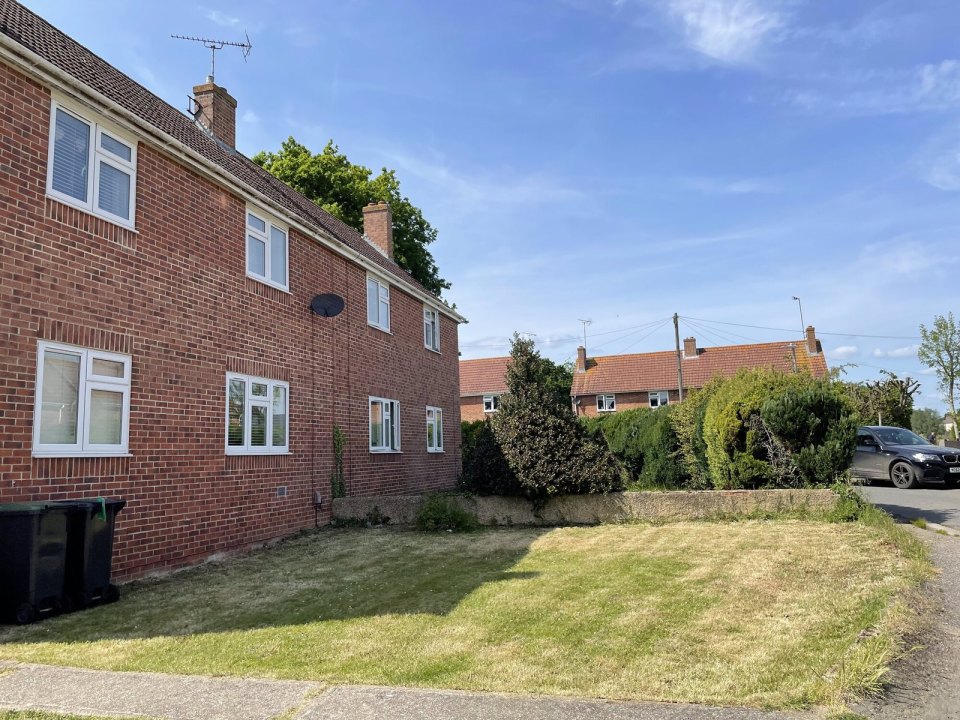
Not every job in the garden needs paperwork from the council. England has permitted development rights — a national grant of planning permission for certain works without a separate application — and many extensions, loft conversions and outbuildings fall under them. But the rights have precise limits, and going over them lets the council order the work undone. Here is what you can do without applying, based on the government's technical guidance.
What extension can I build without permission?
A single-storey rear extension can reach 3 metres beyond the original rear wall for a terraced or semi-detached house, or 4 metres for a detached one. Under the larger home extension scheme you can double the depth — up to 6 metres for a terraced or semi-detached home and up to 8 metres for a detached one — but this needs prior approval, a council check that notifies the neighbours. A single-storey extension must be no higher than 4 metres, and eaves within 2 metres of a boundary must not exceed 3 metres.
 ONLYWAY NEWSLIVELife · 13.11Cold-health alerts in the UK: how the system works and what to doHousing · 13.11Do you need planning permission for a home extension in England?Money · 13.11What it costs to run a car in England: the year worked out from official ratesLife · 13.11Seals in England: where the biggest colony is, and why only by boatMoney · 13.11Credit unions: borrowing below bank rates — and joining is about to get easierLife · 13.11Noise from neighbours: what the council must doLife · 13.11Seven Sisters and Birling Gap: getting there and what parking costsLife · 13.11Free MenB vaccine: the first dose has to be had by 31 DecemberLife · 13.11Bird flu: from 13 November poultry across England must be housed. Are chicken and eggs still safe?Markets · 13.11UK fuel prices: petrol 167p, diesel 196.6p — weekly reviewONLYWAY NEWS · appInstall the ONLYWAY NEWS appFresh UK news, classifieds, key dates and exchange rates on your home screen, one tap away. Free.NewsClassifiedsCalendarRates
What else counts as permitted development?
A loft conversion is allowed within 40 cubic metres of new roof space for a terraced house and 50 cubic metres for others, with earlier additions counting toward the limit. A porch of up to 3 square metres of floor and up to 3 metres high needs no application if it sits more than 2 metres from a boundary with a highway. For a shed or other outbuilding, height is capped at 4 metres with a dual-pitched roof, 3 metres otherwise, and 2.5 metres within 2 metres of a boundary. The total footprint of all buildings in the garden (other than the house itself) must not cover more than 50% of the curtilage — the land around the home.
When is permission always required?
The rights do not apply to flats or to houses created through a change of use. On designated land — National Parks, conservation areas, Areas of Outstanding Natural Beauty and World Heritage Sites — side and multi-storey extensions are restricted, and cladding with stone, render, timber or tiles needs an application. Any outbuilding within the curtilage of a listed building also needs permission. A council can remove these rights through an Article 4 Direction, so a query to the local planning authority before starting is essential.
How do I confirm no application is needed?
If it is unclear whether a project is permitted development, you can apply for a Lawful Development Certificate — a legally binding confirmation from the council that the work is allowed. For prior approval, the authority must decide within 8 weeks. Under the larger home extension scheme the neighbour notification comes first: work cannot start until the council confirms no approval is needed, grants it, or 42 days pass without a decision.
What happens if I build without permission?
From 25 April 2024 England has a single 10-year time limit for all planning breaches — the council can act within that period (previously the limit was 4 years for building works and changes to a dwelling). It is simpler to sort it out in advance or get a certificate of lawfulness than to risk an enforcement notice to demolish. Always check the scheme names and exact limits on gov.uk and with the local council, as some areas restrict the rights more tightly than the general rule.
Thanks for £1If this information was useful and came in time, press the heart. Payment goes through PayPal, with nothing to choose and nothing to fill in, and it pays for the newsroom.
- Money Debt management plans in the UK: pay less, and never pay for advice
- Jobs & Business UK gender pay gap reporting: who must report and by when
- Money GBIS: free home insulation in Great Britain — who qualified
- Life Pupil Premium: the extra funding English schools get for disadvantaged pupils
- Money How to switch energy supplier in the UK and whether it is worth it
- Life Where to buy the food you grew up with in London: Russian, Ukrainian, Polish and Baltic shops
- Life How to disagree politely in English: 10 phrases for work and meetings