City sculptures: who and how much
Who puts sculptures in the city, what they cost and whether anyone can install their own.
Thanks for £1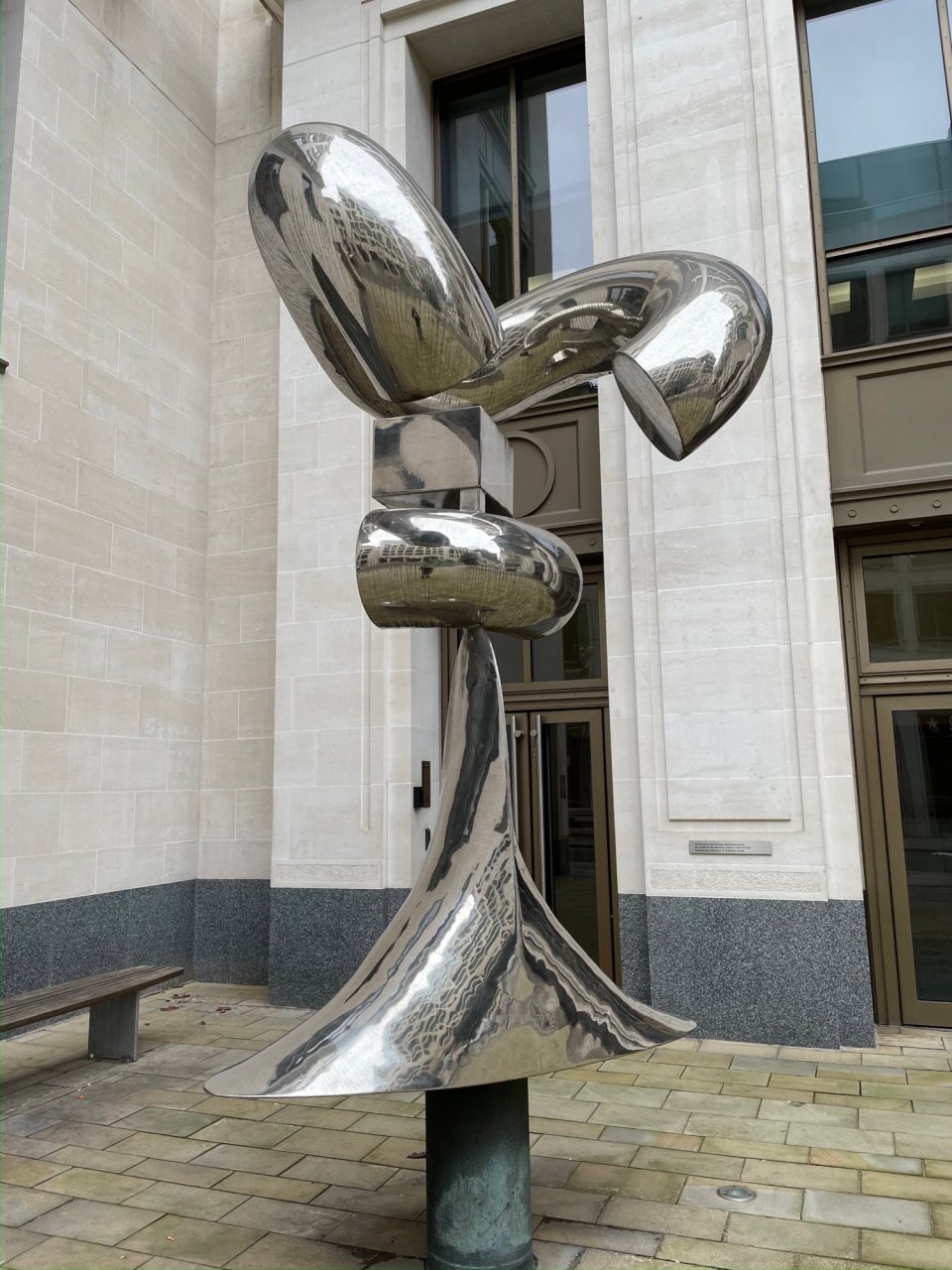
In the photo is a mirror-polished steel sculpture outside an office building in the City of London. Such objects stand all over the city: some appear for a year and vanish, others stay for decades. Hence the business questions: who installs them, what they cost, why some are temporary and others permanent, and whether anyone can put up their own. Here it is, step by step.
Who installs city sculptures
Usually not the artist alone, but a commissioner. That means councils, developers, big companies, galleries and arts organisations, and sometimes private patrons. In London, for instance, the City of London Corporation runs the free Sculpture in the City programme, placing contemporary art around the district. The sculpture in the photo is a typical corporate commission: a company dressing its own plaza by the office.
Where the money comes from
The key mechanism in Britain is developer obligations. Through a Section 106 agreement (and the CIL levy) large developments are required to invest in public realm and public art on site. Add Arts Council England grants, council budgets, and money from trusts and private sponsors. So the "free" art on the street is paid for by the developer, the city or a patron — almost never by the artist.
What it costs
The range is huge. A small work is a few thousand pounds; a serious commission runs to tens or hundreds of thousands. Antony Gormley's famous Angel of the North (1998) cost about £800,000 (around £1.55m today), funded by the Arts Council and trusts. The ArcelorMittal Orbit tower-sculpture in London's Olympic Park cost £22.7m, of which up to £16m came from the billionaire Lakshmi Mittal. Monumental steel and bronze is always expensive.
Why some are temporary and others permanent
It's a choice of commissioner and budget. Temporary works (as in Sculpture in the City — usually for 12 months) are cheaper, more flexible and act as a "shop window": they can be refreshed, and for the artist they are publicity and a chance of a sale. A permanent sculpture is a capital asset: it needs permissions, foundations and, above all, an open-ended duty to maintain, repair and keep it safe. So "forever" happens when there's a budget and a willingness to pay for upkeep for years.
Who has the right to install one
The main rule: the landowner decides. On private ground it's the owner; on public ground it's the city. You can't just plant a sculpture on a street or square: you need the landowner's consent and, as a rule, planning permission — especially in conservation areas and near listed buildings. An unauthorised installation is a breach, and the object will be ordered removed.
Who earns from it
The chain is long. The artist earns (a commission fee), as do foundries and metalworking shops, structural engineers, installers and galleries (sales and commission). For a developer or company there's a payoff too — a recognisable location, prestige and more attractive real estate. And the city gets tourists and a "face" for the district almost for free.
Can you put up your own?
Yes — on your own land and by the rules. A company can commission a sculpture for its plaza (as in the photo), a private person for their plot, with permission in place. Want one on a city street? Deal with the council: propose it to the public-art programme or sponsor the installation. There's a route for anyone, but it runs through the landowner and planning permission, not "turn up and plant it".
Thanks for £1If this information was useful and came in time, press the heart. Payment goes through PayPal, with nothing to choose and nothing to fill in, and it pays for the newsroom.
- Tax Self Assessment: 31 Jan deadline
- Money Do marketplace warehouses give goods away free? The truth about unclaimed parcels
- Money Apps for renting and buying
- Life Soviet Underground: the eighties Red Wave, played live in London
- Travel Network Railcard: train discounts in South East England
- Jobs & Business Post Your Ad Free
- Markets Camden: a £1.25bn market