Bank of England banknotes: who is on them, how to check they are genuine, and where to take old paper pounds
There are 4.98 billion notes in circulation worth £91.5 billion, carrying two monarchs at once, a painter, a novelist and the mathematician who broke Enigma — and soon animals will replace them all. Here is the guide to Britain's notes: what is in your wallet now, how to spot a genuine one, why our photos carry a SPECIMEN stamp, and what to do with the old paper twenties you found in a drawer.
Thanks for £1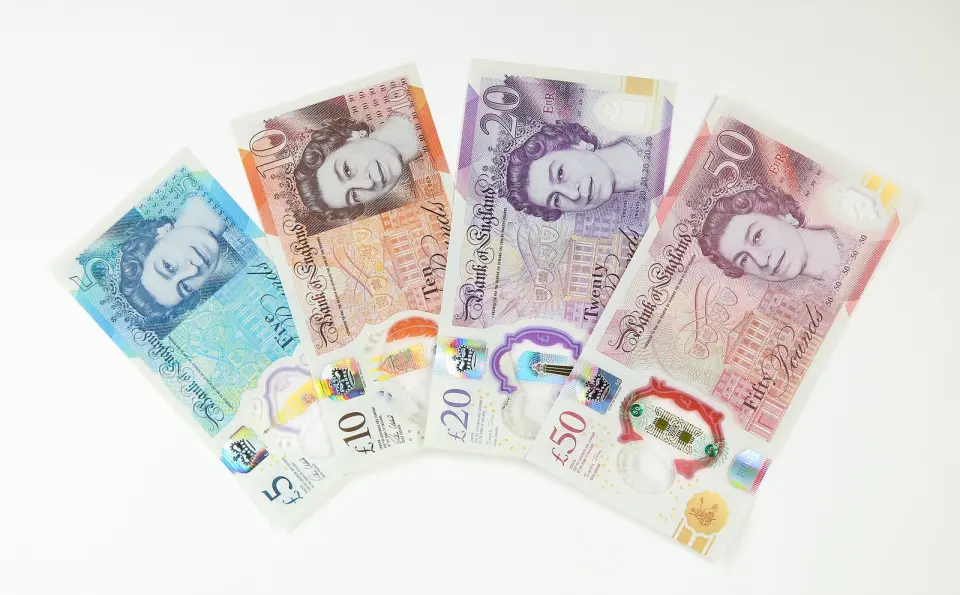
Banknotes are the part of the financial system we carry in our pockets and barely look at. A pity: British notes have rich machinery — from polymer film and see-through windows to strict rules on who may even photograph them and how. The guide to all four denominations is below.
Which banknotes are in circulation now?
Four denominations — £5, £10, £20 and £50, all polymer: the Bank of England no longer issues paper notes. In total, 4.98 billion notes worth about £91.5 billion are in circulation. A peculiarity of the moment: two portraits legally coexist in wallets — Elizabeth II and Charles III. The King's notes have been issued since 5 June 2024 with nothing changed but the portrait; nobody is withdrawing the Elizabeth notes, and both versions are full legal tender.
 ONLYWAY NEWSLIVEImmigration · 19.10British citizenship: five years, 450 days and £1,839Jobs & Business · 19.10Jobs Plans: 22,400 apprenticeships a year for under-25s and 40,000 on siteMoney · 19.10Council Tax discounts: who pays 25% or 50% less and how to claimTax · 19.10Sold a second property: 60 days to report it to HMRCJobs & Business · 19.10Neonatal care leave in the UK: 12 weeks and £187.18 a weekMoney · 19.10UK mobile plans compared: where £8 buys what £25 doesHousing · 19.10Stairs and guarding: England reviews Part K after more than 20 yearsMoney · 19.10Refunds in the UK: 14 days online, less in a shopHousing · 19.10Rent repayment orders: how tenants claim back up to two years' rentTravel · 19.10Missing abroad: who to call first from the UKONLYWAY NEWS · appInstall the ONLYWAY NEWS appFresh UK news, classifieds, key dates and exchange rates on your home screen, one tap away. Free.NewsClassifiedsCalendarRates
Who is on the notes?
The front carries the monarch; the back, four figures of British history. £5 — Winston Churchill. £10 — Jane Austen. £20 — the painter J.M.W. Turner. £50 — Alan Turing, the mathematician who broke Enigma and laid the foundations of computer science. Here is how they officially look (Bank of England images):
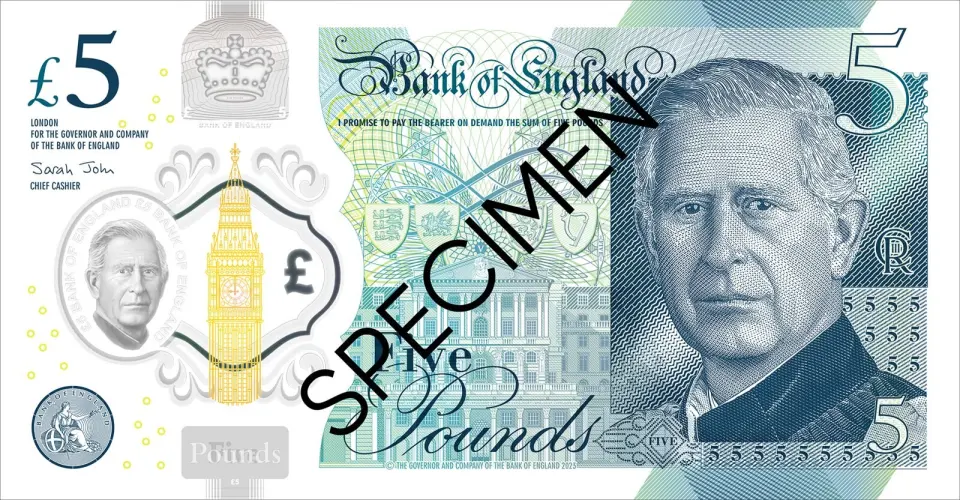
£5: turquoise, the smallest. Winston Churchill on the back
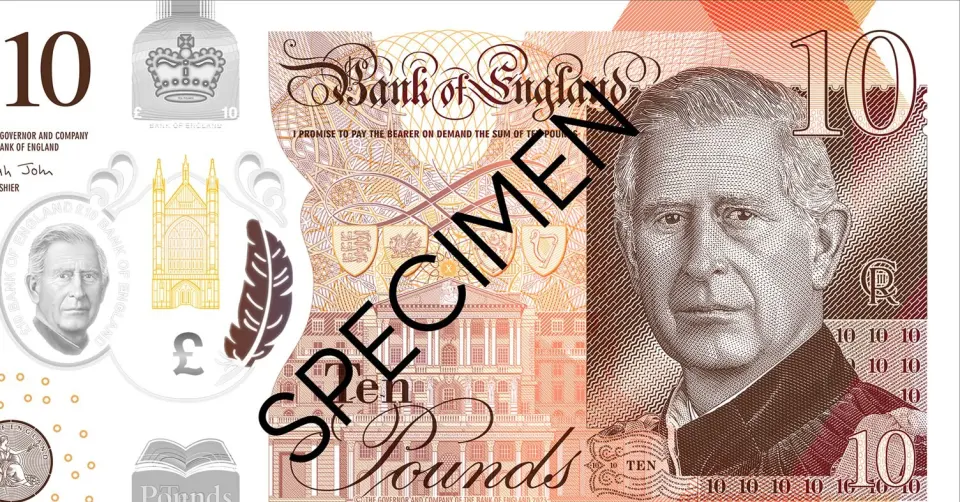
£10: orange. Jane Austen on the back
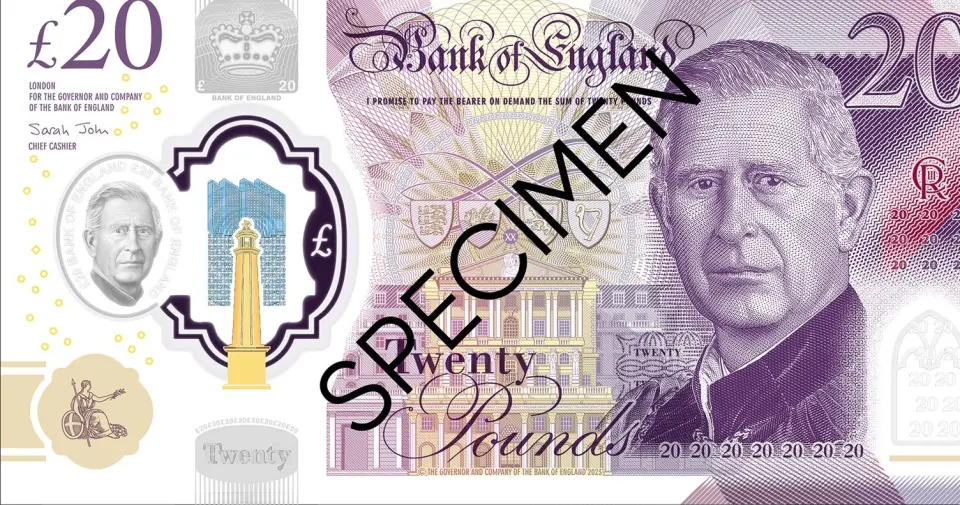
£20: purple, the workhorse. J.M.W. Turner on the back
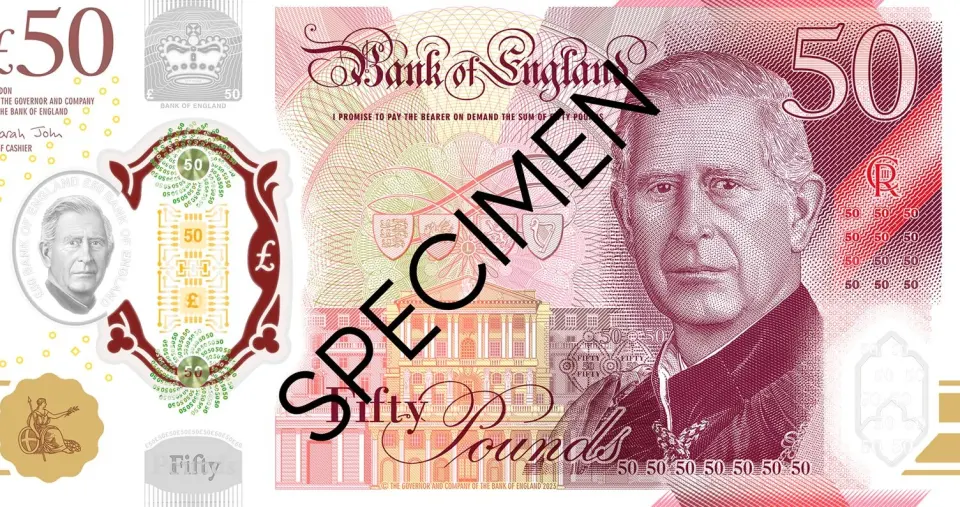
£50: red, the largest. Alan Turing on the back
 ADV · A001ONLYWAY JEWELRY — gold, silver and platinumRings, chains, bracelets, earrings and pendants. Delivery across the UK.Advertise here
How do you check a note is genuine?
Polymer itself is the first line of defence: the film is thin, springy and does not tear like paper. Then look for the see-through windows with the monarch's portrait, holograms that change image as you tilt, metallic foil and features visible only under UV light. The Bank of England demonstrates every feature in the video on its Security features page — if you are paid in cash regularly, those five minutes are worth it. Do not try to pass on a doubtful note: counterfeits are not reimbursed, and knowingly spending one is a crime.
Why do photos of banknotes say SPECIMEN?
A curious detail: the reproduction of banknote images in Britain is regulated by the Bank of England itself. A printed copy must be one-sided and at least 25% larger or smaller than the original, while a digital image showing more than half of a note must carry the diagonal grey SPECIMEN overlay. That is why the official press images — and the photos in this article — bear the stamp: not a defect but a legal requirement. Novelty versions with substituted faces and same-size copies are banned outright.
Where do old paper pounds go?
A classic: a house move turns up an envelope of old paper £20s with Adam Smith, or paper £50s. The good news — they have not expired: the Bank of England exchanges withdrawn notes indefinitely, with no deadline. Three routes. Easiest — pay them into your account: the big banks and building societies accept old notes from their own customers. Second — the Post Office: 51 branches across the country swap up to £300 for cash on the spot, photo ID required. Third — the Bank of England itself: in person on Threadneedle Street in London (Mon-Fri 9:30am-3pm) or by post to its exchange department in Loughton — postal exchange currently takes up to 90 working days. Bring a passport or other photo ID and proof of address; for sums over £700 you will be asked to evidence where the money came from. The Bank transfers the money to an account free of charge, including overseas accounts.
What comes next: animals instead of the greats?
The current series is the last 'historical' one. The next belongs to wildlife: over the summer the public voted on a shortlist of 18 animals — from the hedgehog to the white-tailed eagle — and by the end of 2026 the Bank will name the four winners, one per denomination. Details in our news piece on the vote. Until then, good old Churchill and Turing stay with us for years: the design-and-print cycle is slow. On handling and transferring pounds wisely, see our guide to currency exchange and transfers; on the Bank's rate decisions, the September piece.
Thanks for £1If this information was useful and came in time, press the heart. Payment goes through PayPal, with nothing to choose and nothing to fill in, and it pays for the newsroom.

- Travel Jubilee line part suspended to Stanmore after fire alert
- Life Russian-language events in London: verified dates to December 2026
- Travel London Tube and TfL closures in October 2026: the Piccadilly line stops entirely at Halloween, and no Tube to Heathrow on 17–18 October
- Life A London concert cancelled back in March is still on sale for 4 October — and the full Russian-language listings for October
- Jobs & Business From 1 October, right to work checks reach couriers, subcontractors and platform workers
- Life A hundred students walked into an Edinburgh pub? What the viral Reel really shows
- Life ADHD and autism in England: government changes the rules on assessments and promises help without a diagnosis