The red poppy in November: what Remembrance is in Britain and why people wear it
In early November the whole of Britain puts on red poppies. Here is what Remembrance Sunday and Armistice Day are, why the poppy became the symbol, and what the two-minute silence means.
Thanks for £1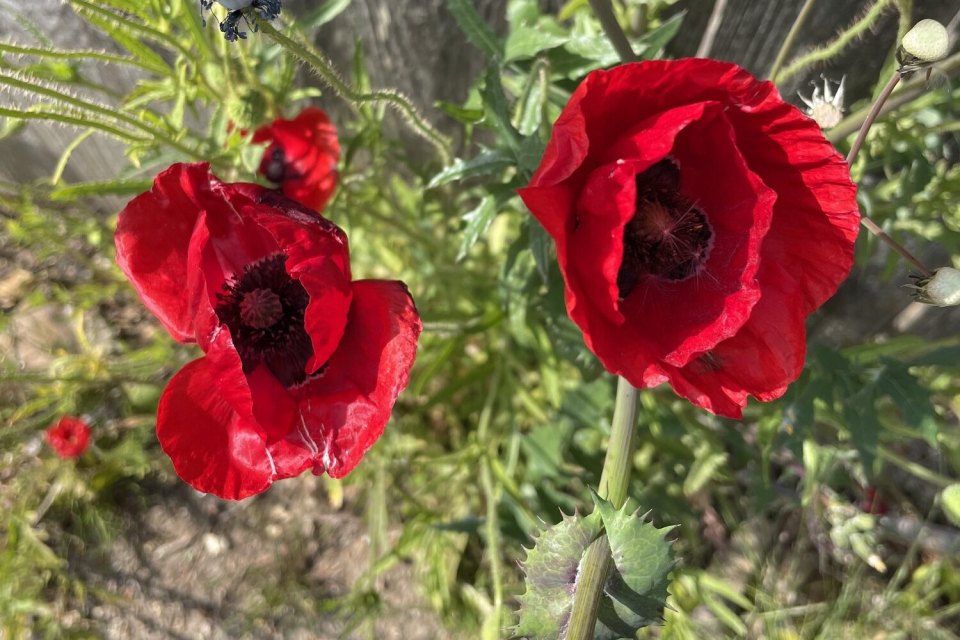
If you live in Britain, in early November you will have noticed small red paper or fabric flowers on people's lapels — on passers-by, on politicians on television and on newsreaders. This is the red poppy, the symbol of remembrance for those who died in war. In 2026 the main day of remembrance, Remembrance Sunday (always the second Sunday of November), falls on 8 November, and Armistice Day is on 11 November.
Why a poppy?
The poppy became the symbol thanks to the poem "In Flanders Fields", written in May 1915 by John McCrae, a Canadian military doctor, after a friend was killed near the Belgian town of Ypres. Bright red field poppies were among the first plants to grow on the shell-torn fields of the First World War (1914–1918), and after the war the flower was adopted as a token of remembrance. It is a symbol of remembrance and hope, not of glorifying war.
The Poppy Appeal
The poppies are distributed by the Royal British Legion, the country's largest armed-forces charity, formed in 1921. Its annual fundraising drive is called the Poppy Appeal. The very first appeal was held on 11 November 1921: the Legion ordered 9 million poppies, they sold out almost at once and raised more than £106,000, which went to help First World War veterans with housing and work. In 1922 Major George Howson set up the Poppy Factory, employing disabled ex-servicemen to make the flowers. Today the appeal supports serving personnel, veterans and their families.
The two-minute silence
The fighting of the First World War stopped at 11am on 11 November 1918. In memory of this, a two-minute silence is observed across the country — at 11am on Armistice Day, 11 November, whatever day of the week it falls on, and at 11am on Remembrance Sunday. People stop in the streets and traffic pauses.
Where it is marked
The main national ceremony takes place at the Cenotaph, the war memorial in the centre of London on Whitehall. Wreaths are laid there by members of the Royal Family, politicians and veterans. Similar services and wreath-layings take place at local war memorials across the country, in every town and in many villages.
Not only red
The usual poppy is red, with a green leaf (Scottish poppies, made since 1926 by the Lady Haig factory in Edinburgh, have four petals and no leaf). Poppies of other colours also exist: the white poppy stands for peace and all victims of war, the purple one remembers animals that died in service. Wearing a poppy is a personal choice — not an obligation, but a mark of respect.
Thanks for £1If this information was useful and came in time, press the heart. Payment goes through PayPal, with nothing to choose and nothing to fill in, and it pays for the newsroom.

- Jobs & Business Post Your Ad Free
- Travel Next-generation airport scanners in Britain: what changes and what can be searched
- Money Debt management plans in the UK: pay less, and never pay for advice
- Jobs & Business UK gender pay gap reporting: who must report and by when
- Money GBIS: free home insulation in Great Britain — who qualified
- Travel Urgent UK passport: the Premium and Fast Track services
- Life Pupil Premium: the extra funding English schools get for disadvantaged pupils