English Fairy Tales by Joseph Jacobs — a book for the night: the Whittington tale and a London trail
The very tales the English grow up on — “Jack and the Beanstalk,” “The Three Little Pigs,” “Tom Tit Tot.” Tonight we follow the thread of Dick Whittington and the Bow Bells: the opening, the author, and a real London trail — places checked today.
Thanks for £1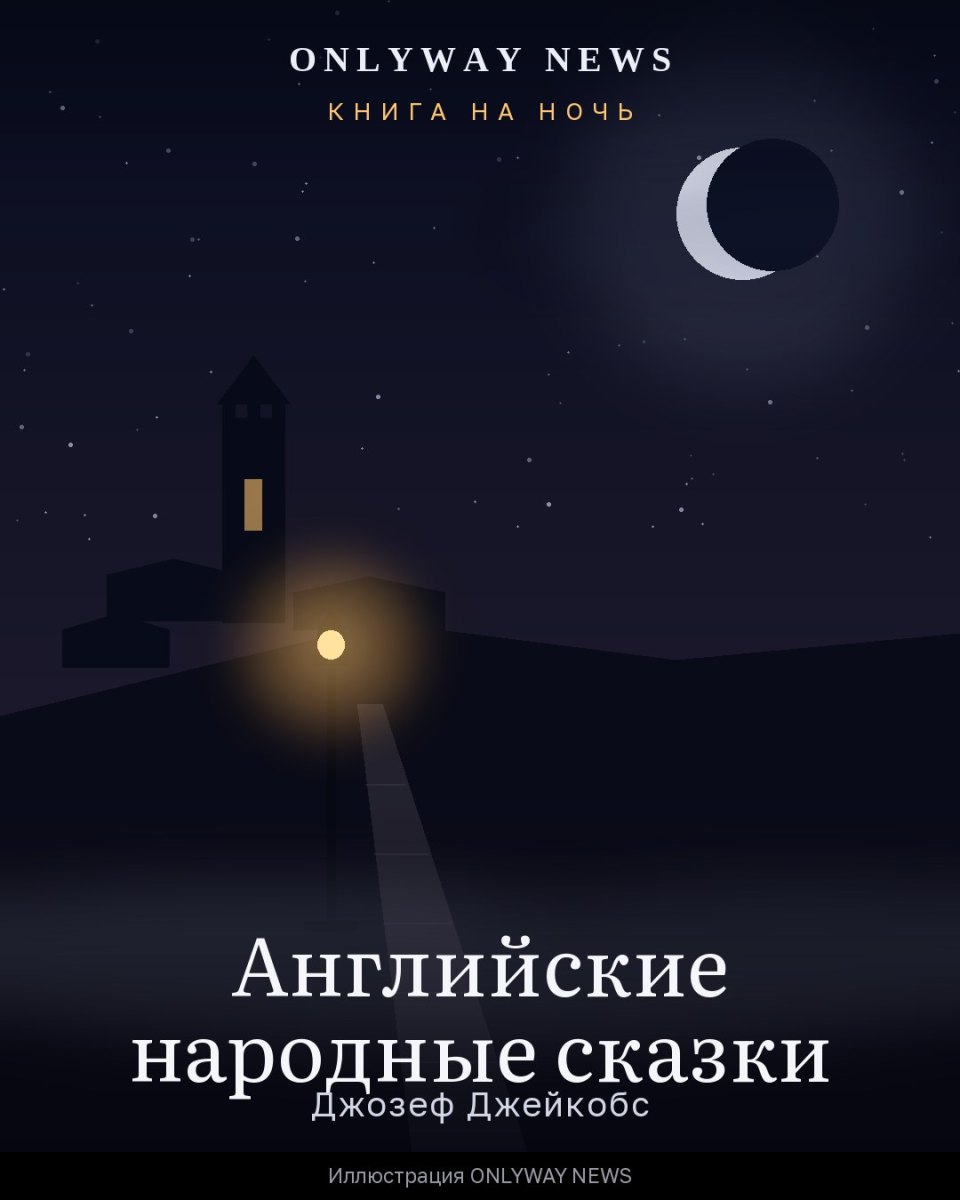
Evening is the time for the stories that are told out loud. Joseph Jacobs’s English Fairy Tales (1890) is the book behind the tales the English grow up on: “Jack and the Beanstalk,” “The Three Little Pigs,” “Goldilocks and the Three Bears,” “Tom Tit Tot” (the English cousin of Rumpelstiltskin). Jacobs gathered them for British children much as the Brothers Grimm gathered the German ones, and set them down in the plain voice of a tale told at bedtime. Tonight we pull a single thread — the story of Dick Whittington and his cat, the poor boy whom the London bells called back to become Lord Mayor. Unlike the giants and the beanstalk, this tale comes with a real London trail you can walk.
The opening: how the Whittington tale begins
The tale opens plainly, as they all do in Jacobs — with a small hero and a far-off king. The first line:
 ADV · A003We build websites for tradespeople and sole traders — £219Customers see your work and prices and message you straight away. Ready in 3 days, £219 instead of £438.Advertise here
“In the reign of the famous King Edward III. there was a little boy called Dick Whittington.”
And here is the line the tale is remembered for. Hungry and discouraged, Dick walks out of London, sits down to rest on a stone at the foot of Highgate Hill — and the bells of Bow begin to ring, and in their peal he seems to hear: “Turn again, Whittington, Thrice Lord Mayor of London.” He turns back — and it all comes true. It is that lantern by the night road, where the boy sat and heard the bells, that we took for today’s illustration.
The full collection in English is free and legal: Project Gutenberg, eBook #7439. The book itself opens not with Whittington but with “Tom Tit Tot” and its famous first line: “Once upon a time there was a woman, and she baked five pies.”
Why it is worth reading tonight
English Fairy Tales is England’s answer to Grimm and Perrault: not a tidied-up literary version but the living folk tale as a collector wrote it down. Jacobs deliberately kept the spoken, slightly prickly tone — the refrains, the repetitions, the eerie turns — so the tales would be good to tell aloud, not only to read. One story takes about five to eight minutes read slowly aloud, which is exactly one bedtime. There is plenty here for a child, funny and a little frightening by turns, and plenty for a grown-up curious to see where familiar plots come from. The Whittington tale stands a little apart: less magic, more London — a market, a ship, a cat and the bells under which a pauper becomes rich. We won’t give away the ending; it is best heard to the sound of bells.
About the author
Joseph Jacobs was born on 29 August 1854 in Sydney and died on 30 January 1916 in Yonkers, near New York — more than seventy years ago, so his collection is now in the public domain. Three things about him. First, he came to Britain at eighteen, studied at Cambridge and worked for years in London, where he took up folklore: he edited the journal Folklore and collected tales across the British Isles. Second, it is his retellings that became “canonical” for English childhood — the “Jack and the Beanstalk,” “Goldilocks” and “Three Little Pigs” we know best come from Jacobs. Third, he described his aim exactly: English children need their own chest of folk tales, as the French had after Perrault and the Germans after Grimm — and he assembled it, later adding Celtic, Indian and European collections before moving to the United States in 1900.
A trail through the places
Whittington’s trail is entirely in London and all three points are free. The hours and conditions below were checked today against the places’ own sites.
The Whittington Stone, foot of Highgate Hill, Archway, London N19 — the very spot where the boy sat down and heard the bells. It is a roadside memorial stone (about fifteen metres south of the junction with Magdala Avenue): free to see, at any hour. The stone tablet was set up in 1821 and restored in 1935; the small black cat on top was added later, in 1964 (sculptor Jonathan Kenworthy). Next to it stand a pub of the same name and Whittington Park.
St Mary-le-Bow, Cheapside, London EC2V 6AU — the very Bow Bells whose ringing called Whittington back. The church (the present building is Christopher Wren’s) is open to visitors seven days a week; usual weekday hours are roughly 6:30 to 18:00, shorter on Friday (confirm on 020 7248 5139), entry free. Below is a Norman crypt from the eleventh century. By tradition, a “true Cockney” is one born within earshot of these bells.
St Michael Paternoster Royal, College Hill, London EC4 — the church the real Richard Whittington rebuilt in 1409 and where he was buried in 1423. The tomb was lost back in the sixteenth century; a curious detail — when the ruins were searched in 1949, a mummified cat was found, but not the Lord Mayor’s body. The building now houses an office and the Mission to Seafarers, and in 2024 the church was put up for sale, so you usually cannot get inside. But the open, free Whittington Garden beside it can be visited any day.
For the curious. The legendary Dick Whittington is based on the real merchant Sir Richard Whittington (c. 1354–1423), who truly was Lord Mayor of London — not three times, as in the tale, but four.
Where to get it
Free. The full English collection is in the public domain: Project Gutenberg, eBook #7439 (with John Dickson Batten’s illustrations). To find it in British libraries, use the Library Hub Discover catalogue.
Buy. English editions of English Fairy Tales are held by ordinary British bookshops (Puffin and Dover keep pocket editions). Russian collections of English folk tales come out under various titles and retellings — search for “Английские народные сказки” in the children’s sections of Britain’s Russian bookshops — Bookashka and Notre Locus; check stock and price on the shop’s site.
Thanks for £1If this information was useful and came in time, press the heart. Payment goes through PayPal, with nothing to choose and nothing to fill in, and it pays for the newsroom.
- English Fairy Tales, collected by Joseph Jacobs (1890) — Project Gutenberg, eBook #7439 (полный текст; «Whittington and His Cat»; первая строка «Tom Tit Tot»)
- Joseph Jacobs (29 Aug 1854, Sydney — 30 Jan 1916, Yonkers) — folklorist; English Fairy Tales 1890, ill. J. D. Batten — Wikipedia
- Whittington Stone, foot of Highgate Hill (tablet 1821, restored 1935; cat 1964, Jonathan Kenworthy) — Wikipedia
- St Michael Paternoster Royal, College Hill — Whittington rebuilt 1409, buried 1423; tomb lost; 1949 search found a mummified cat; put up for sale 2024 — Wikipedia
- St Mary-le-Bow, Cheapside EC2V 6AU — opening times (open seven days; usual Mon–Thu ~6:30–18:00, Fri shorter; tel 020 7248 5139), free — A Church Near You / London City Churches
- Money Debt management plans in the UK: pay less, and never pay for advice
- Jobs & Business UK gender pay gap reporting: who must report and by when
- Money GBIS: free home insulation in Great Britain — who qualified
- Travel Urgent UK passport: the Premium and Fast Track services
- Life Pupil Premium: the extra funding English schools get for disadvantaged pupils