Tess of the d’Urbervilles by Thomas Hardy — a book for the night: the opening, the author and a Dorset trail
Hardy’s most famous novel — a direct defence of a poor woman condemned for another’s fault. The opening line, the author’s dates and a trail through Hardy’s Dorset Wessex — with prices and the venues’ status checked today.
Thanks for £1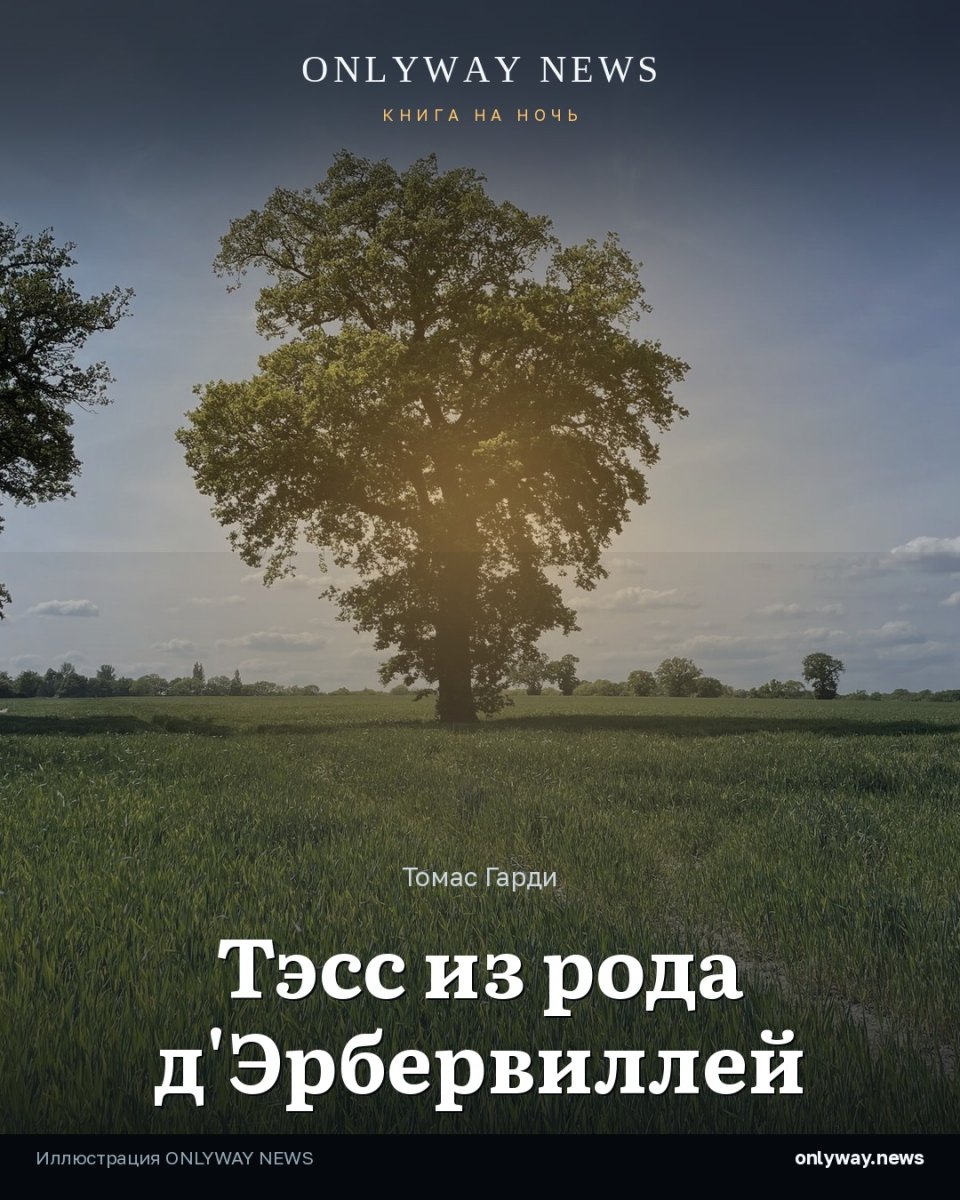
A quiet evening is the time to open Tess of the d’Urbervilles. It is Thomas Hardy’s most famous novel and perhaps the most direct defence in English literature of a poor woman whom society condemned for something that was not her fault. Tess Durbeyfield is the daughter of a penniless carter in Hardy’s invented Wessex; her parents send her to claim rich relatives, and from that her long, unjust, deeply human story begins. Hardy gave the book the defiant subtitle “A Pure Woman Faithfully Presented” — and Victorian England was scandalised, while the novel became an event. For bedtime it works not through plot but through the way Hardy sees the country, the fields and the sky: his Wessex is a character in its own right, and even in a sad book there is the stillness of an evening field to fall asleep to.
The opening
The novel opens on a May evening, on the road to the invented village of Marlott. In the original:
 ONLYWAY NEWSLIVEHousing · 08.11What you can pay less for in Britain: lawful discounts on your bills — no savings promisedImmigration · 08.11UK settlement reform: what was decided on 2 November, and what is not in force yetUK & Politics · 08.11UK dates to know, 8 November to 22 November: 7 to watchHousing · 08.11What renting a room in Britain really costs: rent, deposit and billsJobs & Business · 08.11How to check a UK job vacancy before you apply: pay, contract, right to work — and scam signsLife · 08.11How to give blood in England: age, weight and how to bookLife · 08.11How to disagree politely in English: 10 phrases for work and meetingsLife · 08.11Renewing a British passport from Russia: online only — the embassy does not make passportsBooks · 08.11Gulliver’s Travels at 300: why Swift’s book is far sharper than it looksUK & Politics · 08.11UN Day: what it marks and the United Kingdom’s role in the UNONLYWAY NEWS · appInstall the ONLYWAY NEWS appFresh UK news, classifieds, key dates and exchange rates on your home screen, one tap away. Free.NewsClassifiedsCalendarRates
“On an evening in the latter part of May a middle-aged man was walking homeward from Shaston to the village of Marlott, in the adjoining Vale of Blakemore, or Blackmoor.”
And here is the line with which Hardy brings in Tess herself: “She was a fine and handsome girl — not handsomer than some others, possibly — but her mobile peony mouth and large innocent eyes added eloquence to colour and shape.”
The full English text is free and legal: Project Gutenberg, eBook #110. (The Russian edition of this piece carries our own translation of these lines.)
Why read it tonight
Tess looks like a country drama, but at heart it is about the double standard and a person’s right to compassion. Hardy takes a poor, honest, hard-working girl and shows how society, church and “respectability” are ready to crush her for another’s fault — and, in the subtitle itself, calls her pure. That made the novel a scandal in 1891 and a great book today: few before Hardy wrote about a woman from the very bottom with such tenderness and anger. It is also worth reading for Wessex itself — the vales, the farms, the dairy at Talbothays, the harvest and the mists, drawn down to the last blade of grass. The first chapter, “The Maiden,” is about fifteen minutes read aloud: a May evening, a tipsy carter learns he descends from an ancient family, and the whole trouble begins. Nothing frightening in it, but you know at once whose side you are on. We won’t give away the ending — only that of all the Victorian novels this is the one most often called a story of injustice and dignity.
About the author
Thomas Hardy was born on 2 June 1840 in Higher Bockhampton, Dorset, and died on 11 January 1928 in Dorchester — more than seventy years ago, which is why his text is now in the public domain. Three things worth knowing. First, he was not only a novelist but a major poet, and an architect by training: as a young man he restored old churches, and that feeling for built and lived-in space runs through his books. Second, he invented “Wessex,” a half-imagined south-west England in which almost all his novels take place; the real Dorset is recognisable in it down to the villages. Third, after his death his ashes were buried in Poets’ Corner at Westminster Abbey, while his heart, by his own wish, was buried in Dorset, at Stinsford, beside his family — so Hardy belongs both to great literature and to his native ground.
Places to visit
Hardy’s places are in Dorset, around Dorchester (the “Casterbridge” of his novels) — a day trip. Note: both National Trust houses are closed for the winter, which was checked today on their own sites.
Hardy’s Cottage, Higher Bockhampton, near Dorchester (DT2 8QJ) — the thatched cob cottage where Hardy was born and wrote his first novels. It is closed for the 2026 season and reopens in spring 2027 (National Trust). When open, admission is: adult £12.00 (£13.20 with Gift Aid), child 5–17 £6.00, family £30.00; free for National Trust members; booking essential. But the surrounding Thorncombe Wood is open all year and free — the paths lead to the cottage, so you can see it from outside.
Max Gate, Alington Avenue, Dorchester (DT1 2FN) — the house Hardy designed himself and lived in until his death in 1928. Also closed for the 2026 season, reopening spring 2027; same prices (£12.00 adult, free for NT members).
Stinsford, Church of St Michael — here, in the family grave, Hardy’s heart is buried (his ashes are at Westminster Abbey). The parish church and churchyard are open and free; it is the key Hardy site reachable even in winter.
Where to get it
Free. The full English text is in the public domain: Project Gutenberg, eBook #110. To find the book in British libraries, use the Library Hub Discover catalogue.
Buy it in Russian. Tess is a staple classic in Russian translation (the classic version is by Alexandra Krivtsova); search “Тэсс из рода д’Эрбервиллей” at the Russian-language bookshops in Britain — Notre Locus and Bookashka. Check stock and price on the shop’s site; an English paperback is carried by ordinary British bookshops too.
Thanks for £1If this information was useful and came in time, press the heart. Payment goes through PayPal, with nothing to choose and nothing to fill in, and it pays for the newsroom.
- Tess of the d’Urbervilles by Thomas Hardy — Project Gutenberg (eBook #110, полный текст; первая фраза; представление Тэсс)
- Thomas Hardy — Encyclopaedia Britannica (род. 02.06.1840 Хайер-Бокхэмптон, ум. 11.01.1928 Дорчестер; поэт и романист; «Уэссекс»; архитектор по образованию)
- Thomas Hardy — Wikipedia (подзаголовок «A Pure Woman Faithfully Presented», 1891; прах в Уголке поэтов Вестминстерского аббатства, сердце погребено в Стинсфорде)
- Hardy’s Cottage — National Trust (Higher Bockhampton DT2 8QJ; закрыт на сезон 2026, открытие весной 2027; взрослый £12/£13,20 Gift Aid, ребёнок £6, семейный £30; членам NT бесплатно)
- Hardy’s House, Max Gate — National Trust (Alington Avenue, Dorchester DT1 2FN; дом, спроектированный Гарди; закрыт на сезон 2026, открытие весной 2027; цены те же)
- Library Hub Discover — каталог фондов британских библиотек
 Books
Gulliver’s Travels at 300: why Swift’s book is far sharper than it looks
 Books
Robin Hood by Howard Pyle — a book for the night: the opening, the author and a Sherwood Forest trail
 Books
Jane Eyre by Charlotte Brontë — a book for the night: the opening, the author and a Yorkshire moors trail
- Jobs & Business Post Your Ad Free
- Travel Next-generation airport scanners in Britain: what changes and what can be searched
- Money Debt management plans in the UK: pay less, and never pay for advice
- Jobs & Business UK gender pay gap reporting: who must report and by when
- Money GBIS: free home insulation in Great Britain — who qualified
- Travel Urgent UK passport: the Premium and Fast Track services
- Life Pupil Premium: the extra funding English schools get for disadvantaged pupils