The Wind in the Willows: a quiet bedtime book about the river, Mole and Water Rat
The coziest of English tales — about a river, a burrow with a fireplace and friendship next door. Almost no plot, and so perfect for bedtime. We read Kenneth Grahame, give the first extract, and show how to reach the real Thames in an hour from London.
Thanks for £1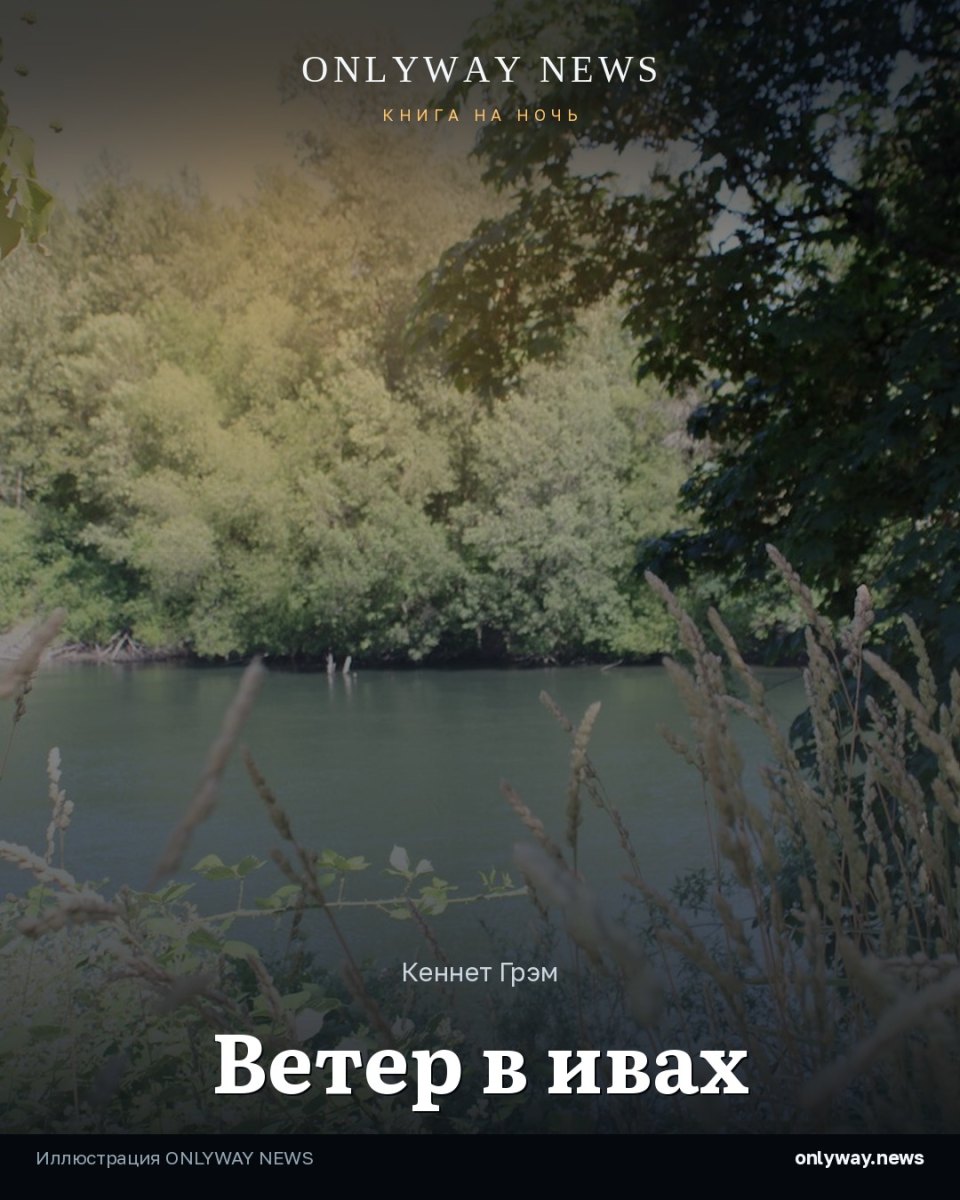
If today was too loud, this book is the antidote. The Wind in the Willows is the quietest, coziest of English children’s books: about Mole, Water Rat, the vain Mr Toad and the river they live beside. It has almost no plot in the usual sense — which is exactly why it reads so well at bedtime: it doesn’t rush you on, it lulls you. Kenneth Grahame drew the river from the real Thames, and you can reach it in an hour by train from London.
An extract
The book begins:
 ONLYWAY NEWSLIVEMoney · 28.10Blind Person's Allowance: £3,250 tax-free in 2026/27Money · 28.10Access to cash in the UK: how to request an ATM or banking hub after a branch closesLife · 28.10NHS Continuing Healthcare: free NHS-funded care — who qualifies and how the assessment worksTax · 28.10Simple Assessment: what to do if HMRC sends you a tax bill — deadlines and how to payTechnology · 28.10Switching mobile provider and keeping your number: one text gets the PACImmigration · 28.10Graduate visa 2026: how to stay in the UK after study — length, cost, conditionsLife · 28.10Speed awareness course in the UK: when it is offered instead of a fine and pointsMoney · 28.10Smart meters in the UK: free, what they do and whether you must have oneMoney · 28.10How to check your State Pension forecast in the UK and fill the gapsLife · 28.10The UK practical driving test: cost, booking and what to bring in 2026ONLYWAY NEWS · appInstall the ONLYWAY NEWS appFresh UK news, classifieds, key dates and exchange rates on your home screen, one tap away. Free.NewsClassifiedsCalendarRates
“The Mole had been working very hard all the morning, spring-cleaning his little home.”
He then abandons the cleaning, scrambles up into the open — and sees the river for the first time. And the book’s most famous line, repeated by everyone who loves boats, is Water Rat’s: “there is nothing — absolutely nothing — half so much worth doing as simply messing about in boats.”
Kenneth Grahame, The Wind in the Willows (1908). The text is in the public domain. The full English text is free on Project Gutenberg (link below).
Why it is worth reading tonight
It is a book about home, friendship and the turning seasons by a river — and about how good it is to have a burrow, a fire and friends next door. Children love Toad’s adventures with his motor-cars; adults love ‘The Piper at the Gates of Dawn’, one of the most lyrical chapters in all English prose. Chapter one is about fifteen minutes aloud — just one evening, and enough to tell whether this is your book.
About the author
Kenneth Grahame (1859–1932) was Secretary of the Bank of England by day and wrote in the evenings. The Wind in the Willows grew out of the bedtime stories he told his son Alastair. It was published in 1908, soon after Grahame left the bank. He is buried in Oxford, at Holywell Cemetery, beside his son.
 ADV · A001ONLYWAY JEWELRY — gold, silver and platinumRings, chains, bracelets, earrings and pendants. Delivery across the UK.Advertise here
Where to go
The Thames in Berkshire. The river of the book is the Thames by the villages of Cookham Dean and Pangbourne, where Grahame lived. In Pangbourne he spent his last years at Church Cottage and died there. It is easy to reach: a train from Paddington to Pangbourne station takes about an hour, then walk along the Thames Path. The path and riverbank are free and always open — this is the river itself.
The grave in Oxford. Kenneth Grahame is buried at Holywell Cemetery in central Oxford (free to enter). The epitaph was written by his cousin, the novelist Anthony Hope.
Where to get it
Free and legal. The full English text is on Project Gutenberg, free to read and download. To find it in a library near you, use the Library Hub Discover catalogue. Links below.
To buy. An English edition is in every bookshop in Britain. For the Russian translation (the classic one by Irina Tokmakova is under copyright) try the Russian-language bookshops: children’s stock at Bookashka, Russian and English sections at Notre Locus. Check stock and price on the shop’s own site.
Thanks for £1If this information was useful and came in time, press the heart. Payment goes through PayPal, with nothing to choose and nothing to fill in, and it pays for the newsroom.
- Jobs & Business Post Your Ad Free
- Life Russian-speaking doctors and clinics in London: eight addresses checked against the registers
- Life Russian-language events in London: verified dates to December 2026
- Travel London Tube and TfL closures in October 2026: the Piccadilly line stops entirely at Halloween, and no Tube to Heathrow on 17–18 October
- Life See London from above for free: four viewpoints and their entry rules