The Jungle Book: a bedtime read about Mowgli, the pack and the Law of the Jungle
Mowgli, Baloo, Bagheera and Shere Khan — but nothing like Disney. Stern, beautiful stories about law and the pack, one an evening. We read Rudyard Kipling, give the first extract, and show where to find his jungle in England.
Thanks for £1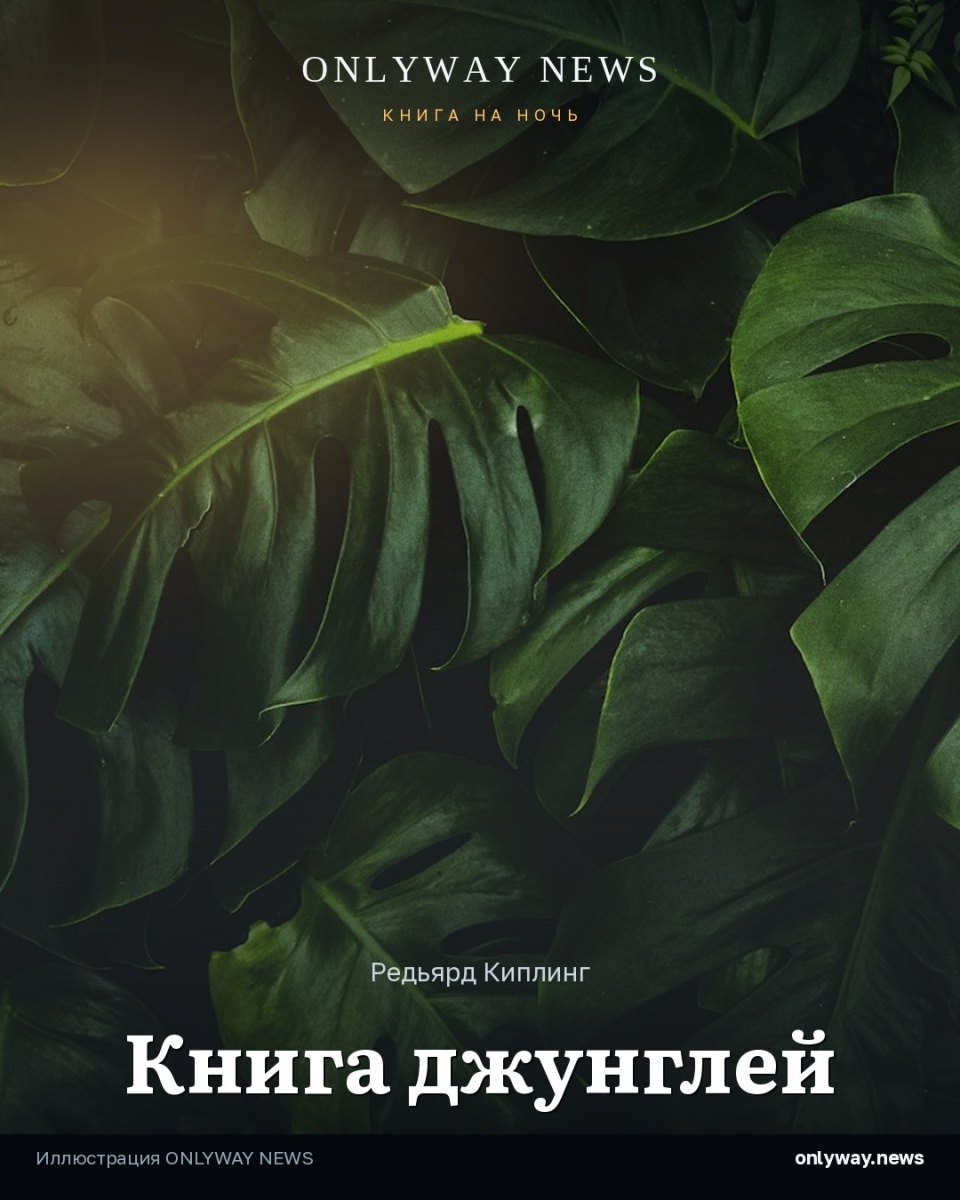
Mowgli, Baloo, Bagheera, Kaa the python and Shere Khan the tiger — even people who have never opened the book know these characters from the films. But Kipling’s Jungle Book is nothing like the Disney version: not a jolly musical but stern, beautiful stories about law, the pack, and what it is to be an outsider among your own. It reads well at bedtime by chapters — each story stands alone, with a beginning and an end, just one evening’s worth.
An extract
This is how the first story, ‘Mowgli’s Brothers’, begins:
 ADV · A001ONLYWAY JEWELRY — gold, silver and platinumRings, chains, bracelets, earrings and pendants. Delivery across the UK.Advertise here
“It was seven o’clock of a very warm evening in the Seeonee hills when Father Wolf woke up from his day’s rest.”
And here is the book’s central idea — the Law of the Jungle: “The Law of the Jungle… never orders anything without a reason.” The whole world of the book rests on this law, and Mowgli must learn it.
Rudyard Kipling, The Jungle Book (1894). The text is in the public domain. The full English text is free on Project Gutenberg (link below).
Why it is worth reading tonight
Because it is one of the finest examples of pure storytelling: clear language, a strong plot, animals that think and speak yet remain animals. For children, adventure and friendship; for adults, a question Kipling asks in earnest: what makes you one of your own — blood or upbringing. Start with ‘Mowgli’s Brothers’; if the pack stories grip you, a whole book and its sequel lie ahead.
About the author
Rudyard Kipling (1865–1936) was born in Bombay, and India remained the main subject of his prose. He wrote The Jungle Book in 1894. In 1907 Kipling became the youngest ever Nobel laureate in Literature. He is buried in London, in Poets’ Corner at Westminster Abbey.
 ADV · A003We build websites for tradespeople and sole traders — £219Customers see your work and prices and message you straight away. Ready in 3 days, £219 instead of £438.Advertise here
Where to go
The house in Sussex. From 1902 until his death Kipling lived at Bateman’s in the village of Burwash, East Sussex; today it is a National Trust house. The house is open 11:00–16:30, the garden 10:00–17:00; an adult ticket is £18 (£19.80 with Gift Aid), a child 5–17 £9, under-5s free. Last entry 30 minutes before closing.
A plaque in London. At 43 Villiers Street by Charing Cross a blue plaque marks where Kipling lived in 1889–1891. Free to see — it is an ordinary street.
The grave. Poets’ Corner in Westminster Abbey. The Abbey charges for entry — check hours and price on its website before visiting.
Where to get it
Free and legal. The full English text is on Project Gutenberg. To find it in a library near you, use the Library Hub Discover catalogue. Links below.
To buy. An English edition is in every bookshop in Britain. For the Russian translation, try the Russian-language bookshops — children’s stock at Bookashka. Check stock and price on the shop’s own site.
Thanks for £1If this information was useful and came in time, press the heart. Payment goes through PayPal, with nothing to choose and nothing to fill in, and it pays for the newsroom.
- Jobs & Business Post Your Ad Free
- Life Russian-speaking doctors and clinics in London: eight addresses checked against the registers
- Life Russian-language events in London: verified dates to December 2026
- Travel London Tube and TfL closures in October 2026: the Piccadilly line stops entirely at Halloween, and no Tube to Heathrow on 17–18 October
- Life See London from above for free: four viewpoints and their entry rules
- Money A lost or late parcel: the seller is responsible, not you
- Money Check your lender now