E-scooters in Britain: your own is illegal, a rental is not
A privately owned e-scooter cannot be ridden on the road, the pavement or in a park: fine, penalty points and seizure. Only rentals inside trial areas are legal, and there are just over twenty of them.
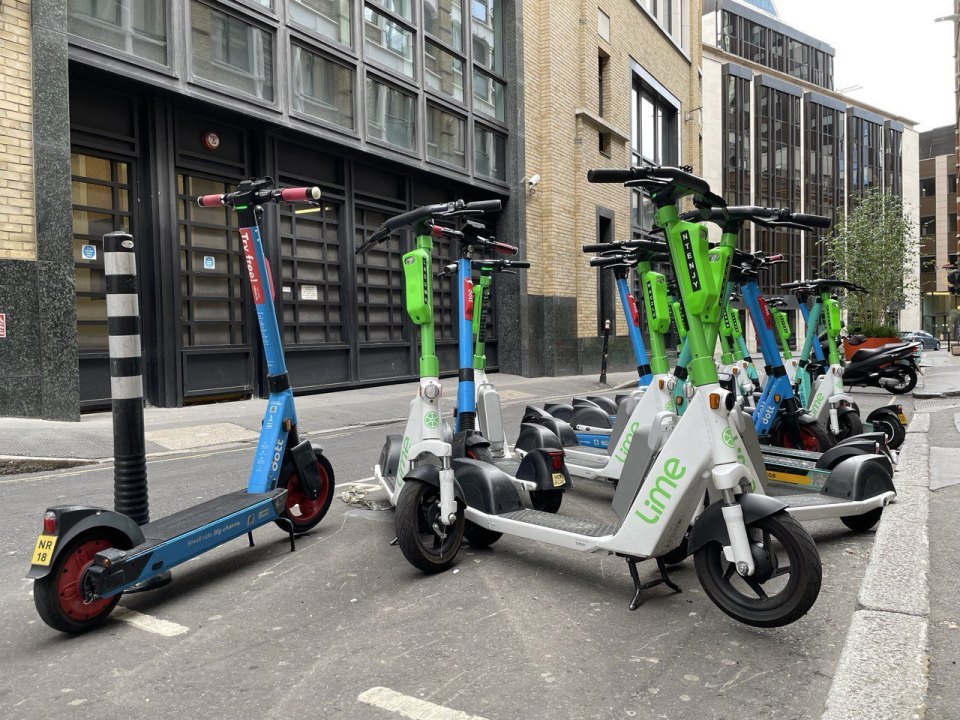
An e-scooter in Britain is not a bicycle and not a toy. A privately owned one cannot be ridden on the road, on the pavement or in a park — that is simply against the law. The only legal way to ride is a rental e-scooter, and only where an official government trial is running.
Why can't you ride your own e-scooter?
Because GOV.UK says so without qualification: it is illegal to ride a privately owned e-scooter in public, for example on pavements, on roads or in parks. The consequences are listed on the same page — a fine, penalty points on your driving licence, and the scooter being seized by the police. The one place you can ride is private land, with the landowner's permission.
 ADV · A001ONLYWAY JEWELRY — gold, silver and platinumRings, chains, bracelets, earrings and pendants. Delivery across the UK.Advertise here
The rules for private e-scooters have not changed; the rental trials did not legalise them. Buying one in a British shop changes nothing either — selling them is legal, riding them on the street is not.
Where is riding allowed?
Only on a rental e-scooter from an official scheme, and only inside a trial area. On one of those you can ride on the road — motorways excepted — and in cycle lanes, as well as on cycle ways unless a separate sign prohibits e-scooters there. Pavements are off limits for rental scooters too.
As of 7 July 2026 the trial areas are Bournemouth and Poole, Brighton and Hove, Buckinghamshire (Aylesbury, High Wycombe), Cambridge, Cornwall, Essex (Braintree and Chelmsford), Gloucestershire, Leeds, Liverpool, London (participating boroughs), Milton Keynes, North and West Northamptonshire, Norwich, Nottingham, Oxford, Plymouth, Salford, Slough, Solent (Isle of Wight, Portsmouth and Southampton), West Midlands (Birmingham, Coventry) and the West of England Combined Authority (Bristol, Bath and parts of South Gloucestershire). The latest update added Brighton and Hove, Cornwall and Plymouth, and ended the Newcastle trial. Leeds opened on 19 March 2026.
What licence do you need to rent one?
A UK driving licence, provisional or full, with category Q entitlement. Category Q comes automatically if your licence lets you drive category AM, A or B vehicles; the categories are printed on the back of the card. Provisional licence holders do not need to display L plates.
Overseas licences work under conditions. A full EU or EEA licence qualifies as long as it does not prohibit you from driving low-speed mopeds and motorcycles. A full licence from another country qualifies if it entitles you to drive a small vehicle — a car, moped or motorcycle — and you entered the UK within the last 12 months. After 12 months of residence the licence must be exchanged. An overseas provisional licence or learner permit does not qualify at all.
Do you need insurance and a helmet?
You do not have to buy insurance: the rental operator provides third-party motor insurance. A helmet is recommended rather than legally required — GOV.UK advises a cycle helmet of the right size, securely fastened and meeting current regulations, plus light-coloured or fluorescent clothing.
What counts as an offence on a rental scooter?
Riding while drunk or otherwise intoxicated. Drink and drug driving laws apply to e-scooter users, and so do careless and dangerous driving offences — which means a case can end in prosecution, not a word with the rental operator.
The rest of the rules are short and firm: one person at a time, nothing may be towed, and no using a mobile phone while riding. A navigation screen is allowed but must be set up before you set off. Bags and small items must not create a danger — never hang them from the handlebars. The maximum speed for a rental e-scooter is 15.5mph, and some areas are limited to less.
Are electric bikes banned too?
Electric bikes are the opposite case, which is where most of the confusion comes from. You can ride one from the age of 14 with no licence, registration, tax or insurance — provided it is an EAPC, an electrically assisted pedal cycle. An EAPC must have pedals that can propel it, a motor with a continuous rated power output of no more than 250 watts, and no motor assistance above 15.5mph. The markings must show the power output and the manufacturer, plus either the battery voltage or the maximum speed.
A bike that fails those tests counts as a moped or motorcycle: it must be registered and taxed, and you need a licence, insurance and a motorcycle helmet meeting British safety standards. It can be ridden only on the road — cycle tracks and cycle lanes are closed to it — and an uninsured one can be seized by the police. No electric bike of any kind may be ridden on the pavement.
What if you have already bought one?
There are exactly two options: ride on private land with the landowner's permission, or use a rental scheme inside a trial area. ONLYWAY NEWS suggests reading the operator's terms before the first ride — GOV.UK points to them directly, and it is there that the area boundary, the parking bays and the local speed cap are set out.

- Travel London Tube and TfL closures in October 2026: the Piccadilly line stops entirely at Halloween, and no Tube to Heathrow on 17–18 October
- Life A London concert cancelled back in March is still on sale for 4 October — and the full Russian-language listings for October
- Life A hundred students walked into an Edinburgh pub? What the viral Reel really shows
- Tax HMRC visits: how to check an officer's identity under the rules updated on 7 October
- Life Russian-language events in London: verified dates to December 2026
- Travel Elizabeth line shut to Heathrow, severe delays on Victoria
- Travel Jubilee line part suspended to Stanmore after fire alert