Flu is rising in England and fewer people have had the jab than a year ago
UKHSA has published the first winter virus report of the season: September activity beat the past four winters, one circulating strain has drifted from the vaccine, and by 4 October only 9.9% of over-65s and 4.9% of at-risk adults had been vaccinated.
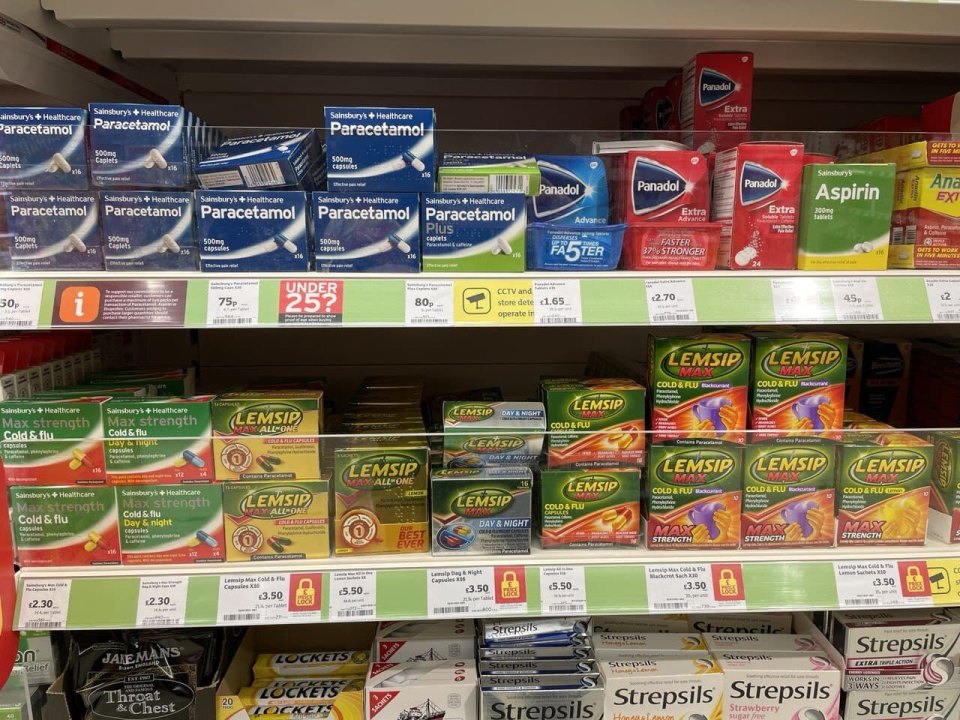
The UK Health Security Agency (UKHSA) published the first weekly winter respiratory surveillance report of the season on 8 October 2026. The headline: flu is rising in England, September activity was higher than in any of the past four winters, and by 4 October fewer people had taken up the free flu vaccine than at the same point last season — among the over-65s, among adults in clinical risk groups, and among two- and three-year-olds.
How much has flu risen in England?
Levels are still low, but every indicator moved up at once. Laboratory positivity for flu reached 6.5% on Sunday 4 October, against 5.0% the previous Sunday. Among samples swabbed in general practice, 10.0% were positive for flu, up from 7.6%. GP consultations for influenza-like illness rose to 5.6 per 100,000 registered patients, from 4 per 100,000. Hospital admissions with confirmed flu stood at 1.97 per 100,000 and intensive care admissions at 0.06 per 100,000. UKHSA also notes that emergency department attendances for influenza-like illness are already above the level normally expected at this point in the year, and that young adults are driving the rise. The figures cover week 40 of 2026 — 28 September to 4 October — and apply to England.
 ADV · A003We build websites for tradespeople and sole traders — £219Customers see your work and prices and message you straight away. Ready in 3 days, £219 instead of £438.Advertise here
Why are experts warning the vaccine may work less well?
Because one of the two circulating subtypes has changed. In England, influenza A(H3N2) and A(H1N1) are currently circulating in roughly equal shares, and the A(H1N1) virus has drifted away from the strain used in this season's vaccine. UKHSA is explicit that it is too early to judge the consequences: nobody yet knows how widely the drifted variant will spread or how well the vaccine will perform against it. That is not a reason to skip the jab — the vaccine also covers A(H3N2) and influenza B, and usually makes illness milder. For scale, UKHSA modelling estimates that last winter's vaccination programme prevented around 100,000 hospital admissions and 7,000 deaths in England.
How many people have been vaccinated so far?
Fewer than at the same point a year ago. UKHSA published weekly uptake data for the first time this season. As of 4 October 2026 in England, the provisional figures are:
— 9.9% of everyone aged 65 and over;
— 4.9% of under-65 adults in a clinical risk group;
— 16.4% of pregnant women;
— 16.5% of two-year-olds and 16.4% of three-year-olds.
Compared with the equivalent week last season, uptake is lower in the over-65s, in under-65s in risk groups and in two- and three-year-olds; for pregnant women it is broadly unchanged. The numbers are provisional: some pharmacy data had not arrived when they were compiled, so the totals may rise. Returns came from 98.7% of GP practices for adults and 98.8% for children.
Who gets the free NHS flu vaccine?
The NHS list for 2026/27 is unchanged. It covers everyone aged 65 or over, including those who turn 65 by 31 March 2027; adults aged 18 to 64 with certain long-term conditions, among them asthma needing steroid treatment, COPD, heart conditions, chronic kidney or liver disease, diabetes, and a BMI of 40 or above; pregnant women at any stage; care home residents; the main carer of an older or disabled person, or anyone receiving Carer's Allowance; people living with someone who has a weakened immune system; people aged 16 or over who are rough sleeping or in a hostel; and frontline health and social care workers, usually through their employer. We set out the full list in September: who can get a free flu jab in England.
 ONLYWAY NEWSLIVELife · 08.10Flu is rising in England and fewer people have had the jab than a year agoHousing · 08.10Homes in London take 84 days to sell — longest in BritainJobs & Business · 08.10AI at work in the UK: ONS names the jobs it has hit firstLife · 08.10GP and NHS dentist appointments in England: how long people really waitMoney · 08.10UK sanctions Cryptomus, Heleket and VexPay: what it means for money transfersImmigration · 08.10UK immigration rules change on 8 October 2026: what is newLaw · 08.10Bought a faulty used car in the UK: how to get your money backMarkets · 08.10Fuel prices now show in Google Maps: how to find the cheapest pumpTravel · 08.10Piccadilly line part closed to Cockfosters as Elizabeth line recoversTax · 07.10HMRC visits: how to check an officer's identity under the rules updated on 7 OctoberONLYWAY NEWS · appInstall the ONLYWAY NEWS appFresh UK news, classifieds, key dates and exchange rates on your home screen, one tap away. Free.NewsClassifiedsCalendarRates
How do you book, and what is the deadline?
There are four routes: the NHS App, the NHS website, your own GP surgery, or a pharmacy offering free NHS flu vaccination. You do not need to wait for an invitation — booking is open now. Children and pregnant women have been eligible since 1 September; other eligible adults since 1 October. Online booking closes on 30 March 2027, and the last day to receive the vaccine is 31 March 2027. Dr Jamie Lopez Bernal, UKHSA consultant epidemiologist, urged eligible people to get vaccinated now rather than waiting for the peak.
What about children?
The children's programme runs separately and is also free. It covers children who were 2 or 3 on 31 August 2026 (born between 1 September 2022 and 31 August 2024), four-year-olds who have not yet started school, school-aged children from reception to Year 11 — usually vaccinated at school — and all children aged 6 months to 17 years with certain long-term conditions. A child who misses the school session, or who is home educated, is offered the vaccine at a community clinic, and from 1 December 2026 at some pharmacies too. The deadlines are the same: online booking until 30 March and the vaccine itself until 31 March 2027.
And COVID-19 and RSV?
COVID-19 is also rising but remains low: positivity was 9.1% against 7.9% a week earlier, hospital admissions 2.04 per 100,000 against 1.75, and intensive care admissions 0.06 against 0.05 per 100,000. Respiratory syncytial virus (RSV), which matters most for infants and older people, is at baseline with very little circulation. Rhinovirus — the ordinary autumn cold — has started to decline. The next UKHSA report is due in a week, and these bulletins now run every Thursday until the end of winter.

- Travel Windrush line delays and Croydon tram closures: London tube today, 5 October
- Money UK sanctions Cryptomus, Heleket and VexPay: what it means for money transfers
- Markets Diesel passes £2 a litre for the first time: what it costs in London today and where to fill up cheaper
- Life When do the clocks change in the UK in 2026? 25 October, an hour back
- Housing Hosepipe bans in England: ten companies, 30 million people, six reservoirs exceptionally low
- Immigration UK visitor visa step by step 2026: timing, cost, biometrics and how long it takes
- Money Your gas and electricity debt can be written off in full: who Ofgem is clearing 2022–2024 bills for, and what you must do