The red phone box: who designed it and why it cannot be removed
The K6 was drawn by Sir Giles Gilbert Scott in 1935 for the Silver Jubilee of George V. Many boxes are listed at Grade II, and the rest are protected by an Ofcom rule: the last box at a site cannot go if 52 or more calls were made from it in a year. A disconnected one can be yours for £1.
Thanks for £1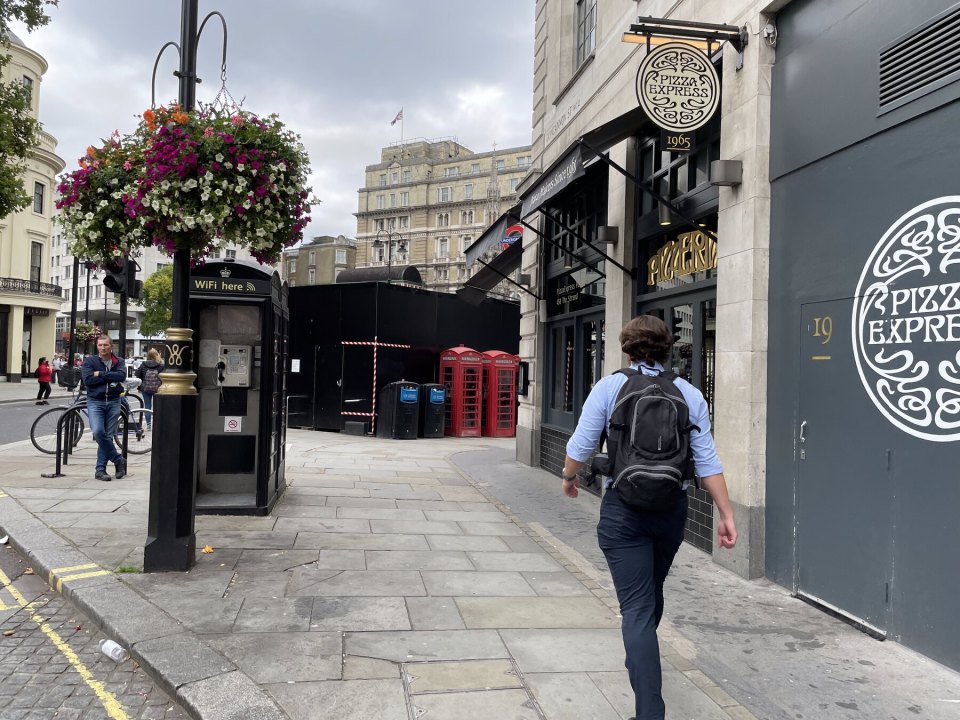
The red telephone box is the most recognisable piece of street furniture in Britain, and nearly all of them are the same design. The model is the K6, drawn by the architect Sir Giles Gilbert Scott in 1935 to mark the Silver Jubilee of King George V. A standardised cast-iron shell painted red throughout, long glazing in the door and sides, a shallow-curved roof, and rectangular white TELEPHONE signs beneath it. On this model the crowns on the top panels are applied rather than perforated.
They are protected monuments
Many boxes sit on the national list of protected buildings. The kiosk at the junction of North Audley Street and Green Street in London, for example, is listed at Grade II, officially since 23 June 2017. The listing notes that the internal equipment has been modernised but the glass is original.
Grade II means the box cannot be demolished, repainted or moved without consent. That is why you still find them on corners where nobody has needed a payphone for decades.
Why they are not removed
Ordinary, unlisted boxes have a different protection, from the telecoms regulator Ofcom. Since June 2022 the last box at a site cannot be removed if it meets at least one of four criteria.
One: the site has no coverage from any of the four mobile networks. Two: it is in an area with a high frequency of accidents. Three: 52 or more calls have been made from it in the past 12 months — all calls count, not only emergency ones. Four: there is other evidence the box is reasonably needed, such as likely reliance during a local emergency like flooding, or use for calling helplines.
If the last box at a site meets none of these, the operator must first consult the local authority and consider any views and evidence sent in. A box that is not the last at its site can be removed with no consultation at all.
You can buy one for £1
BT runs a scheme called Adopt a Kiosk: a disconnected red box goes for a pound. Applications are open to recognised public bodies such as parish, community or town councils, to registered charities, and to individuals who have a payphone on their own land.
 ADV · A001ONLYWAY JEWELRY — gold, silver and platinumRings, chains, bracelets, earrings and pendants. Delivery across the UK.Advertise here
BT keeps supplying the electricity for the light free of charge where it is already in place, and will consider requests to house defibrillators in the modern glass boxes.
More than 6,600 kiosks have been taken on this way since 2008. They become defibrillator points, miniature museums, tiny galleries and book exchanges. On defibrillators alone, the Community Heartbeat Trust reported converting around 800 kiosks, with roughly 200 more in the pipeline.
What they are now
Plenty of boxes in central London stopped being telephones long ago. Wi-Fi points, cash machines and coffee kiosks have moved in. On the Strand you can see classic red K6 boxes standing a few metres from a cabin repainted black with a "WiFi here" sticker on it.
So if you came for the photograph, do not look by the station. Look on the quieter streets of Covent Garden, around St Paul's and in Westminster. That is where they are most often both listed and still the original red.
Thanks for £1If this information was useful and came in time, press the heart. Payment goes through PayPal, with nothing to choose and nothing to fill in, and it pays for the newsroom.
- Money Debt management plans in the UK: pay less, and never pay for advice
- Jobs & Business UK gender pay gap reporting: who must report and by when
- Money GBIS: free home insulation in Great Britain — who qualified
- Travel Urgent UK passport: the Premium and Fast Track services
- Life Pupil Premium: the extra funding English schools get for disadvantaged pupils
- Money How to switch energy supplier in the UK and whether it is worth it
- Money How to challenge your council tax band without it backfiring