Bank of England holds Bank Rate at 3.75% — three of nine voted to raise it to 4%
The decision came at noon on 17 September: Bank Rate stays at 3.75% for a fourth meeting in a row. The vote was 6–3, with three members backing a rise to 4%. Inflation hit 3.1% in August and the Bank warned it is "likely to rise further over coming quarters". Nothing changes today for trackers and SVRs, but if your fix ends this autumn, do not count on cheaper deals arriving by themselves. The next decision is 5 November, with new forecasts.
Thanks for £1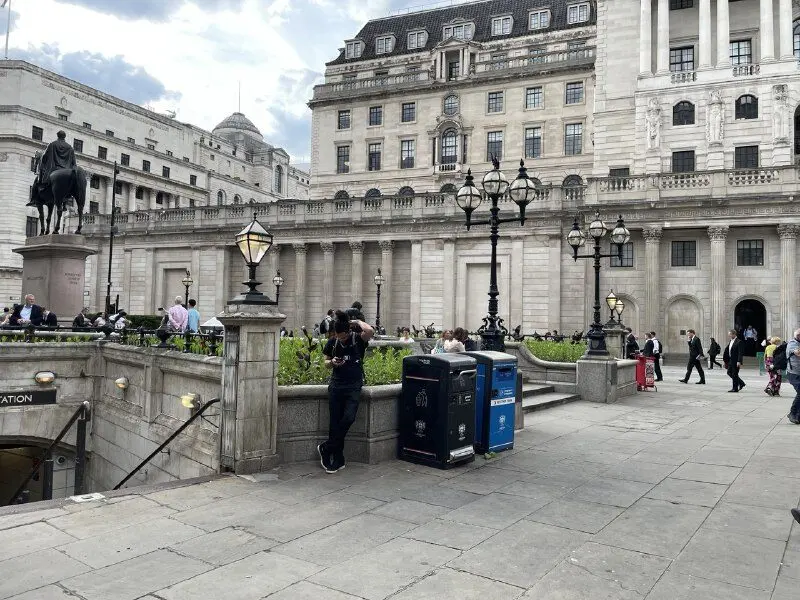
The Bank of England left Bank Rate at 3.75% on 17 September. The Monetary Policy Committee split 6–3: six voted to hold, three voted to raise the rate by 0.25 percentage points to 4%. Bank Rate has been at 3.75% since 30 July, and this is the fourth meeting in a row with no change. But the vote looks exactly as it did in July: a third of the committee thinks it is time to go up.
That is a reversal of the familiar picture. In the spring the argument was about when rates would be cut. Now it is about when they might rise.
 ADV · A003We build websites for tradespeople and sole traders — £219Customers see your work and prices and message you straight away. Ready in 3 days, £219 instead of £438.Advertise here
Why did three members vote for a rise?
Because inflation has been climbing for three months and is well above the 2% target: 2.6% in June, 2.9% in July and 3.1% in August. In its statement the committee warned that inflation is "likely to rise further over coming quarters" — meaning the peak is ahead, not behind.
Holding rates while inflation climbs costs a central bank credibility: markets start to wonder whether 2% is still really the target. That is the minority's core argument.
Why did six still choose to hold?
Because the inflation that rose is not the kind Bank Rate acts on. The whole August acceleration came from one line: fuel. Motor fuel is up 23.0% over the year; in a single month diesel added 14.2p a litre and petrol 9.1p. Average August prices were 181.8p for diesel and 161.3p for petrol.
Meanwhile the numbers the committee watches first did not move at all. Core inflation, excluding food, energy, alcohol and tobacco, stayed at 2.6%, exactly as in July. Services stayed at 3.4% — services is where domestic price pressure shows up, because wages are the main cost there. Food and non-alcoholic drinks: 1.3%.
The price of diesel is set by the global oil market, not by a rate in London. Raising Bank Rate because of fuel means hitting mortgages and loans over a line the rate cannot reach.
 ADV · A001ONLYWAY JEWELRY — gold, silver and platinumRings, chains, bracelets, earrings and pendants. Delivery across the UK.Advertise here
The second argument arrived two days before the meeting. Pay in May–July grew 3.9% including bonuses and 3.5% excluding them — the slowest since 2020. Regular private-sector pay rose 2.9%, public sector 6.3%. The wage spiral the committee feared for two years is slowing down.
What happens to rates next?
The next decision is on 5 November, and it is a "long" one: it comes with a full Monetary Policy Report and fresh forecasts for inflation and the economy. The last meeting of the year is on 17 December.
In between, on 28 October, the Chancellor delivers the Autumn Budget, and on 21 October the ONS publishes September inflation — the figure used to uprate pensions and benefits. The November meeting will have both in hand.
The practical takeaway for borrowers: there is currently no basis for assuming that rates are about to fall and that fixed deals will get cheaper on their own.
What does the decision mean for mortgages?
If you are on a tracker, nothing changed today: the rate is the same and so is your payment. If you are on a standard variable rate, the same applies — but SVRs are expensive anyway, typically 6–7% at most lenders, and sitting on one is the costliest way to hold a mortgage.
A fixed deal is untouched until it ends; that rate is in your contract. But the deal you take afterwards will be priced off today's picture, not off the spring's expectations of cuts.
One detail worth knowing: nobody actually pays 3.75%. On the Bank's own figures, the average effective rate on newly drawn mortgages was 4.45% in July, up from 4.35% in June, while the average across all outstanding mortgages was 3.97%. A new borrower pays almost 0.7 percentage points above Bank Rate, and over the month that gap widened rather than narrowed. The cheapest fixes on the market start at roughly 4.6–4.7%, and they track market expectations years ahead rather than Bank Rate itself.
What does it mean for savings?
A pause means several more months in which a savings account pays far more than a current account. The gap is large: the average rate on new household fixed-term deposits was 4.21% in July (4.30% in June), while money sitting in current accounts and instant-access balances earns an average of just 1.65%.
That is 2.5 percentage points a year for nothing — £250 on every £10,000, purely for keeping the money in the wrong place. The best easy-access accounts currently pay above 4%, and three- to five-year fixes pay above 5%.
What should you do this week?
First, check the end date of your fixed deal, in the contract or in your annual statement. Under the Mortgage Charter, signed by 47 lenders covering around 90% of the market, you can lock in a new rate up to six months before your current deal ends, and if the same lender launches a better offer before it starts, you can ask to switch to it. Booking a rate commits you to nothing — you can walk away.
Second, move cash off your current account into a fixed-term savings account or an ISA. It takes an evening, and new deposit rates have been drifting down for three months.
Third, if you are on an SVR, do the maths. The difference between 6–7% on an SVR and a fix from 4.6% on £200,000 of debt runs into hundreds of pounds a month.
What else did the Bank decide the same day?
Alongside the rate decision the Bank published a market notice on its gilt portfolio: the committee is following a multi-year path to reduce that portfolio to zero, through £20 billion of annual sales alongside maturing bonds. This does not affect household bills directly, but it does affect gilt yields — and fixed mortgage rates are priced off those.
When are the next numbers due?
21 October: September inflation. 28 October: the Autumn Budget. 5 November: the rate decision with the Monetary Policy Report. 17 December: the final meeting of the year.
All the key dates, bank holidays and decision days are collected in the ONLYWAY calendar, day by day with explanations.
Read also: Your mortgage fix is ending: how to lock a rate six months ahead · Inflation accelerates to 3.1% · Autumn Budget set for 28 October
Thanks for £1If this information was useful and came in time, press the heart. Payment goes through PayPal, with nothing to choose and nothing to fill in, and it pays for the newsroom.
- Bank Rate maintained at 3.75% — September 2026 Monetary Policy Summary and minutes, Bank of England
- Interest rates and Bank Rate: our latest decision — Bank of England
- Monetary Policy Committee dates for 2026 and 2027 — Bank of England
- Asset Purchase Facility: Gilt Sales — Market Notice, 17 September 2026, Bank of England
- Money and Credit — July 2026, Bank of England
- Consumer price inflation, UK: August 2026 — Office for National Statistics
- Average weekly earnings in Great Britain: September 2026 — Office for National Statistics
- Base rate held again at 3.75% — MoneySavingExpert, 17 September 2026


- Housing Drought: minister lets the Agency take more water to avoid rota cuts
- Markets UK firms set for more than £330m in export contracts in Guinea and Benin
- Life A London concert cancelled back in March is still on sale for 4 October — and the full Russian-language listings for October
- Life See London from above for free: four viewpoints and their entry rules
- Housing Damp and mould in a rented flat: strict repair deadlines are coming to private landlords
- Life Russian-language events in London: verified dates to December 2026
- Books Book at bedtime: Pride and Prejudice and the price of a good match