UK food prices: the basket, the pint and the fish supper
Food inflation is 1.3%, a five-year low, but nothing got cheaper. A single adult's weekly food budget is £79.71, a pint £5.34, a fish supper £11.17. And why the official pint series stopped in January 2025.
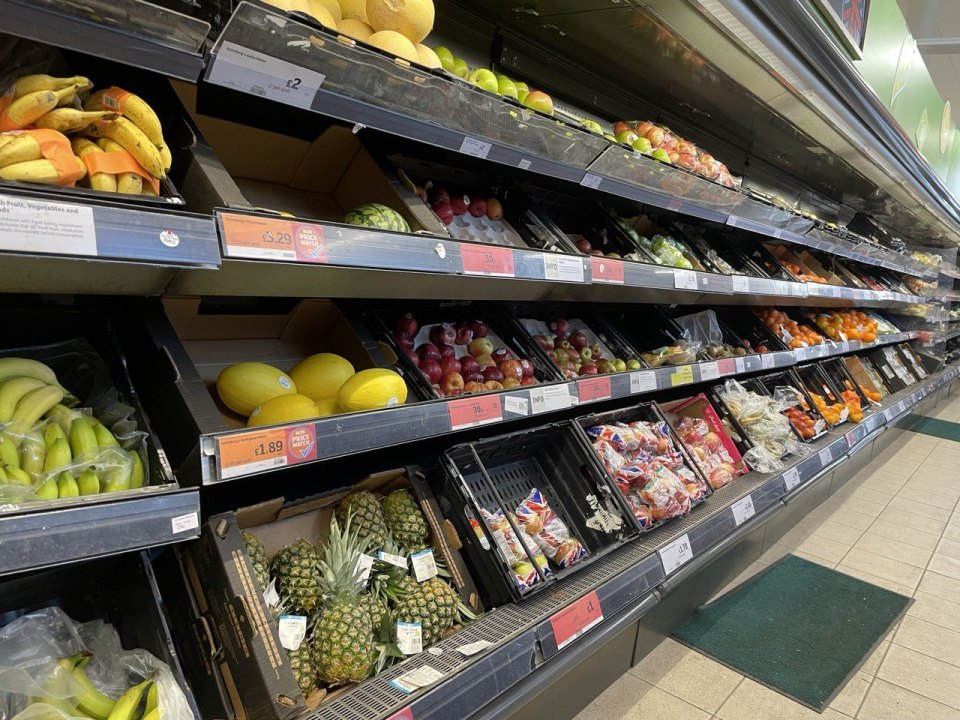
Food inflation in the UK is at its lowest in five years — and that is precisely the figure that misleads. Here is what the official statistics show, what a minimum food basket costs, and what a pint and a fish supper cost. And why ONLYWAY NEWS is starting to count it ourselves.
What do the official figures say right now?
The latest Office for National Statistics bulletin was released on 16 September 2026 and covers August. Headline CPI inflation was 3.1% over the year, up from 2.9% in July. Food and non-alcoholic drinks ran at 1.3%, unchanged from July.
 ADV · A003We build websites for tradespeople and sole traders — £219Customers see your work and prices and message you straight away. Ready in 3 days, £219 instead of £438.Advertise here
The ONS notes that the rate was last lower in September 2021, at 0.8%. Food's contribution to the headline rate was 0.11 percentage points, the smallest since that same month.
Why does low inflation not mean things got cheaper?
Because inflation measures the speed of price rises, not the level of prices. At 1.3% a year, prices are still going up, just slowly. Month on month, from July to August, food rose another 0.4% — exactly as it did in the same month a year earlier.
Put simply: prices have not returned to where they were, they have merely stopped lurching. So the feeling that the shop is still expensive does not contradict the statistics — it matches them.
What does a minimum food basket cost?
The straightest answer comes from the Minimum Income Standard, published on 8 September 2026. It is calculated at Loughborough University for the Joseph Rowntree Foundation: members of the public in focus groups decide what a minimum acceptable standard of living requires, and researchers then price it.
Weekly food budgets as at April 2026: a single working-age adult £79.71; a pensioner couple £132.53; a lone parent with two children £152.12; a couple with two children £211.49.
 ADV · A001ONLYWAY JEWELRY — gold, silver and platinumRings, chains, bracelets, earrings and pendants. Delivery across the UK.Advertise here
For comparison, ONS figures put total spending by the average British household at £676.60 a week.
How much do you need to earn?
On the same research, reaching a minimum acceptable standard of living in 2026 takes: £31,500 a year before deductions for a single adult; £44,800 between a couple without children; £67,600 for a lone parent with two children in private rented housing; and £77,400 between a couple with two children, or £38,700 each.
For pensioners the gap turns on housing: a single pensioner in private rented housing needs £21,300, or £15,900 in social housing. A pensioner couple needs £33,400 and £30,600 respectively.
What does a pint cost?
Here it gets awkward for anyone who checks against government data. The official ONS series for the average price of draught lager per pint stopped at £4.83 and has not been updated since 15 January 2025.
The freshest figure available is an industry survey by The Morning Advertiser, published on 21 May 2026 using April data: the average draught pint is £5.34, up 17p and 3.3% on a year earlier. London is the priciest region at £6.55. The cheapest is the North East at £4.90.
What does fish and chips cost?
ONS figures cited by ITV News on 15 May 2026 put an average fish supper at £11.17. That is up by almost a pound over the year, around 9%. In 2020 the same portion cost £6.65.
Three reasons are given: energy costs, wholesale fish prices and quotas. Under an agreement between the UK, EU and Norway, the cod catch has been cut by 44% on last year over fears that stocks are critically low. Andrew Crook, president of the National Federation of Fish Friers, says wholesale cod has doubled and haddock is "not far behind."
Why are we starting to count it ourselves?
Because the official data on individual items has narrowed. From March 2026 the ONS stopped publishing detailed price-quote microdata for food and alcohol: the statistics are moving to retailers' scanner data, and the agreements with those retailers do not allow publication in the old form. Average prices in the ONS interactive tool are now calculated by product type rather than by broad segment.
The ONS comparison tool remains: more than 650 basket items, with series from January 2020. But the pint froze in government data in January 2025, and the fish-and-chips figure reaches the public only through press reports.
So ONLYWAY NEWS is starting its own record. We will track four things regularly: the annual food inflation rate from the ONS bulletin, the weekly Minimum Income Standard food budgets, the average price of a pint, and the price of a fish supper. Every figure will carry its source and the date it is true for. When a figure goes stale or a source stops updating, we will say so plainly — as we have said today about the pint.
- ONS: Consumer price inflation, UK, August 2026
- JRF: A Minimum Income Standard for the United Kingdom in 2026
- ONS: Family spending in the UK, April 2024 to March 2025
- ONS: RPI average price, draught lager per pint (series CZMS)
- ONS: Changes to the provision of microdata outputs for consumer price inflation statistics
- The Morning Advertiser: average pint price rises 3.3% to £5.34
- ITV News: soaring cost of fish and chips 'unsustainable'
- Travel London Tube and TfL closures in October 2026: the Piccadilly line stops entirely at Halloween, and no Tube to Heathrow on 17–18 October
- Life A London concert cancelled back in March is still on sale for 4 October — and the full Russian-language listings for October
- Life A hundred students walked into an Edinburgh pub? What the viral Reel really shows
- Tax HMRC visits: how to check an officer's identity under the rules updated on 7 October
- Life Russian-language events in London: verified dates to December 2026
- Life GP and NHS dentist appointments in England: how long people really wait
- Life Primary school applications close on 15 January: only 85% of Inner London children get their first choice