Red lines on London roads
Where you can't stop on red lines, and how a single line differs from a double.
Thanks for £1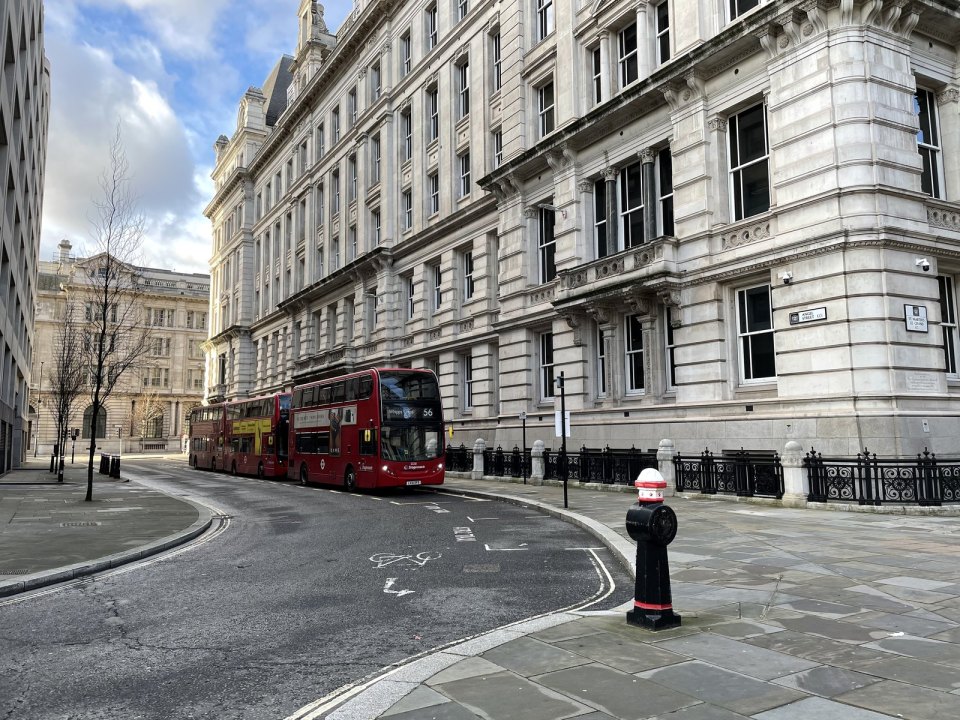
On some British roads the kerbside markings are red, not the familiar yellow. These are "red routes" — major through-roads where stopping is restricted most strictly of all. Mistaking them for yellow lines can cost you a fine. Here is what red lines mean, and where you can still stop, straight from the official Highway Code.
What are red lines and "red routes"?
Red lines are used on some roads instead of yellow ones to mark a "red route", a road with tighter stopping controls. Under the Highway Code, red lines prohibit stopping to park, to load or unload, or to pick up and set down passengers — the only exceptions are licensed taxis and Blue Badge holders (the parking permit for disabled people). The ban applies to the carriageway, the pavement and the verge.
How does a double red line differ from a single one?
A single red line bans stopping during the hours shown on nearby signs. A double red line means no stopping at any time, around the clock, even without extra signs. That is the key difference: a single line has "windows", a double line has none.
Can you stop even for a second?
No. On a red line you cannot even pause briefly to drop someone off or unload — the ban is on stopping itself, not just long parking. The only exceptions are licensed taxis (to set down and pick up) and Blue Badge holders, on the conditions set by the signs and local rules.
So where are you allowed to stop?
Red routes have specially marked bays, with a nearby sign stating the times, purpose and maximum duration. The colour matters: a box marked in red is available only for the stated purpose and only part of the day (for example, outside peak hours). A box marked in white is available throughout the day. Always check the sign beside the bay.
How do red lines differ from yellow?
Yellow lines restrict waiting (parking) but often still allow a quick stop to board or unload. By comparison, a double yellow line bans waiting at any time, yet you can usually set a passenger down on it. A red line is stricter: it bans the stop itself. So do not judge a red line by yellow-line habits.
How do you check the exact rules here?
The Highway Code warns plainly that the markings are only a guide — for the exact restrictions and hours, read the signs at the zone entry or beside the spot. If in doubt, do not stop on a red line: breaking the rule leads to a penalty charge notice (PCN).
Thanks for £1If this information was useful and came in time, press the heart. Payment goes through PayPal, with nothing to choose and nothing to fill in, and it pays for the newsroom.

- Tax Self Assessment: 31 Jan deadline
- Money Do marketplace warehouses give goods away free? The truth about unclaimed parcels
- Law Yellow and red kerb lines: UK rules
- Travel Next-generation airport scanners in Britain: what changes and what can be searched
- Life Free English with a native speaker: how Russian speakers can find a language partner
- Life Royal week: Prince George starts at Eton, Prince William at King Harald's funeral
- Immigration UK Standard Visitor Visa in 2026: Rules, Fees and Duration