The Picture of Dorian Gray: a bedtime book and a walk through Oscar Wilde's London
A novel that pretends to be drawing-room chatter and turns out to be the most unsettling book about beauty and its price — plus a walk through Oscar Wilde's London, still standing.
Thanks for £1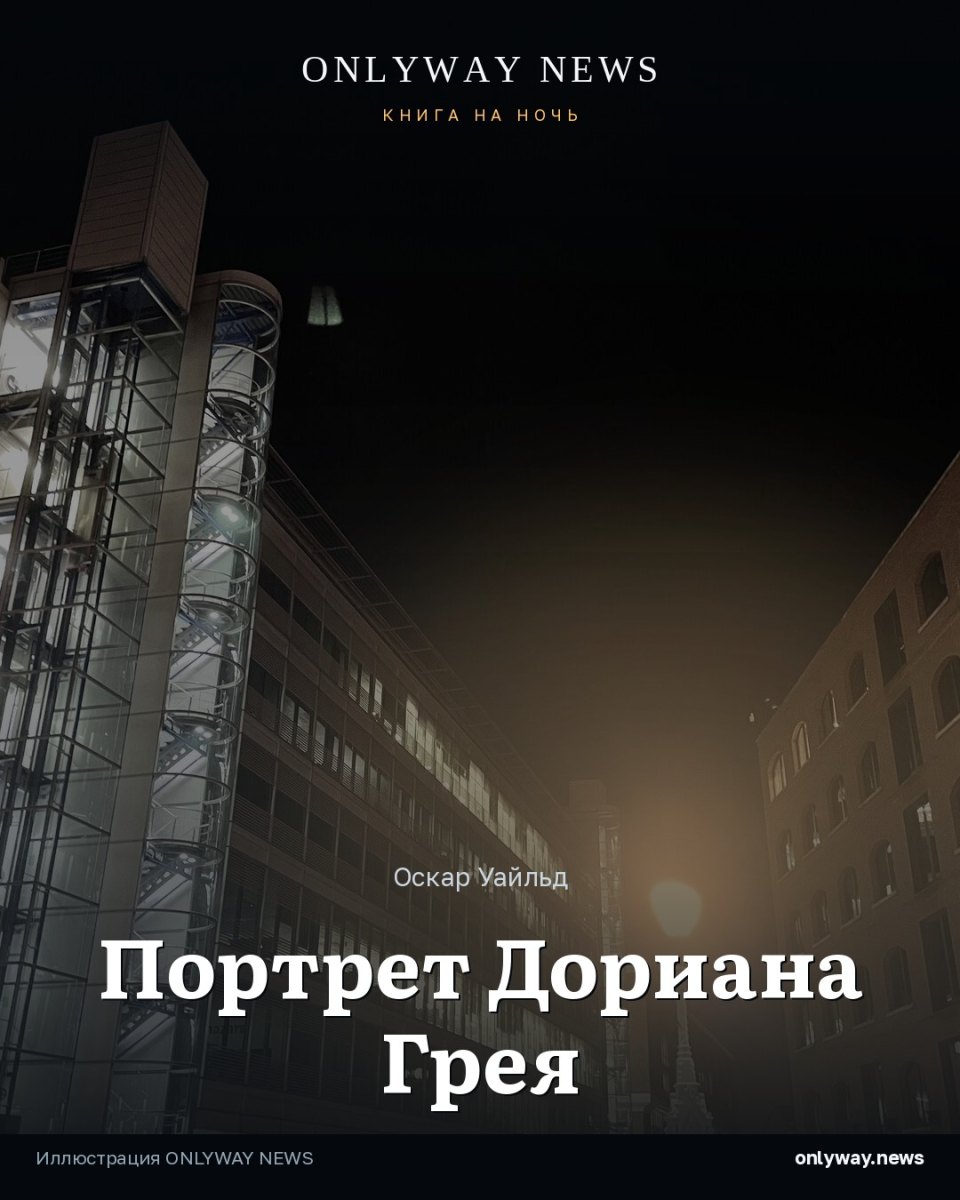
This novel pretends to be a light drawing-room story — and turns out to be one of the most unsettling books ever written about beauty and its price. A young Londoner, Dorian Gray, is given a portrait of himself and makes a wish: let the canvas age instead of him. The wish comes true. Oscar Wilde wrote The Picture of Dorian Gray in the heart of Victorian London — in his own house on Tite Street in Chelsea — and it still reads as a warning: about vanity, about living for show, about the habit of admiring oneself. Open it tonight not for the moral but for the writing: almost every page has a line you will want to copy out. And because Wilde's London is still here to walk.
An extract
The novel opens on a famous summer scene in a painter's studio:
 ADV · A003We build websites for tradespeople and sole traders — £219Customers see your work and prices and message you straight away. Ready in 3 days, £219 instead of £438.Advertise here
«The studio was filled with the rich odour of roses, and when the light summer wind stirred amidst the trees of the garden, there came through the open door the heavy scent of the lilac, or the more delicate perfume of the pink-flowering thorn.»
And here is the line everyone quotes — Lord Henry's: «There is only one thing in the world worse than being talked about, and that is not being talked about.»
Oscar Wilde, The Picture of Dorian Gray (magazine version 1890, full novel 1891). The original text is in the public domain. The complete English text is free and legal to read at Project Gutenberg (link below).
Why read it tonight
If you only know the story from the films, the book will still surprise you. It is not a horror tale about a living picture. It is a novel about the temptation to live as though your actions leave no mark on you — and the mark does appear, just not where you expect. Wilde never lectures: he gives all the best lines to the cynical Lord Henry, and you catch yourself half-agreeing. That is where the unease comes from, and it holds to the last page.
Chapter one is a long, unhurried conversation between two friends in a sunlit studio — about forty minutes read aloud, just right for one evening. We will not give away the ending: you have to reach it yourself.
 ONLYWAY NEWSLIVELaw · 29.10Help with Fees: how to reduce or avoid a court fee in the UKHousing · 29.10Repairs in a rented home: what your landlord must fix and where to complainBooks · 29.10The Picture of Dorian Gray: a bedtime book and a walk through Oscar Wilde's LondonTravel · 29.10Clean Air Zones in England: where you pay to drive and how to check your carMoney · 29.10ISAs in the UK: £20,000 tax-free a year and the 25% Lifetime ISA bonusLaw · 29.10How to make a legally valid will in England and WalesTax · 29.10Capital Gains Tax on selling property in the UK: rates and the 60-day deadlineMoney · 29.10Industrial Injuries Disablement Benefit: up to £233.90 a week for a work injuryTax · 29.10UK tax codes explained: what the numbers and letters on your payslip meanTravel · 29.10Freedom Pass for Londoners aged 66+: free travel and how to applyONLYWAY NEWS · appInstall the ONLYWAY NEWS appFresh UK news, classifieds, key dates and exchange rates on your home screen, one tap away. Free.NewsClassifiedsCalendarRates
About the author
Oscar Wilde (1854–1900) was an Irish writer, poet and playwright, and a star of London society. He was born on 16 October 1854 in Dublin and died on 30 November 1900 in Paris. He was famous for his wit before he was famous for his books. In January 1885 he moved into 34 Tite Street in Chelsea and lived there for about ten years — his most successful period, when he wrote both The Picture of Dorian Gray and The Importance of Being Earnest.
The novel first appeared as a shorter version in the American Lippincott's Monthly Magazine on 20 June 1890 and caused a scandal; in April 1891 Wilde published the expanded text as a book. A few years later, in 1895, he was tried and sentenced to two years in prison; after his release he left for the Continent and died in Paris, a broken man.
Places to visit
Wilde's London is still here, and three stops make an easy evening walk.
«A Conversation with Oscar Wilde» — on Adelaide Street, behind the church of St Martin-in-the-Fields, between Trafalgar Square and Charing Cross station. An unusual bronze by Maggi Hambling: Wilde seems to rise from a granite sarcophagus, cigarette in hand. Unveiled in 1998, it stands in the open air — free to see, at any hour.
Wilde's house — 34 Tite Street, Chelsea, SW3 4JA. He lived here from 1885 and wrote Dorian Gray here; a blue plaque (put up in 1954) marks the front. The house is private, but the plaque and facade can be seen from the street, for free.
The National Portrait Gallery, St Martin's Place, WC2H 0HE — a couple of minutes from the statue. For a novel about a portrait it is the perfect stop, and it holds portraits of Wilde himself. Admission to the permanent collection is free; the gallery is open daily 10:30–18:00, and until 21:00 on Fridays and Saturdays. Check times at npg.org.uk before you go.
Where to get it
Free and legal. The full English text (The Picture of Dorian Gray) is on Project Gutenberg, free to read and download. To find a copy in a library near you, use the Library Hub Discover catalogue, which lists the holdings of hundreds of British libraries. Links are in the sources below.
To buy. An English edition is in every bookshop in Britain. For a Russian translation, try the Russian-language bookshops in the UK — for example Notre Locus. Check the exact edition, availability and price on the shop's own site: we never quote a price from memory.
Thanks for £1If this information was useful and came in time, press the heart. Payment goes through PayPal, with nothing to choose and nothing to fill in, and it pays for the newsroom.
- Project Gutenberg — The Picture of Dorian Gray, Oscar Wilde (полный текст, 1891)
- English Heritage — Oscar Wilde blue plaque, 34 Tite Street, Chelsea
- National Portrait Gallery — visit, opening hours and free admission
- A Conversation with Oscar Wilde (Maggi Hambling, 1998), Adelaide Street — Art UK
- Library Hub Discover — британские библиотечные фонды

- Jobs & Business Post Your Ad Free
- Life Russian-language events in London: verified dates to December 2026
- Life Russian-speaking doctors and clinics in London: eight addresses checked against the registers
- Money A lost or late parcel: the seller is responsible, not you
- Money Check your lender now
- Money Could that call be a trap?
- Life See London from above for free: four viewpoints and their entry rules