The pint after work, Friday, Saturday and Sunday: the unwritten rules of British life
Why people go to the pub to sit rather than to drink, what a round is and why you cannot skip it, where POETS day comes from, why the main match is not on television at three on a Saturday, how many hours you actually have to shop on a Sunday, and how the North differs from the South and Scotland from Wales. Plus seven rules that save a newcomer a year.
Thanks for £1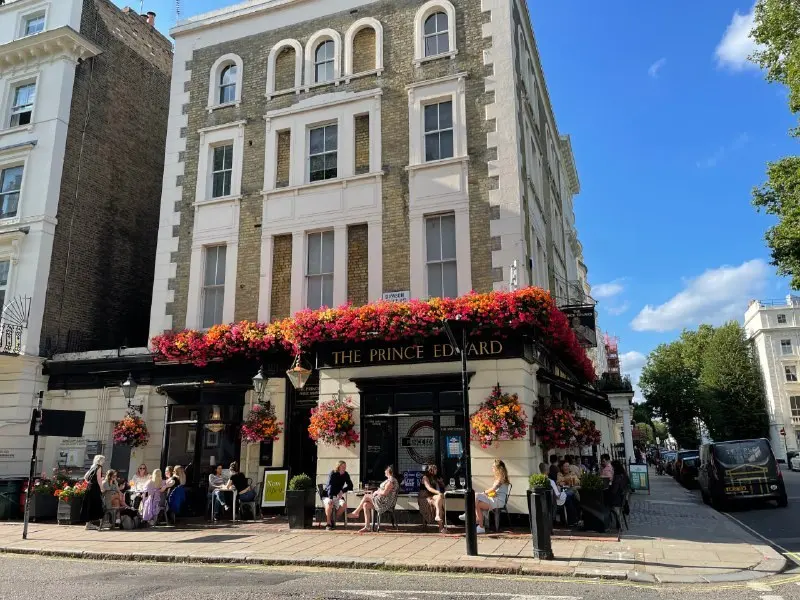
Laws can be read. Custom cannot: either somebody explains it, or you live here for years without understanding why colleagues exchange glances on a Friday, what "you alright?" is actually asking, or why the supermarket shutters come down in front of you at four on a Sunday afternoon. This is a guide to the unwritten rules — the pint after work, what separates Friday from Saturday and Saturday from Sunday, and how differently all of it works in the four corners of the United Kingdom.
Why is the pint after work not about drinking?
Newcomers think the British drink a lot. In fact the British sit a lot. The pub is what sociologists call a third place: not home, not work, neutral ground where two hours can pass without a plan.
 ONLYWAY NEWSLIVEMoney · 21.10Charging an EV at home: from 21 October no permission and up to £300 savedHousing · 21.10What a landlord can legally charge you: eight payments and no moreHousing · 20.10Social housing and domestic abuse: the abuser leaves, not the survivorJobs & Business · 20.10Job offer withdrawn: what you can actually claimHousing · 20.10Deposit withheld for wear and tear: where the line isMoney · 20.10Universal Credit: what you get, and why earning cuts it by 55pLife · 20.10A child passport in the UK: £66.50 online, £80 on paper, five years' validityLife · 20.10Health and your licence: what you must tell DVLA, and the cost of not tellingJobs & Business · 20.10Unpaid parental leave: 18 weeks per child and 4 weeks a yearLaw · 20.10Shop theft in England: seven years maximum, the truth about £200 and what the 2026 Act changesONLYWAY NEWS · appInstall the ONLYWAY NEWS appFresh UK news, classifieds, key dates and exchange rates on your home screen, one tap away. Free.NewsClassifiedsCalendarRates
Hence the central fact: people go to the pub to be somewhere, not to drink. The pint is the entry ticket — the reason you are allowed to occupy a table and talk. The same person can spend three hours over two pints and leave sober, and nothing about that is odd.
The mechanics nobody warns you about:
- You order at the bar. No one comes to the table. Waiting to be served while sitting down can take a very long time.
- You pay as you go. There is no bill at the end.
- You do not tip the bartender. At most, "and one for yourself" — the old way of buying the person behind the bar a drink. Food in a gastropub is tipped; drinks at the bar are not.
- The round. The single most important rule. In a group, one person buys for everybody, and next time somebody else does. Leaving without buying your round is a visible offence. If you drink little or not at all, say so at the start — that is accepted without comment; silently skipping your turn is not.
- Last orders. A bell or a shout of "last orders at the bar" means roughly ten minutes left to order. Then "time", and you finish up.
- The queue at the bar is invisible but real. The bartender remembers who arrived first. Pushing in is the surest way to stay unseen.
And then the arithmetic. The average pint in Britain now costs £5.34 (Morning Advertiser, May 2026): £6.55 in London, £4.90 in the North East. The national spread is more than a pound and a half — around £3.25 in Doncaster and Bradford, while Mayfair bars charge £11 a pint and £12.50 for a 330ml bottle. Meanwhile pubs are closing at eight a week; England and Wales have about 38,780 left, 2,283 fewer than at the start of 2020. The reasons are dull and financial: employer national insurance up, the minimum wage up, and the business rates discount cut from 60% to 25% in April.
What happens on a British Friday?
Friday in Britain is not a day, it is a condition. It even has an office acronym: POETS day — push off early, tomorrow's Saturday. Officially nobody leaves early. In practice the inbox empties after three and the office by five.
What follows depends on where you are. In the City and Canary Wharf the pavements outside pubs fill at six with suits holding pints, because drinking standing on the street outside is entirely normal. In a small town the same evening looks like a full room where everyone knows everyone.
 ADV · A003We build websites for tradespeople and sole traders — £219Customers see your work and prices and message you straight away. Ready in 3 days, £219 instead of £438.Advertise here
Friday is also takeaway night — Indian, Chinese, fish and chips. Cooking on a Friday evening is close to taboo, a ritual refusal of domestic effort.
The practical point for a newcomer: if you are invited "for a quick one after work" on a Friday, it is not a formality but an invitation into the circle. You may decline, but you should go — two hours in a pub will teach you more about the job and the people than a month at a desk.
What does a British Saturday look like?
Saturday is the day of errands and the day of football, and neither interferes with the other.
Morning means the big shop, a trip to the garden centre or the local market, and children's sport — parents standing at the edge of a wet pitch is itself a tradition. Afternoon means the high street: shopping as a leisure activity rather than a purchase.
And at 3pm on Saturdays, historically, football is played. That is not incidental. Saturday at three is sacred in English football, and broadcasts of matches kicking off in that slot are still prohibited on British television — the "3pm blackout", which exists to protect attendance in the lower leagues. So on a Saturday afternoon the pub screen shows anything but the main event, and supporters go to the ground.
Saturday evening is the night out: a restaurant, the cinema, the pub again but a smarter one. It is the one evening of the week for which the British genuinely dress.
What does a British Sunday look like?
Sunday is built around two things: lunch, and slow time.
The Sunday roast is an institution. Roasted meat — beef, lamb, chicken or pork — potatoes crisped in fat, vegetables, gravy and a compulsory Yorkshire pudding. Eaten at home or in the pub, and usually between one and four in the afternoon. Not in the evening, which matters: turning up for a roast at seven on a Sunday means missing it.
Shops open for six hours. Under the Sunday trading rules, large stores in England and Wales may open for only six consecutive hours, typically 11 to 5 or 10 to 4. Small shops are unrestricted. Scotland has no such law at all; Northern Ireland has its own, stricter rules. This is the most common trap for newcomers: "I'll get it on Sunday" — and the shutters are already down.
One more phrase worth knowing: the Sunday scaries, the low Sunday-evening dread of Monday. The British discuss it openly and consider it nothing to be ashamed of.
How do England, Scotland, Wales and Northern Ireland differ?
The South of England. Politeness at a distance. People are warm but do not step into the personal; a conversation with a neighbour can run ten years without leaving the weather and the bins. That is not coldness — it is a way of respecting somebody's edges.
The North of England. A different temperature. In Yorkshire or Lancashire strangers speak to you in the queue, on the bus and at the till, and call you love, duck or pet. It is not familiarity, it is the norm. The pub there is more often genuinely a neighbourhood one rather than an office one.
Scotland. A directness southerners occasionally read as sharpness. People here are likelier to say what they think. Its own calendar too: Hogmanay matters more than Christmas, bank holidays do not line up with England's, and school terms even less. Sunday trading is unrestricted.
Wales. The language is daily life rather than a museum: road signs are bilingual and Welsh is taught in schools. The singing is not a stereotype — the choral tradition is alive, and on a rugby international the country looks like nothing England ever looks like.
Northern Ireland. The most hospitable part of the kingdom and the most complicated. More than anywhere else, it matters which area you are from, which school you went to and how you pronounce the name of the second city — Derry or Londonderry. For a newcomer there is one rule: listen, do not guess, and do not take a side.
Which unwritten rules should you know straight away?
- The queue is sacred. It exists even where you cannot see it — the bus stop, the bar, the till. Jumping it is the one thing that will make a polite British person raise their voice.
- "Sorry" is not an apology. It is lubricant. It is said when they step on your foot and when you step on theirs. The correct reply is also "sorry".
- "You alright?" means hello. It is not asking after your health. The answer is "Yeah, you?"
- The weather is not small talk. It is the protocol for opening contact. Failing to play along is rude.
- "Not bad" means good. "Quite good" means average. "Interesting" often means "I didn't like it." The understatement is not insincerity; it is a way of not pressing.
- Complaining loudly is not done. Complaints are made in writing, politely and persistently — and, oddly, that works better.
- You bring something. A bottle, a box, something. Arriving empty-handed is noticed and never mentioned.
None of this is law and none of it can be broken illegally. But it is what decides whether you feel like part of the room or a guest in it. The good news: the rules are simple, and they are learned in that same pub on a Friday evening, faster than in any classroom.
Read next: What to do in London on 12–14 September: Open House, the… · London on Sunday 13 September: what is free and what you pay…
Thanks for £1If this information was useful and came in time, press the heart. Payment goes through PayPal, with nothing to choose and nothing to fill in, and it pays for the newsroom.
- Housing Drought: minister lets the Agency take more water to avoid rota cuts
- Travel Jubilee line part suspended to Stanmore after fire alert
- Life A London concert cancelled back in March is still on sale for 4 October — and the full Russian-language listings for October
- Life Russian-language events in London: verified dates to December 2026
- Travel London Tube and TfL closures in October 2026: the Piccadilly line stops entirely at Halloween, and no Tube to Heathrow on 17–18 October
- Jobs & Business From 1 October, right to work checks reach couriers, subcontractors and platform workers
- Money Section 75 and chargeback: how to get your money back in the UK