Churches and religion in Britain
Christians are now under half, a third have no religion. Who heads the church, its wealth and churches.
Thanks for £1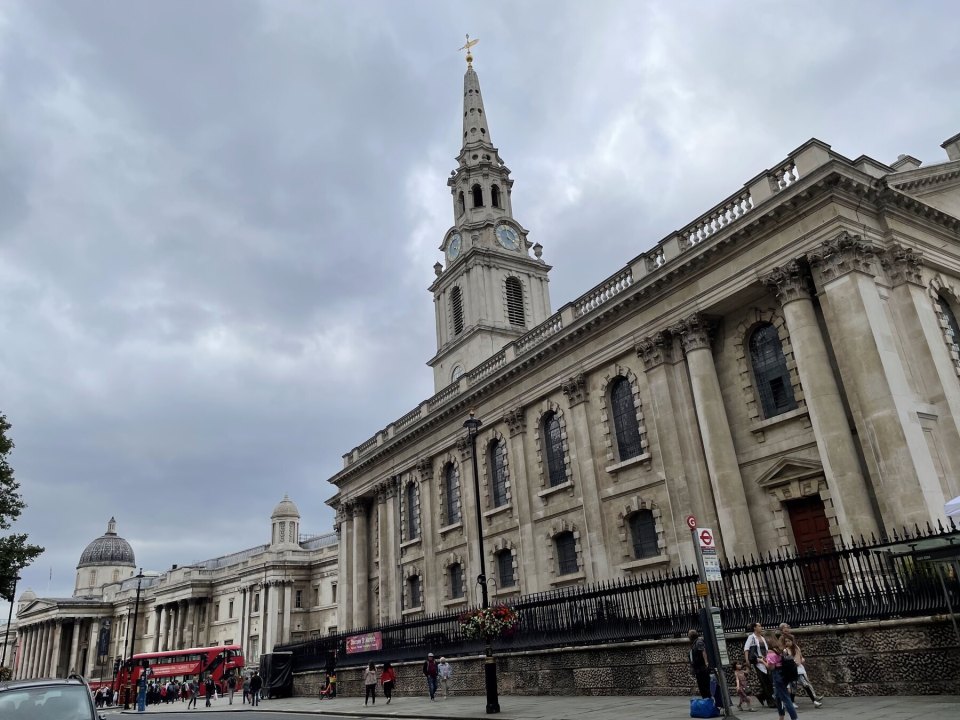
Red-brick cathedrals and the white columns of St Martin-in-the-Fields by Trafalgar Square — churches have long been part of the British landscape. But faith in the country is changing fast. Here it is in business terms and without judgement: what Britons believe, which church counts as the main one, how much money and how many buildings it has, and where a newcomer should go.
What do Britons believe?
In the 2021 census for England and Wales, 46.2% called themselves Christian — under half for the first time (it was 59.3% in 2011). "No religion" was the answer for 37.2%, almost a third, and the fastest-growing one. Muslims were 6.5%, Hindus 1.7%, Sikhs 0.9%, Jews and Buddhists 0.5% each. Scotland is even more secular, with about half the population having no religion. The trend is clear: fewer Christians, more non-believers and more Muslims.
Which church is the main one?
In England the state ("established") church is the Church of England (Anglican). Its head is the monarch: King Charles III holds the titles "Supreme Governor" and "Defender of the Faith". Twenty-six bishops sit in the House of Lords and take part in making laws. Scotland's national church is different — the Presbyterian Church of Scotland; Wales and Northern Ireland have no established church at all. So there is no single "British church"; each part of the country has its own arrangement.
 ADV · A001ONLYWAY JEWELRY — gold, silver and platinumRings, chains, bracelets, earrings and pendants. Delivery across the UK.Advertise here
How much money and how many buildings?
The Church of England has about 16,000 parish churches and 42 cathedrals, many protected as heritage. Its investment fund (the Church Commissioners) is valued at around £10bn, invested in property and shares — one of the richest institutions in the country. The church lives on income from the fund, donations and tourism: entry to cathedrals such as St Paul's is paid, and that is a notable earner.
Does anyone actually go?
Regular attendance has long been falling: only a few hundred thousand people across the country go to Anglican churches on a Sunday. But the picture is uneven: some congregations are growing instead — evangelical and Pentecostal churches, often among people from Africa and other migrant communities. So an empty medieval church and a packed modern congregation sit side by side in one city.
Where should a newcomer go?
For Russian-speakers, big cities have Orthodox parishes — Russian, Ukrainian, Romanian, Greek; there are many Catholic churches attended by Poles and Lithuanians; and there are mosques, synagogues, gurdwaras and Hindu temples. Services are usually free, and many churches also give out free food, run English classes and help migrants with paperwork — so they are a practical anchor, not only a place of prayer.
What about freedom of religion?
By law Britain has full freedom of religion: you may practise any faith or none, and discrimination by religion at work is banned. At the same time the Church of England keeps a special role — the coronation, seats in parliament, ties to the crown. The verdict, without judgement: at the top the country is officially Christian, while in daily life it is increasingly secular and multi-faith.
Thanks for £1If this information was useful and came in time, press the heart. Payment goes through PayPal, with nothing to choose and nothing to fill in, and it pays for the newsroom.
- Tax Self Assessment: 31 Jan deadline
- Money Do marketplace warehouses give goods away free? The truth about unclaimed parcels
- Law Yellow and red kerb lines: UK rules
- Life Royal week: Prince George starts at Eton, Prince William at King Harald's funeral
- Immigration UK Standard Visitor Visa in 2026: Rules, Fees and Duration
- Immigration UK visitor visa step by step 2026: timing, cost, biometrics and how long it takes
- Life Use by vs best before dates