NatWest: from public to private
The state owned NatWest for 17 years and exited in 2025. The rescue cost £45.5bn. Terms, prices, owner.
Thanks for £1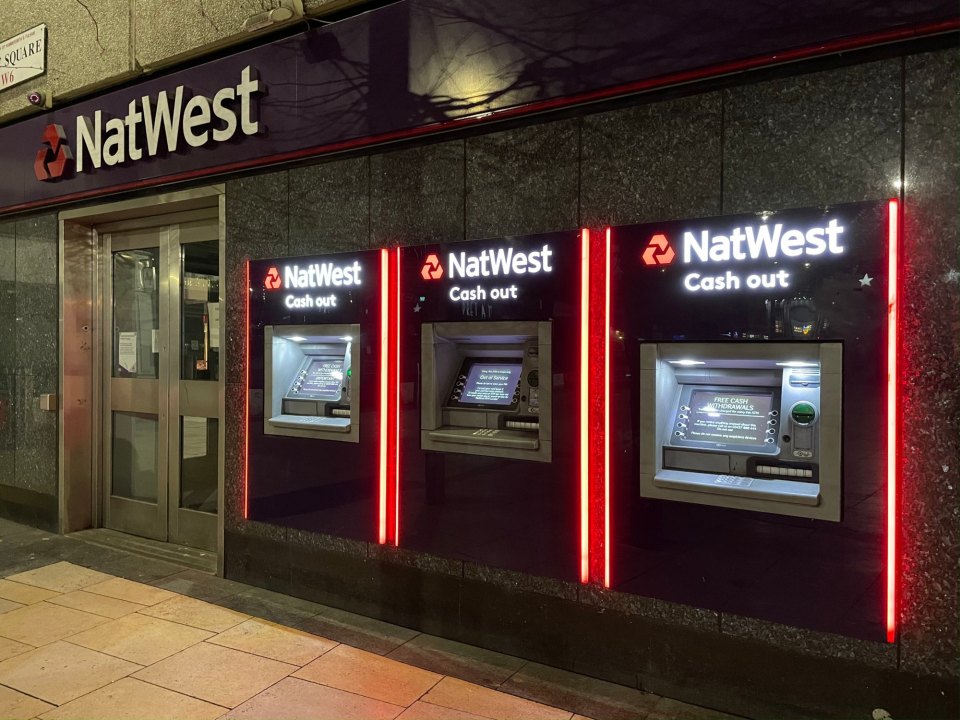
NatWest's red cash machines marked "Cash out" with free withdrawals stand on many London streets. Behind that sign is one of Britain's biggest banks and a rare story: for 17 years it was effectively owned by the state. Here it is in business terms: who owns it, what the bank offers, terms for newcomers, prices and turnover — with numbers.
Who owns it — and why the state?
In the 2008–2009 crisis the state rescued the bank RBS (today NatWest), injecting £45.5bn and taking up to 84.4% of the shares. For seventeen years the main shareholder was the taxpayer. On 30 May 2025 the government sold its last shares — and NatWest became fully private again. About £35bn was recovered, so the Treasury lost around £10.5bn. The bank trades on the London Stock Exchange (FTSE 100) and owns the NatWest, Royal Bank of Scotland and Coutts brands.
The bank's yearly figures
This is a banking giant. In 2024 its operating profit before tax was £6.2bn, and it has over 19 million customers across the country. Yet it is shrinking offline: the workforce was cut by more than 3% over the year, 10% in retail, closing branches and moving people to the app. The three machines in the photo (one "Out of Service") are a sign of that shift to self-service.
 ONLYWAY NEWSLIVEMoney · 27.11McDonald's in Britain: figuresLife · 27.11Churches and religion in BritainLife · 27.11City dragons: why fourteenMoney · 27.11NatWest: from public to privateLife · 27.11Early morning coffee in LondonLaw · 27.11Free water in pubs: the lawTravel · 27.11Train complaints: where to goJobs & Business · 27.11Tips: the law on fair sharingLife · 27.11Why UK museums are freeLife · 27.11Bathing water quality in EnglandONLYWAY NEWS · appInstall the ONLYWAY NEWS appFresh UK news, classifieds, key dates and exchange rates on your home screen, one tap away. Free.NewsClassifiedsCalendarRates
What it offers and what it costs
The current account is free, with no monthly fee, and withdrawals at the bank's ATMs are free, as the screen says. Abroad it costs more: a fee on foreign-currency transactions of about 2.75%. The arranged overdraft is dear — around 39.9% a year (representative). But there is a strong app: instant Faster Payments transfers, one-tap card freeze, round-ups into savings.
Accessibility for newcomers
A newcomer can open an account too: you need a photo ID (passport) and proof of a UK address, and a basic account does not require a long credit history. The bank is "digital by default", with much done in the app. But there are fewer branches, so if seeing someone in person matters, check first whether the nearest office is open, and bring your documents.
Cash and ATMs — what's changing?
Cash is fading, and free ATMs across Britain are closing in numbers: the free network has thinned noticeably in recent years, with some machines going paid. NatWest still keeps free withdrawals at its own machines, but a queue for a human cashier in a branch is ever harder to find. For those used to cash, it is a signal: get comfortable with the card and app, or you may end up paying to take out money in the wrong place.
What it means for a customer
NatWest is a big, stable and now fully private bank with a handy app and a free account. The downside is few branches, so it suits those happy to live "in the phone". It is accessible to a newcomer, but go to an office with a full set of documents. And the bank's history is a good lesson: even giants are sometimes rescued at the taxpayer's expense, and the whole country pays for it.
Thanks for £1If this information was useful and came in time, press the heart. Payment goes through PayPal, with nothing to choose and nothing to fill in, and it pays for the newsroom.
- Tax Self Assessment: 31 Jan deadline
- Money Do marketplace warehouses give goods away free? The truth about unclaimed parcels
- Law Yellow and red kerb lines: UK rules
- Life Royal week: Prince George starts at Eton, Prince William at King Harald's funeral
- Immigration UK Standard Visitor Visa in 2026: Rules, Fees and Duration
- Immigration UK visitor visa step by step 2026: timing, cost, biometrics and how long it takes
- Life Use by vs best before dates