An honest token, not a pyramid
If crypto is a pyramid, an honest token differs: backed by silver and a real service. A worked example.
Thanks for £1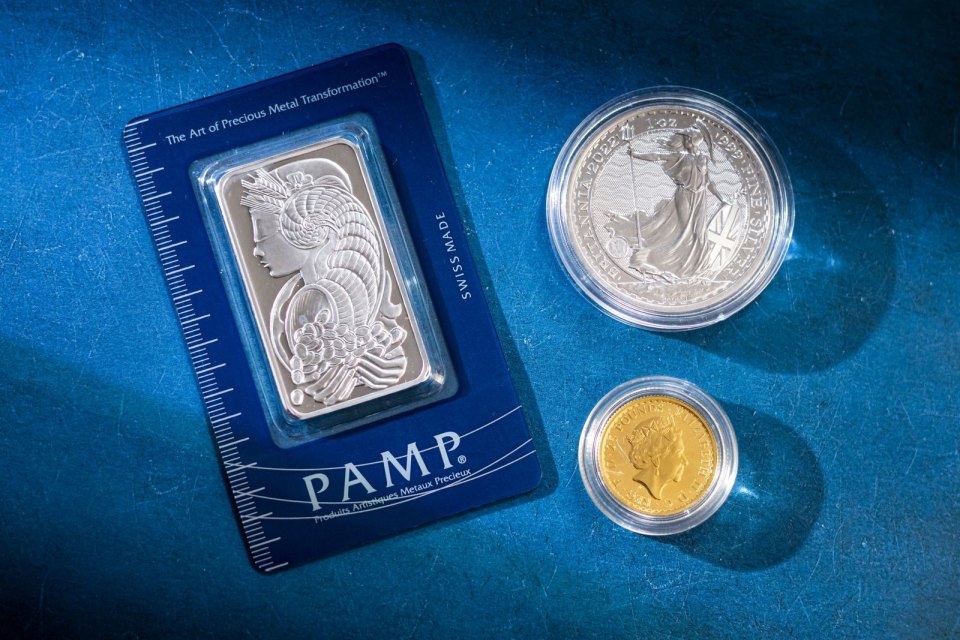
In our last column we explained why cryptocurrency looks like a pyramid: its price rests on the inflow of new buyers, not on anything real. The logical question is — can there be an honest digital value? Yes, if a token has two foundations: real backing (metal) and a real service. Let us show it with a concrete example — the jeton we have in mind for our own app, Taksofon. A caveat up front: this is not an offer to invest and not investment advice; the project is in development.
How does an honest jeton differ from crypto?
The difference is what stands behind the price. Behind a speculative coin — nothing but the hope that the next person pays more. Behind an honest jeton — a concrete asset and a concrete use: its price is tied to metal, and you can spend it on a real service. Not "get in before the crowd," but backing plus utility. That is closer in logic to money than to a bet in a casino.
A silver peg — how it works
The idea is simple: 1 jeton = a fixed number of micrograms of silver. And crucially — for every jeton issued, that silver (or the money for it) is actually held, with the right to redeem and an independent audit. Silver costs around £0.8 a gram on the market (the exact price taken on the day), so a microgram is a fraction of a penny; the jeton's "weight" is set to fit the tariff so one service costs a convenient number of jetons. Both jeton and tariff are counted in silver — so a ride always costs the same number of jetons.
 ONLYWAY NEWSLIVEMoney · 26.11An honest token, not a pyramidLaw · 26.11Cafe tables on the pavement: licenceMoney · 26.11Crypto will vanish. What staysMarkets · 26.11Camden: a £1.25bn marketJobs & Business · 26.11Statues: who makes and cleansHousing · 26.11Skip and scaffolding on the roadHousing · 26.11Conservation area: what you can't doUK & Politics · 26.11How to save a local pubLaw · 26.11Bike stolen: what to doHousing · 26.11Playgrounds in courtyardsONLYWAY NEWS · appInstall the ONLYWAY NEWS appFresh UK news, classifieds, key dates and exchange rates on your home screen, one tap away. Free.NewsClassifiedsCalendarRates
Where do the jetons come from?
Jetons are born not "from a growing crowd" but when a user puts in value, against which silver is bought. More users — more contributions — more backing — more jetons. The quantity grows with the service, but behind every jeton stands metal, not the expectation of the next buyer. It is the same idea of "issuance by number of users", but without a pyramid.
The red line: what an honest jeton does not do
It does NOT rise in price "because more people came" — otherwise it would be that very pyramid. Price is set by silver, not by the crowd. If the project grows, the benefit is given another way: discounts, referral bonuses, a share in the company itself — but not by inflating the jeton's price. You cannot both peg a jeton to silver and promise it will rise with the number of subscribers: one cancels the other.
It is digital value, but not a "coin on an exchange"
Such a jeton is closed and controlled, tied to an asset and redeemable. In logic it is closer to a state's digital money (backing plus stability) than to speculative crypto with a floating price. The user gets a convenient digital "travel pass" whose value does not evaporate overnight, because real metal sits beneath it.
What is needed to launch it legally?
Honestly about the limits: a token tied to metal and exchangeable for money is, in Britain, a regulated product (FCA; in the EU, the MiCA rules). That means first a lawyer, the backing and most likely a licence, and only then a launch. This is not a "coin in five minutes". To repeat: this piece explains the idea of honest digital value, it does not offer anything for sale, and it is not investment advice.
Thanks for £1If this information was useful and came in time, press the heart. Payment goes through PayPal, with nothing to choose and nothing to fill in, and it pays for the newsroom.


- Life Nemnogo Nervno’s Kateryna Gopenko plays London on 20 November
- Tax Self Assessment: 31 Jan deadline
- Money Do marketplace warehouses give goods away free? The truth about unclaimed parcels
- Life Russian-speaking doctors and clinics in London: eight addresses checked against the registers
- Life Royal week: Prince George starts at Eton, Prince William at King Harald's funeral
- Immigration UK Standard Visitor Visa in 2026: Rules, Fees and Duration
- Immigration UK visitor visa step by step 2026: timing, cost, biometrics and how long it takes