Playgrounds in courtyards
A courtyard playground costs from £60,000, paid by residents. The 10 sqm-per-child rule and who earns.
Thanks for £1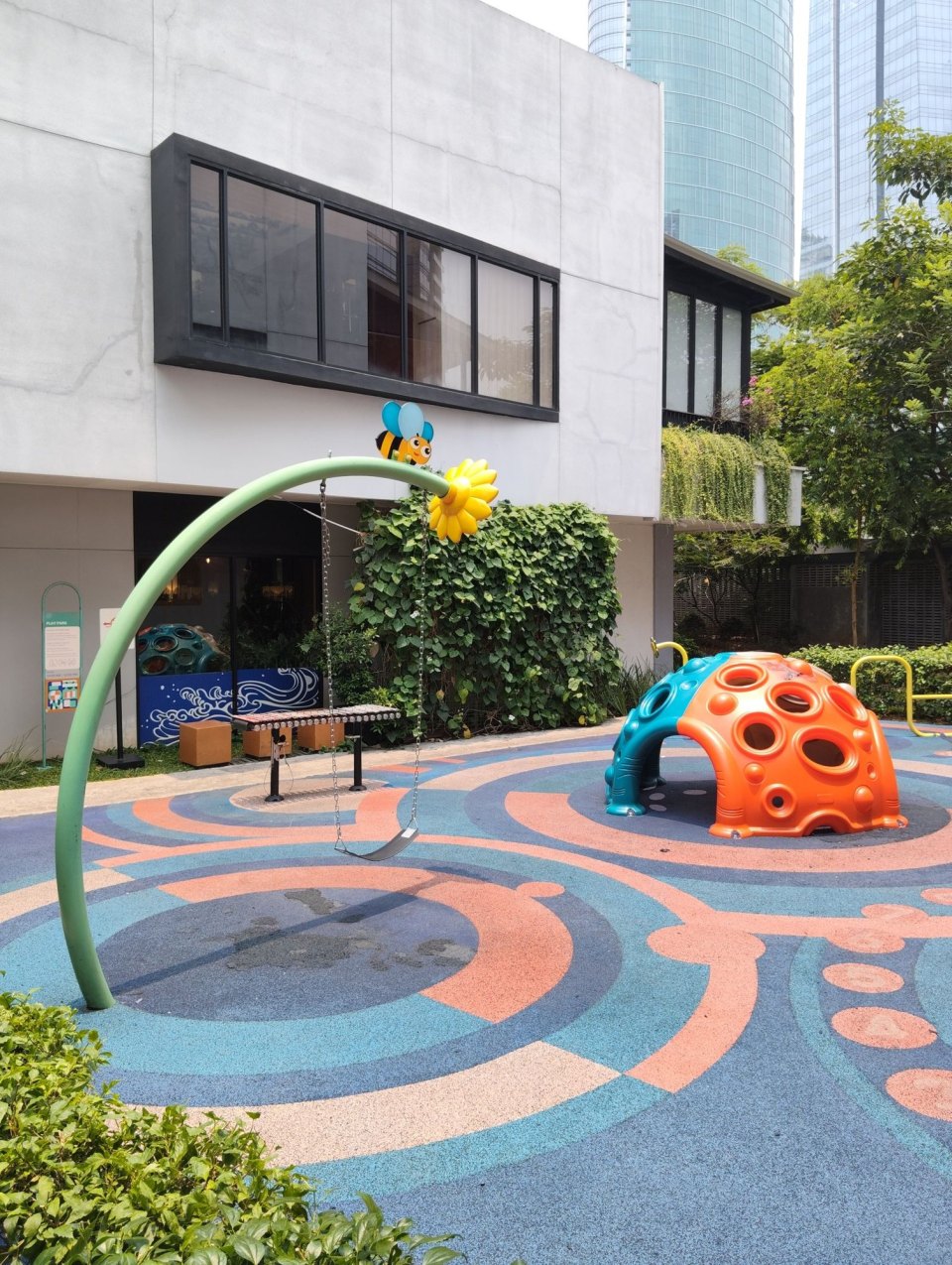
Courtyards of new housing developments often have a children's playground. Behind it sit rules, money and a whole market. Here it is in business terms: who must provide one, what it costs, who pays for upkeep, what the big scandal was, and who earns from children's playgrounds — all with numbers.
Who must provide a playground?
London has a standard from the London Plan: new housing must provide 10 square metres of play space for every child expected among residents. The playground is provided by the developer — a condition of planning permission (through a Section 106 agreement). The more family flats in a scheme, the more play space the law requires in the courtyard.
What does it cost to build?
The money is serious. By the maker Kompan's own figures, a playground in a residential courtyard costs about £61,654, in a preschool £98,893, in a school £114,758, and a big one in a park £190,798. The split: the equipment itself is about 60% of the budget, safety surfacing about 20%, installation about 10%, the rest freight. So the lion's share goes not on concrete but on slides, swings and safety flooring.
Who pays for upkeep?
Here is what a buyer should know: in new developments the courtyard playground is maintained by the residents themselves — through the management company's service charge. In public parks playgrounds are the council's, but budgets have been cut: council spending on play services has fallen by at least 54% since 2008–09. So old playgrounds are often closed or left unrepaired, while new ones are shifted onto residents.
The scandal: playgrounds "for our own"
The big story of 2019 was the Baylis Old School scheme in Lambeth. Children from social-rent flats were walled off from the communal courtyard playground used by residents of the "bought" flats. The press called it "poor doors for playgrounds." There was an outcry, the Mayor of London and the government condemned the practice and moved to ban segregated play areas in new housing. The lesson: a "communal" playground must be communal for all.
Who makes them and who gains?
The equipment is made by specialist firms. The world's biggest maker is Denmark's Kompan; it was built up and then sold by the investment fund Nordic Capital, so serious capital stands behind the play structures. The oldest British maker is Wicksteed, founded by Charles Wicksteed back in 1920. The market grows about 5% a year. The winners are the makers (big orders), the installers and the developers, who sell flats as "family-friendly".
What should a family check?
Before buying or renting in a new scheme, check three things: whether the playground really is open to all residents with no "separate entrances", who maintains it, and how much that costs in the service charge. A good courtyard playground adds value to a home; a neglected or "for our own" one is the opposite — a warning sign and a reason to haggle or look elsewhere.
Thanks for £1If this information was useful and came in time, press the heart. Payment goes through PayPal, with nothing to choose and nothing to fill in, and it pays for the newsroom.
- Life Nemnogo Nervno’s Kateryna Gopenko plays London on 20 November
- Tax Self Assessment: 31 Jan deadline
- Money Do marketplace warehouses give goods away free? The truth about unclaimed parcels
- Life Russian-speaking doctors and clinics in London: eight addresses checked against the registers
- Life Royal week: Prince George starts at Eton, Prince William at King Harald's funeral
- Immigration UK Standard Visitor Visa in 2026: Rules, Fees and Duration
- Immigration UK visitor visa step by step 2026: timing, cost, biometrics and how long it takes