Bollards: cannons and automatics
A removable post £100–500, an automatic one from £3,000. Who installs them and who owns the market.
Thanks for £1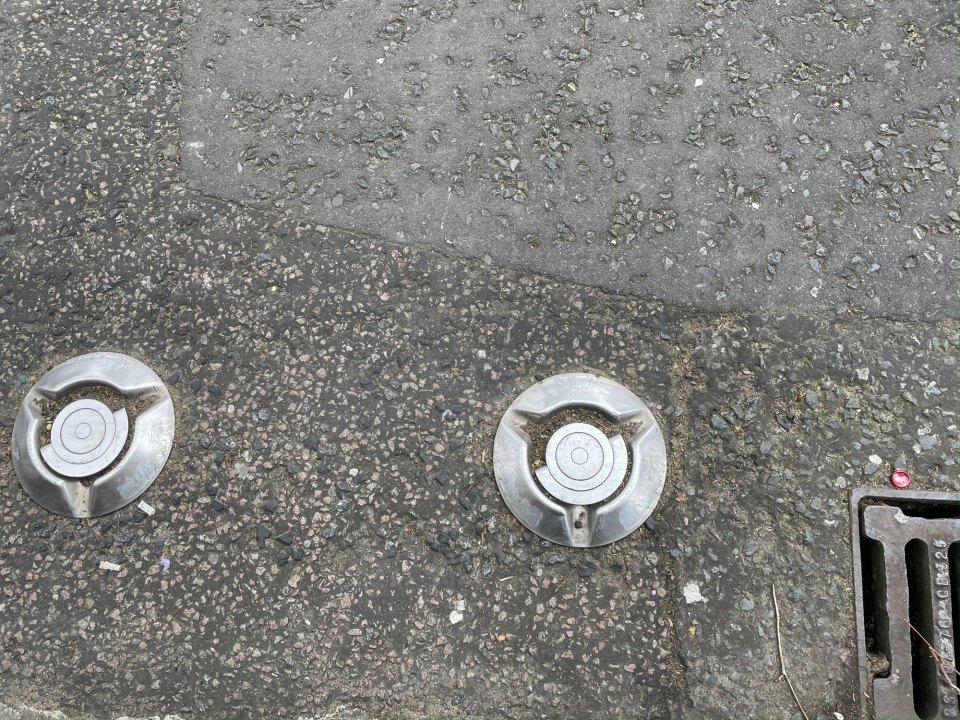
Two kinds of post stick out of the city's pavements: shiny removable "mushrooms", as in the photo, and old cast-iron "cannons". Both are bollards — entry restrictors — and behind them sits a big market. Here it is in business terms: who may install them, how an automatic system differs from a concrete block, what it costs, who makes them and who is the market's main beneficiary.
Who may install a restrictor?
On your own land — a yard entrance, a car park, a private drive — the owner installs a bollard freely. But on the pavement or a public road you may not put up anything yourself: it is the highway authority's (council's) land, and an unauthorised post blocking a footway or a dropped kerb is fined and removed. The council grants permission; in a conservation area you also need planning consent. Anti-terror bollards around buildings are agreed with the council and police.
Automatic versus a concrete block
The difference is fundamental. An automatic rising bollard (hydraulic or electro-mechanical) hides in the ground and rises on a fob, intercom or number-plate recognition: it lets residents in and keeps others out. Convenient, but it needs power, controls and servicing. The fixed option — a permanent post, one removable with a key, or just a concrete block or planter — has no moving parts, is cheap and reliable, but must be moved by hand. For ramming protection the crash rating to PAS 68 / IWA 14 matters: such bollards stop a lorry.
 ADV · A003We build websites for tradespeople and sole traders — £219Customers see your work and prices and message you straight away. Ready in 3 days, £219 instead of £438.Advertise here
What does it cost?
| Type | Price each |
|---|---|
| Fixed steel | £60–130 |
| Concrete | £75–150 |
| Folding parking | £70–180 |
| Removable / telescopic | £100–500 |
| Automatic rising | from £3,000 (installed) |
Installing a simple post adds £100–250 each. Automatics cost several times more: they need a cable, a drive and a control unit, and serious crash-rated models for secure sites run to tens of thousands.
Who makes them and who leads the market?
Bollards in Britain are made by ATG Access, Marshalls, Heald, Avon Barrier, Frontier Pitts and Autopa, with heritage ones by Furnitubes. The market's main beneficiary is the listed group Hill & Smith plc (London Stock Exchange): in 2019 it bought ATG Access, the leader in crash-rated bollards, for £22.5m, and now earns from protecting stations, stadiums and embassies worldwide. Simpler street bollards come from another listed firm, Marshalls plc. So the big money sits with listed infrastructure groups, while the customer is most often a council or the state.
The old 'cannons' — what are they, and why all this?
Cast-iron "cannons" on the pavement are a London classic. After 1815 some captured French cannons really were set muzzle-down as posts, and a few survive under protection. But most "cannons" are purpose-cast iron bollards shaped like a cannon with a ball in the muzzle, mass-produced from the 1830s. Why the market grows: after vehicle attacks on crowds, demand for ramming protection jumped, and bollards give councils steady contracts and protect pedestrians. The global bollard market is valued at over $1bn.
Thanks for £1If this information was useful and came in time, press the heart. Payment goes through PayPal, with nothing to choose and nothing to fill in, and it pays for the newsroom.
Check whether an employer can sponsor a work visa →
Search the Home Office register on our own site: whether the company holds a sponsor licence, and for which routes.
- Life Nemnogo Nervno’s Kateryna Gopenko plays London on 20 November
- Tax Self Assessment: 31 Jan deadline
- Money Do marketplace warehouses give goods away free? The truth about unclaimed parcels
- Life Russian-speaking doctors and clinics in London: eight addresses checked against the registers
- Life Royal week: Prince George starts at Eton, Prince William at King Harald's funeral
- Immigration UK Standard Visitor Visa in 2026: Rules, Fees and Duration
- Travel GHIC card: state healthcare in Europe