The waste business in Britain
A $45bn market: who earns from waste, what bins cost and how to start your own business.
Thanks for £1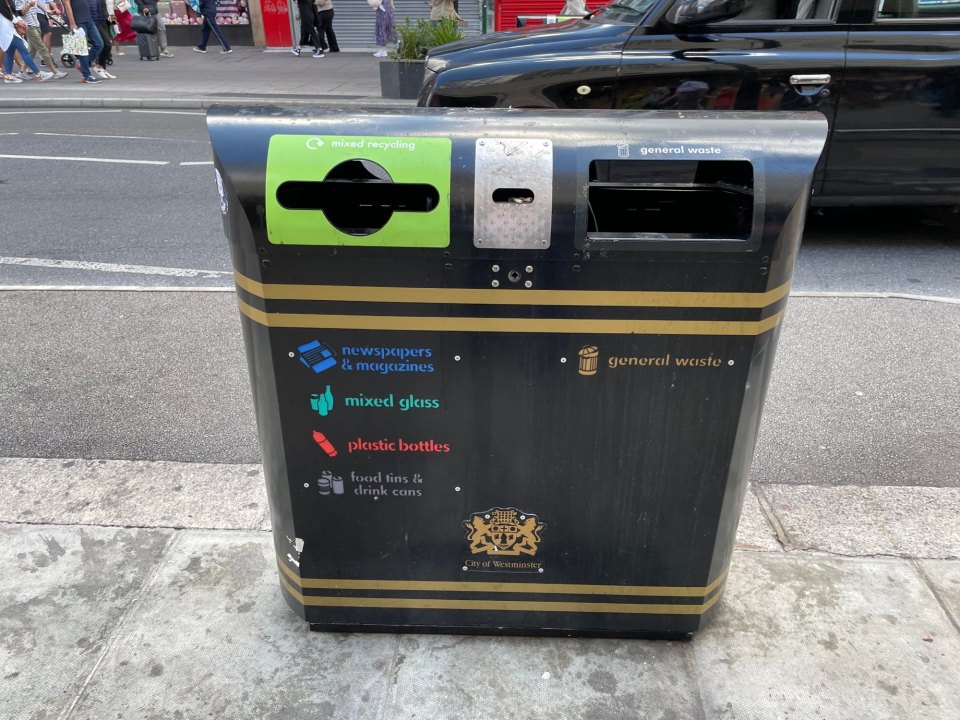
Waste in Britain is not a dump but a big market, with money at every stage: collection, sorting, recycling, making the bins and even advertising on them. Here it is in business terms: how big the industry is, who earns from it, who installs and makes the bins, and how an individual can earn from waste — and what it takes.
How big is the market and who runs it?
The UK waste management market is valued at about 45.4 billion dollars in 2026 and is growing 5.25% a year — forecast to reach 68.3 billion by 2034. The big money sits with large operators — Veolia, Biffa, Suez, Viridor — who collect and treat waste under council contracts. About 44.5% of household waste in Britain is recycled, nearly half, and the government is pushing for more.
Who installs and makes the street bins?
Street bins are placed by the local council — on the photo it is the City of Westminster; buying and servicing are often handed to contractors. The bins are made by specialist manufacturers: Glasdon, Leafield, Wybone, Broxap and others. Prices depend on the material: a plastic street bin is about £120–300, a steel one £290–770, while a solar-powered "smart" compactor bin (such as BigBelly) costs a council thousands of pounds each — but needs emptying less often.
 ADV · A003We build websites for tradespeople and sole traders — £219Customers see your work and prices and message you straight away. Ready in 3 days, £219 instead of £438.Advertise here
How is money made on the bins themselves?
Three sources. First, the makers: councils buy bins by the thousand, which are steady contracts. Second, advertising: specialist media firms place adverts on and beside street bins, earning from each spot. Third, savings: smart compactor bins overflow less, so the council spends less on collections. So one bin earns money for the firm that built it and the firm that put an advert on it.
How can an individual earn — where to start?
The easiest way in is man-and-van rubbish removal: clearing flats, offices and gardens, taking away old furniture and builders' waste. To carry other people's waste legally you must register as a waste carrier with the Environment Agency: the upper tier costs £191.02 and renews every three years for £130.25; the lower tier is free — for those who only move their own waste. Then line up the tips you deliver to and take jobs.
Scrap metal — a business of its own
Buying and selling scrap metal is a classic way to earn from waste. It needs a scrap metal dealer licence from the council (under the Scrap Metal Dealers Act 2013): a collector's licence costs, for example, about £700 and a site licence about £1,100, though amounts vary by council. A key rule: by law you cannot pay cash for scrap — only by transfer or cheque, so the metal's origin is traceable.
What does it take to stay legal?
Three things. A licence: carrying other people's waste without registering is an offence. Duty of care: you must record where the waste went (a waste transfer note) and take it only to legal sites — fly-tipping is fined, for both the business and whoever hired an illegal remover. And insurance. Get these right and waste turns from a problem into a clear business with a low barrier to entry.
Thanks for £1If this information was useful and came in time, press the heart. Payment goes through PayPal, with nothing to choose and nothing to fill in, and it pays for the newsroom.
Check whether an employer can sponsor a work visa →
Search the Home Office register on our own site: whether the company holds a sponsor licence, and for which routes.



- Life Nemnogo Nervno’s Kateryna Gopenko plays London on 20 November
- Tax Self Assessment: 31 Jan deadline
- Money Do marketplace warehouses give goods away free? The truth about unclaimed parcels
- Life Russian-speaking doctors and clinics in London: eight addresses checked against the registers
- Life Royal week: Prince George starts at Eton, Prince William at King Harald's funeral
- Immigration UK Standard Visitor Visa in 2026: Rules, Fees and Duration
- Travel GHIC card: state healthcare in Europe