London's red postboxes
What the red boxes are, what a letter costs, when the post is collected and who still writes.
Thanks for £1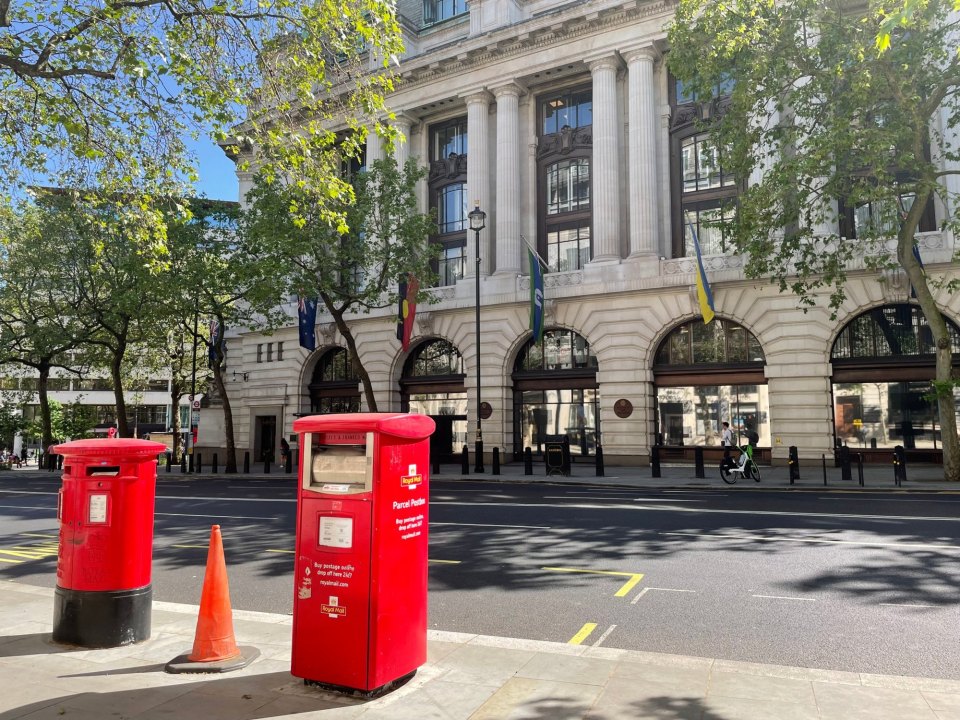
The red boxes on the pavement are Royal Mail post. You drop letters and cards into them, and parcels into the big ones. Here is what these boxes are, what a stamp costs, when the post is collected, how many Christmas cards get sent, and who actually writes the letters that end up inside.
What are these red boxes?
The round pillar box is the classic one, for letters and cards, put up since Victorian times. The taller rectangular one is a Parcel Postbox, a "postbox of the future" for parcels up to 44×35×16cm: you can drop a pre-paid parcel in around the clock. There are more than 110,000 postboxes across Britain; Royal Mail is rolling out about 3,500 of the new parcel boxes and wants to grow parcel drop-off points to 45,000 by 2030.
How much does it cost to send a letter?
A First Class stamp costs £1.80 — delivery the next working day, including Saturday. A Second Class stamp is 91p, delivered in 2–3 working days. These prices have applied since 7 April 2026. You can buy a stamp in a shop or pay for postage online and print a label. For a parcel: pay on the website or app, stick on the label, scan it in the Royal Mail app for proof of posting, and drop it in the Parcel Postbox.
 ADV · A001ONLYWAY JEWELRY — gold, silver and platinumRings, chains, bracelets, earrings and pendants. Delivery across the UK.Advertise here
When is the post collected?
Post is collected from the box at least once every working day. The exact time is printed on the box itself, on the white plate: on the box in the photo it is 6:00pm Monday to Friday and 10:30am on Saturday. Post before that time and it leaves the same day; later, and it goes with the next collection. So before an important letter, check the plate.
How many Christmas cards get sent?
Christmas is the post's peak. In Britain about 1.05 billion Christmas cards are bought a year, worth £384m: roughly 105 million singly and around 900 million in packs. The paper card holds firm: in a Royal Mail survey, 72% would rather receive a card than a greeting by text (10%) or on social media (6%).
Who writes the letters that end up there?
Most ordinary letters are sent not by people but by organisations: bills, bank statements, letters from government, the NHS, the tax office. Personal post today is mostly cards for holidays and special dates. And through the Parcel Postbox, parcels and online-shopping returns increasingly go out — that is the real "new" sender at the red box.
How to send without mistakes?
In short: buy a stamp or pay online; a letter needs a stamp, a parcel needs a label and a scan in the app. Check the last-collection time on the plate so you don't wait an extra day. And send Christmas cards early — in December the post multiplies, and a late card risks arriving after the holiday.
Thanks for £1If this information was useful and came in time, press the heart. Payment goes through PayPal, with nothing to choose and nothing to fill in, and it pays for the newsroom.
- Life Nemnogo Nervno’s Kateryna Gopenko plays London on 20 November
- Tax Self Assessment: 31 Jan deadline
- Money Do marketplace warehouses give goods away free? The truth about unclaimed parcels
- Life Russian-speaking doctors and clinics in London: eight addresses checked against the registers
- Books Book at bedtime: Pride and Prejudice and the price of a good match
- Immigration UK Standard Visitor Visa in 2026: Rules, Fees and Duration
- Jobs & Business Post Your Ad Free