Free parking in Britain
Single yellows at night, permits, Park & Ride, supermarkets — park free in the UK, no fine.
Thanks for £1
Parking in Britain is expensive, but parking free and staying within the law is doable — if you know the rules and read the sign. Here are the methods that work, without risking a fine or a tow.
The one rule: read the sign
The markings and the plate beside them decide everything. A double yellow line means no parking at any time (only loading or unloading, if it is clearly seen). A single yellow line is restricted only during the hours shown on the plate by the line; outside those hours parking is free. Red routes in London mean no stopping: a double red at any time, a single red during the hours on the sign. No lines and no restriction sign usually means you can park. A penalty in London is up to £130 (£65 if paid within 14 days); elsewhere it is usually £50–70, halved for prompt payment.
 ADV · A003We build websites for tradespeople and sole traders — £219Customers see your work and prices and message you straight away. Ready in 3 days, £219 instead of £438.Advertise here
Where to park free in the evenings and at weekends
The most common legal trick: a single yellow line after the restricted hours end — usually evenings and weekends (but check the plate: some run to 8:30pm, some all day). Controlled parking zones (CPZ) also work to a timetable — outside the zone's hours, parking is free. Quiet side streets a couple of minutes' walk from the centre are often unrestricted: that is where to look.
A resident permit — cheap from the council
If you park by your home in a controlled zone, get a resident permit from your council. It is not free, but it is far cheaper than street machines — usually tens of pounds a year, not a day. The council website says who qualifies and how to apply, and offers visitor vouchers for people coming to see you.
Supermarkets, Park & Ride and apps
Car parks at Tesco, Asda, Sainsbury's and shopping centres are often free but time-limited (1–3 hours) and watched by ANPR cameras — leave on time or face a charge from a private firm — up to £100. On the edge of cities there is Park & Ride: leave the car cheaply on the outskirts and take a bus into the centre. Parkopedia and JustPark help you find free and cheap spaces, and through YourParkingSpace or JustPark you can rent someone's driveway near your destination for little money.
Blue Badge and loading
If you hold a Blue Badge (for disabled drivers), you often park free and for longer — including up to three hours on yellow lines where it is safe and not an obstruction. A loading bay ("Loading Only") is not a way to park for free: it is only for loading and unloading and collecting goods you have already paid for, not for shopping.
How much money is made from this
Parking is big business, and the figures show it. In 2024–25 councils in England took £2.163bn from parking, with a record net surplus of £1.094bn above their costs. Westminster made the most — £90.6m in a year, up 19.3% on the year before. Private car parks earn separately: their cameras issued a record 14.4 million tickets in a year — about one every two seconds, and a quarter more than the year before. A free space is not a trifle; it is real money saved.
Paid parking: how to pay less
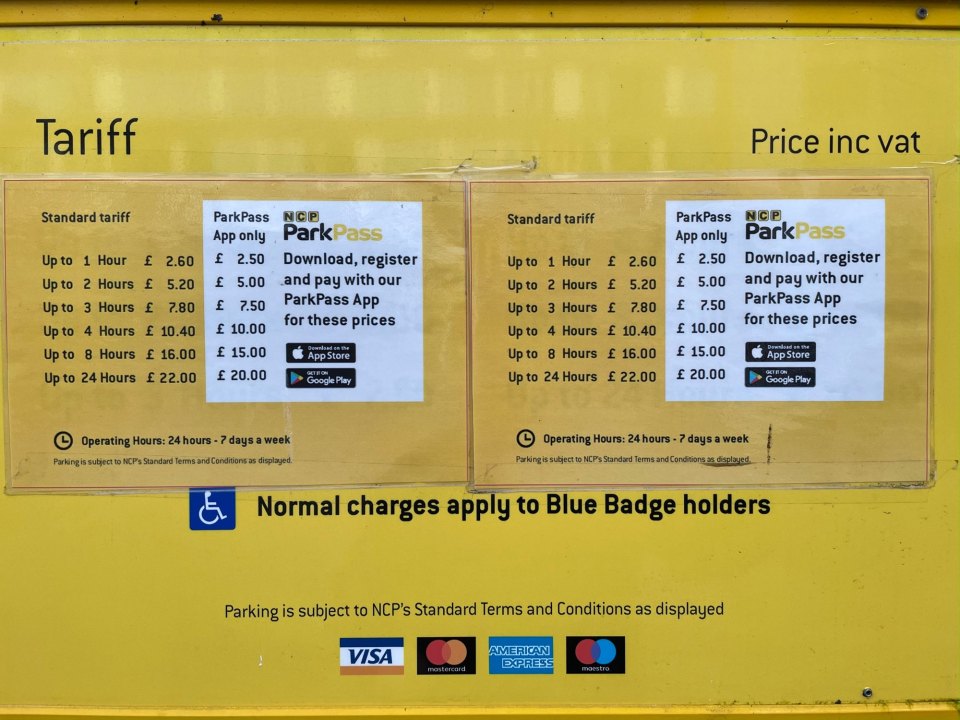
When paid parking is unavoidable, you can still pay less — through an app. A real NCP example (Finsbury): the standard tariff is £2.60 an hour and £22.00 for 24 hours; through the NCP ParkPass app the same spaces are cheaper — £2.50 an hour and £20.00 a day, about £2 a day saved with no tricks. The PayByPhone app lets you top up from your phone without walking back to the car and sends a reminder before time runs out — which saves you from a fine. Note: private NCP car parks give no Blue Badge concession — you pay like everyone else; the penalty here (PCN) is £100, and a lost ticket is charged at the full daily rate.
Where not to park, to avoid a tow
To steer clear of fines and the tow truck, stay away from: double yellow and red lines, dropped kerbs and driveway entrances, disabled bays without a Blue Badge, bus lanes and stops. In London and Scotland you must not park on the pavement, even partly. And the rule that saves the most money: if in doubt, drive on and read the sign again. It is cheaper than any "clever" spot.
Thanks for £1If this information was useful and came in time, press the heart. Payment goes through PayPal, with nothing to choose and nothing to fill in, and it pays for the newsroom.
- Life Nemnogo Nervno’s Kateryna Gopenko plays London on 20 November
- Tax Self Assessment: 31 Jan deadline
- Money Do marketplace warehouses give goods away free? The truth about unclaimed parcels
- Life Russian-speaking doctors and clinics in London: eight addresses checked against the registers
- Books Book at bedtime: Pride and Prejudice and the price of a good match
- Immigration UK Standard Visitor Visa in 2026: Rules, Fees and Duration
- Jobs & Business Post Your Ad Free