Lab tests: a £10.7bn market
A £10.7bn diagnostics market, 780m NHS tests a year. Who earns from it and why pay for your own.
Thanks for £1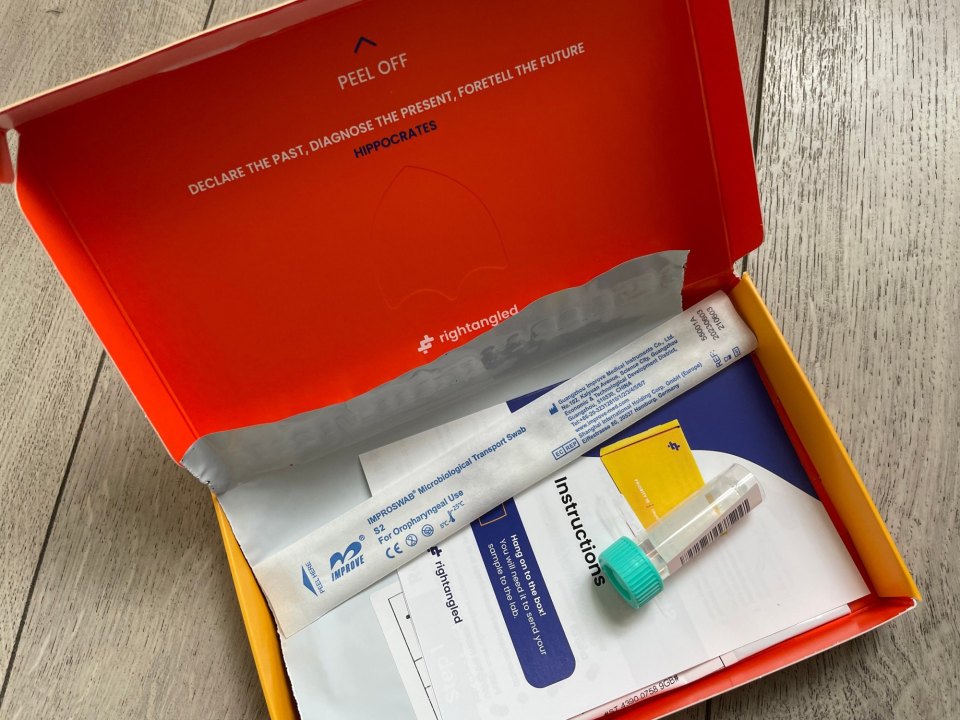
A red box with a swab and a tube is a home test kit: you take the sample yourself, send it to a lab and get a result. Behind that box sits a big business. Here it is in business terms: how big the UK testing market is, who earns from it and who invests, what it costs to test yourself, and why it is worth doing at all.
How big is the market?
The UK diagnostics market is valued at about £10.7bn. Of that, £9.3bn is wholesale (the cost to the NHS and private labs) and £1.4bn is retail — what people pay themselves or through insurance. The volumes are huge: the NHS alone runs about 780 million lab tests a year, plus another 8 million for private patients. Do-it-yourself home tests, like the one in the photo, are still a small segment at about £70–80m a year, but it has nearly doubled since 2021.
Who earns, and who invests?
The NHS does most of the testing, but private labs work behind the scenes. The biggest players are Synlab (controlled by the investment fund Cinven), Sonic Healthcare — an Australian listed company that owns London's The Doctors Laboratory — and Randox of Northern Ireland. Randox is the private firm of Dr Peter FitzGerald that boomed on Covid: the government handed it testing contracts worth about £777m, and in 2021 it posted a £275m pre-tax profit. So the market's main beneficiaries are private labs and the funds and listed holdings behind them.
 ONLYWAY NEWSLIVEMoney · 26.11Find a lost bank accountMoney · 26.11Lab tests: a £10.7bn marketJobs & Business · 26.11Bollards: cannons and automaticsMoney · 26.11Metro Bank: terms and ownerMoney · 26.11The lottery business: who winsMoney · 26.11Which UK business pays from day oneMoney · 26.11UK vegetables: price and marketJobs & Business · 26.11The waste business in BritainJobs & Business · 26.11UK business: openings and closuresJobs & Business · 26.11The one-person companyONLYWAY NEWS · appInstall the ONLYWAY NEWS appFresh UK news, classifieds, key dates and exchange rates on your home screen, one tap away. Free.NewsClassifiedsCalendarRates
What does it cost to test yourself?
A private blood test is about £50–150 for a panel, a full "body MOT" £100–300. Home kits with a finger-prick or swab are cheaper, around £30–100, with the result sent to your phone in a few days. The brands selling these tests straight to people are Thriva, Medichecks and Rightangled; the last of these, incidentally, raised money by crowdfunding, taking hundreds of thousands of pounds from small investors.
Why pay when the NHS is free?
Several reasons: speed (no wait for a GP appointment), convenience (a test at home), a choice of markers the NHS will not order on request, and privacy. For many it is a way to keep an eye on cholesterol, vitamins, hormones or fitness and get information about themselves before anything hurts.
What's the catch, and who gains?
Doctors warn that the adverts for these tests say little about the risks. Unnecessary tests with no symptoms produce false alarms, push people into more scans and worry the healthy. The business model often rests on subscriptions and repeat orders, and on customer data too. So the main winner is frequently the lab and the investor, not the patient. The sensible approach is simple: a home test is useful for watching known markers, but a result — especially an alarming one — is worth discussing with a doctor, not treating yourself through an app.
Thanks for £1If this information was useful and came in time, press the heart. Payment goes through PayPal, with nothing to choose and nothing to fill in, and it pays for the newsroom.
- Life Nemnogo Nervno’s Kateryna Gopenko plays London on 20 November
- Tax Self Assessment: 31 Jan deadline
- Money Do marketplace warehouses give goods away free? The truth about unclaimed parcels
- Life Russian-speaking doctors and clinics in London: eight addresses checked against the registers
- Life Royal week: Prince George starts at Eton, Prince William at King Harald's funeral
- Immigration UK Standard Visitor Visa in 2026: Rules, Fees and Duration
- Immigration UK visitor visa step by step 2026: timing, cost, biometrics and how long it takes