UK retail sales up 0.5% in August — but shoppers are spending 6% more for 2.4% more goods
ONS data for August: retail sales volumes rose 0.5% on the month and 0.9% over three months. Over the year volumes are up 2.4% while the value of sales is up 6.0% — a 3.5 percentage point gap that is pure price. Online accounts for 27.4% of sales, peaking every November. Next release: 23 October.
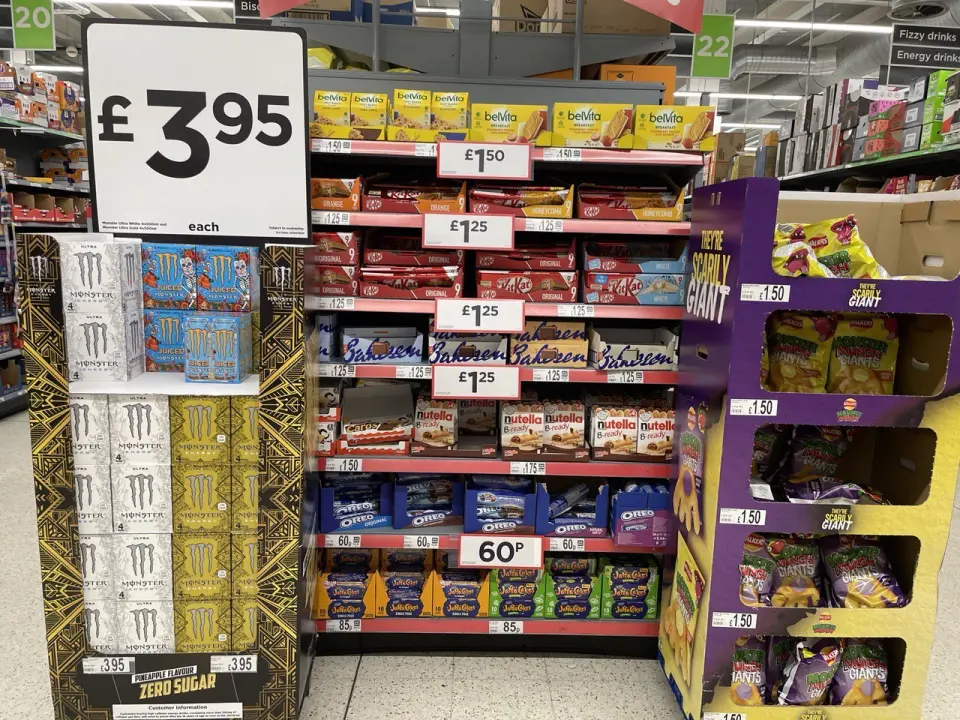
Shoppers in Britain went back to the tills in August: retail sales volumes rose 0.5% on the month. That reverses July's 0.5% fall and keeps the wider trend going — volumes were up 0.9% in the three months to August compared with the three months to May. The figures were published by the Office for National Statistics (ONS) today, 18 September.
How much have sales grown over the year?
Over twelve months the quantity of goods bought rose 2.4%, while the amount of money spent rose 6.0%. These are two different numbers describing the same shopping: one counts items, the other counts pounds.
 ADV · A001ONLYWAY JEWELRY — gold, silver and platinumRings, chains, bracelets, earrings and pendants. Delivery across the UK.Advertise here
The gap — around 3.5 percentage points — is the price of the difference. We are buying 2.4% more and paying 6% more for it. For context, headline inflation in August was 3.1%. In other words, what you see on the shelf is rising faster than the national average figure quoted in the news.
What were people buying?
The rebound came from non-store retailers — mostly online sellers. They had dropped in July because this year's promotions moved forward into June, and in August they recovered part of that fall. Department stores also bounced back after July, when stock availability held them down. Food stores did well across the latest quarter.
There is a practical lesson in that mechanism: the discount calendar has shifted. Promotions that used to land in July ran in June this year, so anyone waiting for the usual summer sales simply missed them.
How much UK shopping is now done online?
ONS figures show that in July 2026 internet sales made up 27.4% of all retail sales, against 26.7% a year earlier. The share has hovered around a quarter of the market for four years, but it swings within the year: the peak is November, when 32.3% of all purchases went online in November 2025.
That matters for planning. November is when British retail genuinely cuts prices — and when you are most likely to pay someone you cannot see. Online purchases carry wider rights than shop purchases: you can send them back within 14 days without giving a reason. We explain how that works in a separate guide: 30 days for faults, 14 days for online orders and chargeback.
 ADV · A003We build websites for tradespeople and sole traders — £219Customers see your work and prices and message you straight away. Ready in 3 days, £219 instead of £438.Advertise here
Why watch this release at all?
Retail sales are the one statistic that shows not what people say about prices but what they do with their money. Consumer confidence surveys have been gloomy all year, yet the tills have recorded growth in three months out of the last four.
For the Bank of England that argues against a rate cut. On 17 September Bank Rate was held at 3.75% and three of the nine committee members voted to raise it. A consumer who keeps spending is exactly the factor that minority points to.
When is the next release?
The next retail sales release is on 23 October 2026 and covers September. Before that, on 21 October, September inflation is published — the number that feeds into the uprating of many benefits and tariffs.

- Travel Windrush line delays and Croydon tram closures: London tube today, 5 October
- Life When do the clocks change in the UK in 2026? 25 October, an hour back
- Housing Hosepipe bans in England: ten companies, 30 million people, six reservoirs exceptionally low
- Immigration UK visitor visa step by step 2026: timing, cost, biometrics and how long it takes
- Money Your gas and electricity debt can be written off in full: who Ofgem is clearing 2022–2024 bills for, and what you must do
- Travel London Tube closures this weekend, 3–4 October: Victoria shuts on Saturday evening, Jubilee closed to Canary Wharf both days
- Money Power cut: £100 paid automatically, up to £2,235 in a storm — what you are owed and what to do if the money never arrives