How to return goods in the UK: 30 days for faults, 14 days for online orders, and chargeback when the shop says no
The law gives you 30 days to reject faulty goods for a full refund and 14 days to cancel an online order without giving a reason. For the first six months the retailer must prove the fault was not there at purchase. If the shop refuses, the bank pays: Section 75 on credit cards from £100 to £30,000 and chargeback within 120 days on debit cards. A step-by-step guide.
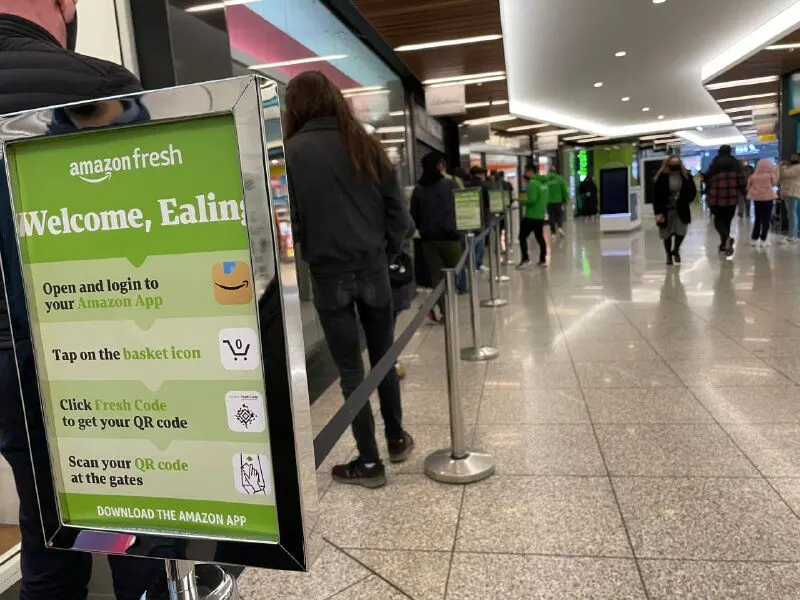
A British shop rarely argues with a customer who knows two numbers: 30 days and 14 days. The first covers faulty goods, the second an online purchase that simply did not suit you. Neither is store policy or goodwill — both are law: the Consumer Rights Act 2015 and the distance selling rules. There is more reason to use them: ONS data for August show sales growing with online holding around 27% of the market. Here is how to use them step by step, and how to get your money back through the bank when the retailer goes quiet.
How long do you have to return a faulty item?
Thirty days from taking ownership. Within that window a faulty item can be rejected for a full refund — not a repair, not a replacement, not a voucher, and with no deduction for the use you have had.
 ONLYWAY NEWSLIVEJobs & Business · 08.10AI at work in the UK: ONS names the jobs it has hit firstLife · 08.10GP and NHS dentist appointments in England: how long people really waitMoney · 08.10UK sanctions Cryptomus, Heleket and VexPay: what it means for money transfersImmigration · 08.10UK immigration rules change on 8 October 2026: what is newLaw · 08.10Bought a faulty used car in the UK: how to get your money backMarkets · 08.10Fuel prices now show in Google Maps: how to find the cheapest pumpTravel · 08.10Piccadilly line part closed to Cockfosters as Elizabeth line recoversTax · 07.10HMRC visits: how to check an officer's identity under the rules updated on 7 OctoberLaw · 07.10Legal aid in the UK: who can get a free lawyer and how to applyMoney · 07.10State pension triple lock to change from April 2030: what it means for paymentsONLYWAY NEWS · appInstall the ONLYWAY NEWS appFresh UK news, classifieds, key dates and exchange rates on your home screen, one tap away. Free.NewsClassifiedsCalendarRates
Goods are faulty if they are broken or damaged (not of satisfactory quality), do not do the job (not fit for purpose), or do not match the description. The rights do not apply to normal wear and tear, damage you caused, or a fault you were told about before buying — a discounted item sold "with a scratch", for example.
This covers new and second-hand goods bought from a business. Buying from a private seller on a marketplace is a different story, with very few rights.
What if the 30 days have passed?
The retailer then gets one attempt to repair or replace the item. You can state your preference, but the shop may choose the other option if yours is disproportionately expensive.
If the repair or replacement fails, the right to a refund returns — or you can keep the item and take a price reduction. In the first six months the refund must be full, with no deduction for use (vehicles follow a separate rule). After six months the retailer may deduct an amount for the use you have had.
Who has to prove the fault was there from the start?
For the first six months, the retailer. The fault is assumed to have been present at purchase, and if the shop disagrees it must prove otherwise and pay for the inspection.
After six months the burden flips to you: you have to show the fault is inherent rather than caused by use. In practice that means an independent expert report, which you pay for up front and claim back if you win.
Can you return something that works but doesn't suit you?
In a shop, no. If you saw the item, it works and you changed your mind, the law does not require the retailer to take it back. A 28- or 30-day "change of mind" return with a receipt is the chain's own policy, and it can be anything, including a voucher.
One important caveat: a "no refunds" sign, or "exchange only", is unlawful when the goods are faulty. A shop cannot cut back your statutory rights, and a notice on the wall does not remove them.
How does the 14-day rule for online orders work?
Orders made online, by phone or by post come with a right to change your mind for no reason:
— you have 14 days from receiving the item to tell the seller you are cancelling;
— then a further 14 days to send it back;
— the seller must refund you within 14 days of getting the item back.
No reason is needed. The retailer may only deduct if the item shows signs of use beyond ordinary inspection — trying a coat on is fine, wearing it for a week is not.
What can't be returned?
The 14-day cancellation right does not cover personalised or custom-made items, perishable goods, unwrapped CDs, DVDs and software, or sealed items that cannot be returned for health or hygiene reasons once opened. All of them can still be returned if they are faulty — the quality rules take over there.
Who pays the return postage?
For faulty goods, the retailer covers return costs in the first six months. After that you normally pay, but the money should be reimbursed if you show the fault was inherent.
If you are simply changing your mind under the 14-day rule, you pay the return postage — unless the seller failed to say so in its terms before you ordered.
What if the shop refuses to refund you?
Start with a written complaint — not a phone call, but an email or account message setting out the purchase date, the fault and what you want. That trail becomes your evidence.
If it does not work, the bank is next:
— Section 75. If you paid by credit card and a single item cost between £100 and £30,000, the card provider is equally liable with the retailer. You can claim the full amount paid or the cost of repair. It applies even if only part was paid on the card — but usually not when you bought through an intermediary such as Amazon or eBay.
— Chargeback. For debit cards, and for purchases under £100, the payment can be reversed through the card scheme. The usual deadline is 120 days from the transaction; for goods or services due later (tickets, events) the clock starts when you should have received them, and in some cases the limit stretches to 540 days. This is scheme rules that banks sign up to, not statute.
— PayPal. A dispute must be opened within 180 days of paying.
If the bank refuses or takes longer than eight weeks, complain to the Financial Ombudsman Service — it is free.
How long do you have to go to court?
A court claim can be brought within six years in England, Wales and Northern Ireland, and five years in Scotland, from the date of purchase. That does not mean goods must last six years — it is simply the window in which you may sue.
What to keep so the argument is won in advance
The receipt or order confirmation, the delivery date, photos of the fault and the packaging, and the correspondence with the shop. For an online order, screenshot the product description as it was when you bought: if the item does not match, that screenshot is the proof. Those four things turn a month-long dispute into a five-minute conversation at the counter.
- Accepting returns and giving refunds: the law — GOV.UK
- Return faulty goods — Citizens Advice
- Getting your money back if you paid by card or PayPal — Citizens Advice
- Faulty product? How to get a refund, repair or replacement — Which?
- Debit & credit card chargeback — MoneySavingExpert
- Consumer Rights Act 2015 — legislation.gov.uk


- Travel Windrush line delays and Croydon tram closures: London tube today, 5 October
- Markets Diesel passes £2 a litre for the first time: what it costs in London today and where to fill up cheaper
- Life When do the clocks change in the UK in 2026? 25 October, an hour back
- Housing Hosepipe bans in England: ten companies, 30 million people, six reservoirs exceptionally low
- Immigration UK visitor visa step by step 2026: timing, cost, biometrics and how long it takes
- Money Your gas and electricity debt can be written off in full: who Ofgem is clearing 2022–2024 bills for, and what you must do
- Travel London Tube closures this weekend, 3–4 October: Victoria shuts on Saturday evening, Jubilee closed to Canary Wharf both days