Damp and mould in a rented home: what the landlord must do, and in how many days
In social housing the deadlines are in law: 24 hours for an emergency, 10 working days to investigate damp, 3 days for a written summary, 5 for the safety work. Private renting has no day counts — but it has a free council inspection and the courts. A guide for the heating season.
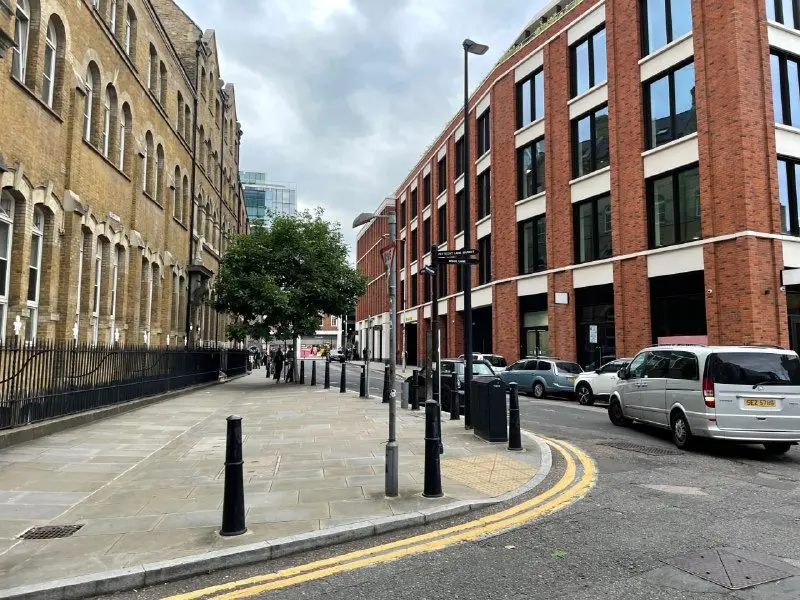
Heating season is when black patches appear on the bedroom wall and the landlord replies that you simply are not ventilating enough. Here is what is law and what is rhetoric: who is responsible for what, which deadlines are written down in actual days, and how to word a complaint so that it works.
Who is responsible for damp and mould in a rented home?
Damp comes in four kinds, and responsibility follows the kind.
Rising damp — from the ground up. The landlord is responsible, especially where a damp-proof course exists and has failed.
Penetrating damp — a leaking roof, a cracked wall, a failing pipe. The landlord is responsible.
Construction damp — in a new building. The landlord is responsible where a design defect has caused structural damage.
Condensation — the most common and the most disputed. The key point: the landlord is responsible for condensation caused by inadequate heating, ventilation or insulation. "Open the windows more" is not an answer when the bathroom has no extractor, the windows have no vents and the heating cannot cope. That is a housing condition, not a housekeeping argument.
The general rule: the landlord is responsible for the structure and exterior, heating and hot water, pipes, flues and ventilation, electrical wiring and sanitary fittings. Separately, damp and mould growth sits in the official list of housing hazards alongside excess cold, fire and falls.
 ONLYWAY NEWSLIVELaw · 14.10Changing your name by deed poll in England: free yourself or £53.05 through the High CourtLife · 14.10How to register with a GP in England: no passport, no address, no feeMarkets · 14.10ADOPT on-farm trial grant is open in England: apply by 2 DecemberMarkets · 14.10BridgeAI grants open on 21 October for UK AI SMEs: who can applyLife · 14.10England wants 10,000 new foster places: who can apply and what carers are paidTax · 14.10Your tax code: how to check it and how to get overpaid tax backJobs & Business · 14.10Minimum wage 2026: the rates, who is covered and how to get arrears backMoney · 13.10Money after a partner dies: what is paid and why the first three months decide itMoney · 13.10DWP posts 660,000 leaflets: pensioners reminded about £4,500 a yearMoney · 13.10Council tax: four legitimate ways to cut your billONLYWAY NEWS · appInstall the ONLYWAY NEWS appFresh UK news, classifieds, key dates and exchange rates on your home screen, one tap away. Free.NewsClassifiedsCalendarRates
What repair deadlines apply to social housing?
If you rent from a council or a housing association, Awaab's Law has applied since 27 October 2025. It writes hard deadlines into the tenancy — obligations, not guidance.
Emergency hazards (gas or carbon monoxide leak, a major leak, dangerous electrics, a broken external door or window, a broken boiler, no water): the landlord must investigate and make the home safe within 24 hours.
Damp and mould posing a significant risk of harm: the landlord must investigate within 10 working days of becoming aware.
After the investigation, there are 3 working days to give you a written summary: what was found, what will be done, and when. The summary is only skipped if everything was fully fixed within those three days.
Work that makes the home safe must be finished within 5 working days of the investigation ending. Further preventative work must also begin within 5 working days, or — where that is not possible — physically start within 12 weeks at the latest.
If the landlord cannot meet the deadlines, they must offer temporary accommodation for the whole household, children included. There is no fixed limit on how long, but it must be as short as possible.
The law is phased. Phase one covers emergency hazards plus damp and mould. During 2026 it extends to excess cold and heat, falls, structural collapse and explosions, fire and electrical hazards, and hygiene and food safety. In 2027 it covers all remaining hazards except overcrowding.
The landlord has one statutory defence: proving they took all reasonable steps. "We called and you did not let us in" is exactly that, so do give access — 24 hours' notice is normal, emergencies excepted.
What must a private landlord do about damp?
Awaab's Law does not yet apply to private landlords. The government has said it will extend it to the private rented sector, but the timescales are still under consultation — that is phase three of the rental reform, with no date announced. The landlord database starts rolling out region by region from late 2026, and a mandatory private landlord ombudsman launches in 2028.
That does not leave a private tenant without leverage. There are three routes, and they work.
How do you report damp to your landlord in writing?
A landlord is responsible for a repair from the moment they become aware of it. So "aware" has to be documented.
Write by email or message, so a date survives. Say exactly where (room, wall, ceiling), since when, what you have already tried, and who lives in the property — children, older people, anyone with asthma or another respiratory condition. Attach dated photographs, ideally a series over several weeks. Ask specifically for an inspection and name a reasonable deadline for a reply.
Keep every copy. Everything that follows rests on this correspondence.
What will the council's environmental health team do?
If a reasonable time passes and nothing happens, contact environmental health at your council. It is free.
The officer assesses the home under the HHSRS, the official hazard rating system, in which damp and mould growth is a hazard in its own right. A category 1 hazard (a score of 1,000 or more) obliges the council to act — must, not may. A category 2 hazard is at the council's discretion.
What the council can serve: a hazard awareness notice, an improvement notice with a set deadline, a prohibition order, an emergency prohibition order, or emergency remedial action carried out by the council and billed to the landlord.
Ask in writing and attach the full exchange with your landlord — it shows you followed the order of things.
When can you take a landlord to court over mould?
The Homes (Fitness for Human Habitation) Act 2018 lets a tenant take the landlord to court where a home is not fit to live in. The court can order the repairs and award compensation.
Who is covered: private tenancies, housing associations and councils, fixed terms under seven years, England only. Tenancies signed on or after 20 March 2019 were covered immediately; earlier ones from 20 March 2020. Lodgers, temporary accommodation and property guardians are generally not covered.
Before court you must: check the problem meets the criteria, notify the landlord in writing, allow a reasonable time for repairs, and send a formal written complaint.
The court will not help where the tenant caused the problem, where the cause is outside the landlord's control, or where the landlord tried in good faith but could not obtain the necessary consents.
Where do you complain if social housing does nothing?
The order is: the landlord's own complaints procedure first, then the Housing Ombudsman, which is free. After that, the pre-action protocol and court. If an investigation happened and the problem came back, you can request a fresh in-person inspection — it must take place within 10 working days of your request.
Can you be evicted for complaining about mould?
The tenant's oldest fear is being evicted for complaining. Since 1 May 2026, section 21 has been abolished in the private rented sector: no-fault eviction is gone and a landlord needs a lawful ground. That changes the balance of a repairs conversation. More in our guide to the rental reform and in how to challenge a rent increase.
What should you do first?
Report it in writing, with photographs. Allow a reasonable time. In social housing, count the days: 24 hours for an emergency, 10 working days to investigate damp, 3 for the written summary, 5 for the safety work. In private renting, once a reasonable time has passed, go to the council's environmental health team — it costs nothing. And keep every message: without it, no council, court or ombudsman can help you.
- GOV.UK: Awaab's Law — guidance for tenants in social housing
- GOV.UK: Awaab's Law — guidance for social landlords, timeframes for repairs
- GOV.UK: Private renting — repairs
- GOV.UK: Tenant guide to the Housing Health and Safety Rating System (HHSRS)
- GOV.UK: Guide for tenants — Homes (Fitness for Human Habitation) Act 2018
- GOV.UK: Implementing the Renters' Rights Act 2025 — roadmap
- Citizens Advice: If you have damp or mould in your rented home
- Money UK sanctions Cryptomus, Heleket and VexPay: what it means for money transfers
- Life Free English with a native speaker: how Russian speakers can find a language partner
- Life A London concert cancelled back in March is still on sale for 4 October — and the full Russian-language listings for October
- Law Courts in England and Wales must now record domestic abuse in the sentence: what changed on 5 October
- Travel Jubilee line part suspended to Stanmore after fire alert
- Travel Cheap train tickets in Britain: a third off fares, and the money back when the train is late
- Travel Piccadilly line part closed to Cockfosters as Elizabeth line recovers