Bus fares in England fall to a £2 cap from 1 January 2027 — and how to check your route
The Department for Transport reported on 25 September that children made 14.5 million free bus journeys in August. The same release confirmed what matters next: from 1 January 2027 a single bus ticket in England outside London will cost no more than £2, down from today's £3. Here is what applies now, what you have to apply for, and who travels free all year.
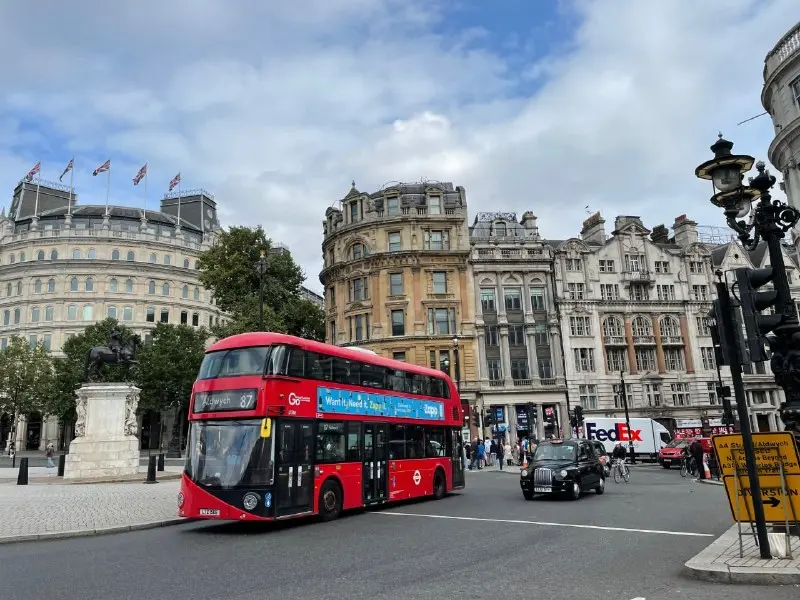
On 25 September the Department for Transport published the results of its summer free-travel scheme: children in England made more than 14.5 million free bus journeys in August. The same release confirmed the figure that matters to everyone else — from 1 January 2027 a single bus ticket in England outside London will cost no more than £2. The cap today is £3.
What does a single ticket cost right now?
England has a national cap of £3 on a single bus ticket, and it runs until the end of 2026. The rule is simple: on the routes of participating operators the company cannot charge you more than £3 for one journey, even where the normal fare is higher. How much higher is clear from the government's own estimate: without the cap, single fares on the most expensive routes would climb above £10.
 ADV · A003We build websites for tradespeople and sole traders — £219Customers see your work and prices and message you straight away. Ready in 3 days, £219 instead of £438.Advertise here
What changes on 1 January 2027?
The cap drops to £2 — a third off the maximum price of a journey. The decision was announced on 22 July 2026 and will run from 1 January to the end of 2027. It is backed by an extra £400 million (£454 million including funding for the devolved governments of Scotland, Wales and Northern Ireland), which the government says comes from reprioritising the DESNZ budget. One detail worth knowing: before this decision the £3 cap was due to run only until the end of March 2027, after which fares would have been let go. Instead of a rise in the spring there will now be a cut in the winter.
Do you have to apply for anything to pay the capped fare?
No. The cap is not a card, a pass or a concession you have to claim. It is a ceiling on the price of a ticket: you board, you pay as usual, and the operator simply cannot charge you more. No application, no documents, no status check. For anyone who has recently arrived in the UK this is the easiest saving on transport there is — it requires doing nothing at all.
One caveat that is easy to forget: the cap applies to single tickets. Day, weekly and season tickets are not covered, and a day ticket sometimes works out cheaper than two singles — do the maths before you travel.
How do you check whether your bus is covered?
GOV.UK keeps a reference page listing, region by region across England, which operators take part and exactly which route numbers are included. Read it carefully: for the same operator some routes are in the scheme and others sit in the exclusions column — usually long-distance, express, school and airport services. The order of play is: find your region, find your operator, find your route number, and check which column it is in.
Why is London different?
The national cap applies outside London — that is written into the government's decision. The capital has its own fare structure and its own passes, set by Transport for London, and prices there have to be checked with the operator. If you live in London but travel by bus in the neighbouring counties, the cap does apply to you on those routes.
 ONLYWAY NEWSLIVEHousing · 15.10Short on rent: what replaced Discretionary Housing Payments in England on 1 April 2026Money · 15.10Gaps in your National Insurance record: £18.40 a week and only six years backLife · 15.10Free UK GHIC: state healthcare in Europe and 15 working days for deliveryLife · 15.10Great British Railways HQ confirmed for Derby with 600 apprenticeship placesLaw · 15.10Subject access requests: getting your records, emails and CCTVHousing · 15.10Noise from neighbours: what the council must do and what the fines areLaw · 15.10Freedom of information requests: how to get data from a public bodyLaw · 14.10Bailiffs at the door: what they cannot do and cannot takeLife · 14.10Brain cancer: government speeds up the route from lab to patientLife · 14.10SORN explained: taking a car off the road and getting your tax backONLYWAY NEWS · appInstall the ONLYWAY NEWS appFresh UK news, classifieds, key dates and exchange rates on your home screen, one tap away. Free.NewsClassifiedsCalendarRates
What happened over the summer, and why is it in the news today?
From 1 to 31 August 2026 England ran the Great British Summer Savings Scheme: children aged 5 to 15 travelled free on participating operators' buses. It was backed by £100 million. The result, published on 25 September, is more than 14.5 million free child journeys. A child fare typically costs up to £2, so the saving to families runs into millions of pounds.
The regional figures, from the Confederation of Passenger Transport and the operators themselves: one service in the north-east carried 710% more child passengers than the previous summer; the Bee Network in Greater Manchester carried nearly 1.7 million children, 748,000 more than a year earlier; buses in the East Midlands almost doubled their passengers. The scheme was a one-off and has not been extended into the autumn — children pay the child fare again.
Who travels free all year round?
Two groups, and both apply through their local council.
The older person's pass. In England it is issued when you reach State Pension age — the age is tied to the pension age, not to a round number. London has a separate rule: free travel on buses, the Tube and other transport from 60, but only within London. In Wales, Scotland and Northern Ireland it is from 60.
The disabled person's pass. In England it is issued under the English National Concessionary Travel Scheme to people who are 'eligible disabled'. Which body issues the pass in your area is for your council to tell you.
In both cases the application goes not to a government department but to the council: GOV.UK has a postcode form that takes you straight to the right council's page, with its own conditions and list of documents.
What changes for disabled bus passes?
Today the pass does not work around the clock: free travel applies on weekdays between 9.30am and 11pm, unless the local authority has paid to extend it. From 1 April 2027 the time restriction is being lifted across the whole of England — travel at any hour, on any day, regardless of postcode. It is backed by £60 million. Some areas moved earlier: Greater Manchester lifted the restrictions back in March 2026.
Is this a reason to give up the car?
That is a calculation, not a mood. Running a car is mostly fixed cost that barely depends on mileage: vehicle tax, the MOT and insurance are paid even while the car sits still. We have set out what a car actually costs in Britain — add up the annual figure, divide by the number of journeys you make and compare it with £2 a trip from January. For a household with one or two daily routes the difference can be marginal; for people who drive rarely it is stark.
What else is worth reading?
If the age-related pass is getting close, see our guide to the State Pension and State Pension age. If you are working out the household budget, see Child Benefit and what changes in the UK from October.
- GOV.UK / DfT: Summer savings scheme helped families cut costs with over 14 million free bus journeys (25 September 2026)
- GOV.UK / DfT: Cheaper travel for millions with a third off fares (22 July 2026)
- GOV.UK: £3 national bus fare cap — operators and routes (updated 19 August 2026)
- GOV.UK / DfT: Free bus travel 24/7 for disabled people (18 August 2026)
- GOV.UK: Apply for an older person's bus pass
- GOV.UK: Apply for a disabled person's bus pass
- Travel London Tube and TfL closures in October 2026: the Piccadilly line stops entirely at Halloween, and no Tube to Heathrow on 17–18 October
- Life Free English with a native speaker: how Russian speakers can find a language partner
- Life A hundred students walked into an Edinburgh pub? What the viral Reel really shows
- Life MenB jab for students: free until 31 December, but only 27% have had a first dose
- Tax HMRC visits: how to check an officer's identity under the rules updated on 7 October
- Housing Homes in London take 84 days to sell — longest in Britain
- Life A London concert cancelled back in March is still on sale for 4 October — and the full Russian-language listings for October