What charging an EV costs
A full Leaf charge is ~£3 at home overnight, £22 from a lamppost, £33 at a rapid station. Where's cheaper and why.
Thanks for £1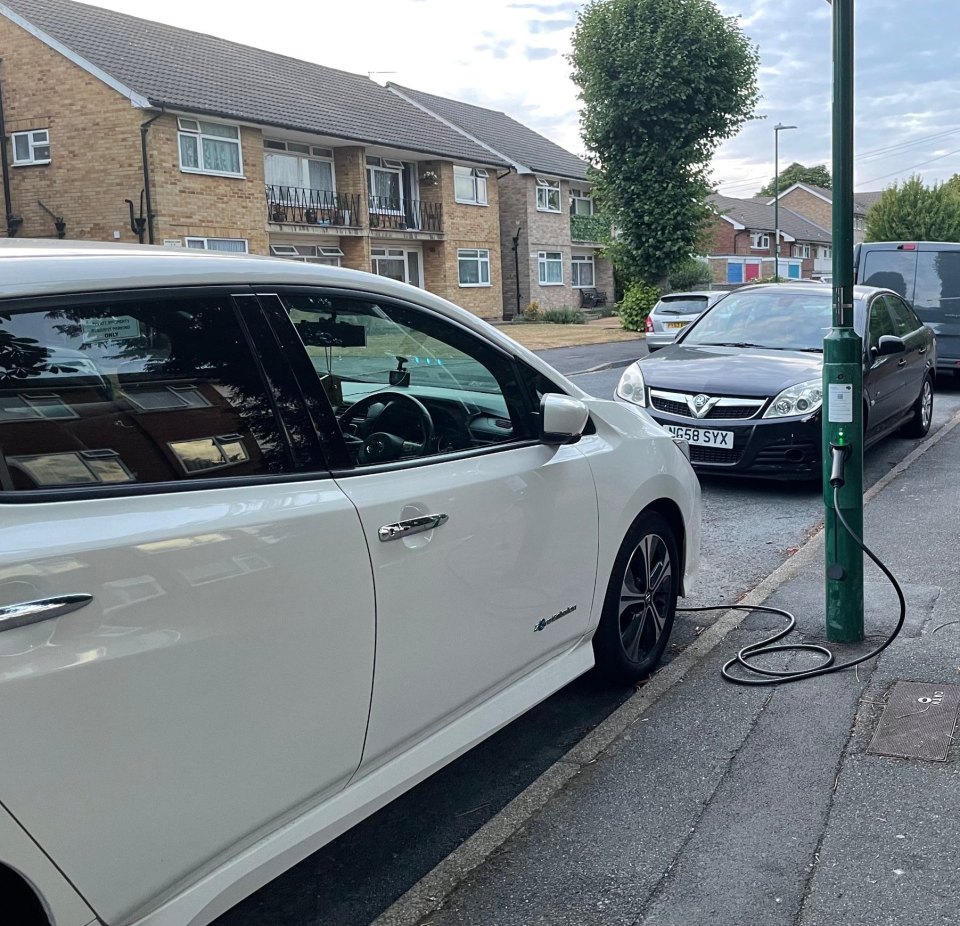
In the photo a Nissan Leaf is charging straight from a lamppost on an ordinary residential street — how people without their own parking do it. The main question for a future owner is simple: what does "filling up" actually cost? Here it is in business terms, with the prices: what charging costs at home, at a lamppost and at a rapid station, and who earns from it.
What does the electricity for charging cost?
The price depends heavily on where you charge. At home on a standard tariff electricity costs about 26p per kWh, but on a special off-peak EV tariff just 7–8p. Public charging is dearer: at slow and medium points (lampposts included) it averages about 54p, and at rapid stations about 82p per kWh. The gap between home off-peak and public rapid charging is more than tenfold.
What does a "full tank" come to?
Take this Nissan Leaf as an example (about a 40kWh battery, ~150 miles of range). A full charge at home overnight is about £3, at home by day on a standard tariff about £10. From a lamppost, as in the photo, about £22. At a rapid station about £33. For a bigger car (a 60kWh battery) home comes to about £15.60, and a public rapid station nearly £49. The takeaway: where you charge matters more than how far you drove.
 ADV · A001ONLYWAY JEWELRY — gold, silver and platinumRings, chains, bracelets, earrings and pendants. Delivery across the UK.Advertise here
What is that per journey?
To compare with petrol, people count the cost per 100 miles. At home charging is about £5–6 per 100 miles (and on an off-peak tariff just a couple of pounds), public standard about £16, rapid about £24. For comparison, a petrol car on the same 100 miles easily burns £18–25 of fuel. So an electric car pays off above all for those who charge at home, and nearly loses the advantage if it constantly sits at dear rapid stations.
Who installs the chargers and earns?
The green post in the photo is a ubitricity charger, and it is owned by the oil giant Shell. Such operators (ubitricity/Shell, Pod Point, bp pulse, InstaVolt, Tesla) are the main beneficiaries: they install the equipment, buy electricity wholesale cheaper and sell it to drivers at a markup. Electricity suppliers earn too. The country already has about 98,000 public charging points, and a third of them are on-street, in residential areas.
Why does street charging matter so much?
Simple: roughly a third of Britons have no garage or driveway, especially flat-dwellers, like the building in the photo. They have nowhere to fit a home charger, so lampposts and public stations are all that is left — and that is the dearest way. It comes out unfair: someone with their own house and parking charges for £3, while a neighbour from a flat pays £22 for the same charge. It is one of the main problems of the switch to electric cars.
How to pay less?
The main tip is to charge at home where possible and definitely sign up for a special off-peak EV tariff: it cuts the price several times over. Save rapid stations for long trips, not daily top-ups. At public points compare prices in an app (such as Zapmap) and check the operator's membership — at Tesla and some networks the price for members is noticeably lower. And always count the cost per 100 miles rather than per single charge — that shows the real value.
Thanks for £1If this information was useful and came in time, press the heart. Payment goes through PayPal, with nothing to choose and nothing to fill in, and it pays for the newsroom.



- Tax Self Assessment: 31 Jan deadline
- Money Do marketplace warehouses give goods away free? The truth about unclaimed parcels
- Law Yellow and red kerb lines: UK rules
- Life Royal week: Prince George starts at Eton, Prince William at King Harald's funeral
- Immigration UK Standard Visitor Visa in 2026: Rules, Fees and Duration
- Immigration UK visitor visa step by step 2026: timing, cost, biometrics and how long it takes
- Life Use by vs best before dates