Reserved in London: who owns it
RESERVED on Oxford Street is Polish brand LPP, turnover £4.6bn. Who owns it and how it took over BHS.
Thanks for £1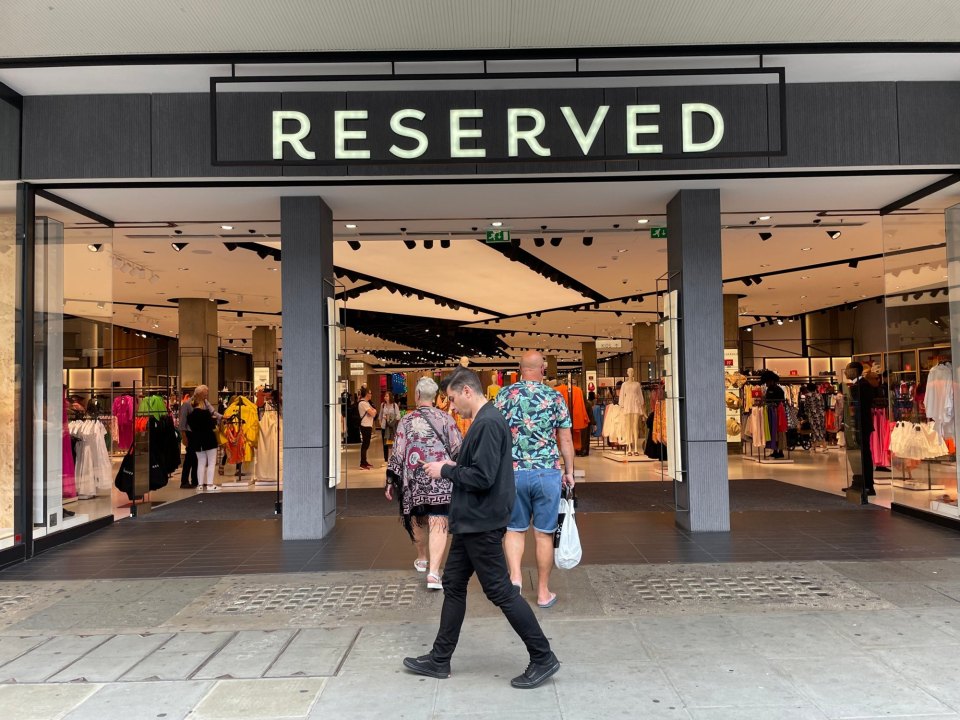
The big RESERVED store on Oxford Street is easy to mistake for another Western chain like Zara or H&M. But it is a Polish brand, backed by one of Europe's largest fashion companies with turnover in the billions. Here it is in business terms: who owns it, how much it earns, how the Poles got into London's dearest shopping corridor, and what it means for the shopper.
Whose brand is it?
RESERVED belongs to the Polish group LPP, based in Gdańsk. It was founded in 1991 by Marek Piechocki and Jerzy Lubianiec, starting out in wholesale clothing. Today LPP means not only RESERVED but the brands Cropp, House, Mohito and the ultra-cheap Sinsay. The company is listed on the Warsaw Stock Exchange, its market value exceeds 50bn złoty (about £10bn), and Piechocki himself is among the richest people in Poland.
How much does LPP earn?
It is big business. For the 2025 financial year the group's revenue topped 23bn złoty (about £4.6bn), with net profit of 2.4bn złoty (up 36% in a year). LPP has more than 3,700 stores across all brands in dozens of countries, over 3 million m² of retail space and about 63,000 staff. The main beneficiary is LPP itself and its shareholders, with control held by the founder's family through a foundation.
 ADV · A003We build websites for tradespeople and sole traders — £219Customers see your work and prices and message you straight away. Ready in 3 days, £219 instead of £438.Advertise here
How did the Poles get onto Oxford Street?
Neatly and symbolically. In 2017 RESERVED opened its London flagship in the very building of the collapsed British chain BHS (441–457 Oxford Street) — a young Polish brand taking the place of an old British retailer. It was a signal to the whole industry: Eastern European fashion had arrived in Europe's busiest and most expensive shopping corridor, where rent is measured in hundreds of pounds per square foot a year.
What is driving the company's growth?
The paradox is that it is not RESERVED pulling the group up but the cheapest brand — Sinsay. Its network has already passed 2,300 stores: small formats, low prices, a bet on the app (over 80% of Sinsay sales go through it). The model is simple: many small cheap outlets in smaller towns plus powerful logistics. For LPP it is a way to grow faster than Zara and H&M precisely in Central and Eastern Europe.
And what about Russia?
An important detail for an honest picture. Until 2022 Russia and Ukraine gave the group about a quarter of its revenue. After the war began, LPP announced its exit from the Russian market and sold the business there. It cost the company dearly, but it made up the loss with explosive Sinsay growth elsewhere — which is exactly why it is posting record profits again today.
How is this useful to the shopper?
RESERVED is the "mid" price tier: dearer than Primark, roughly level with H&M and Zara, with frequent sales. A practical tip: basics are better value at Sinsay from the same owner (it is cheaper), while RESERVED is for a smarter look. And remember: it is the same kind of fast fashion as its neighbours on the street, so the real savings come from seasonal discounts, not the ordinary price on the tag.
Thanks for £1If this information was useful and came in time, press the heart. Payment goes through PayPal, with nothing to choose and nothing to fill in, and it pays for the newsroom.
- Tax Self Assessment: 31 Jan deadline
- Money Do marketplace warehouses give goods away free? The truth about unclaimed parcels
- Law Yellow and red kerb lines: UK rules
- Life Royal week: Prince George starts at Eton, Prince William at King Harald's funeral
- Immigration UK Standard Visitor Visa in 2026: Rules, Fees and Duration
- Immigration UK visitor visa step by step 2026: timing, cost, biometrics and how long it takes
- Life Use by vs best before dates