The UK airport border: what to tell the officer, who can use the e-gates, and what you can bring in your suitcase
Part one of our guide to Britain's airports — everything that happens between the jet bridge and the Exit sign. Who needs a visa and who just needs a £20 ETA; who qualifies for the automatic e-gates and who must see an officer; what the border officer asks and how to answer; how many cigarettes, litres of wine and gifts you can bring duty-free — and why the £10,000 cash rule counts for the whole family, not per person.
Thanks for £1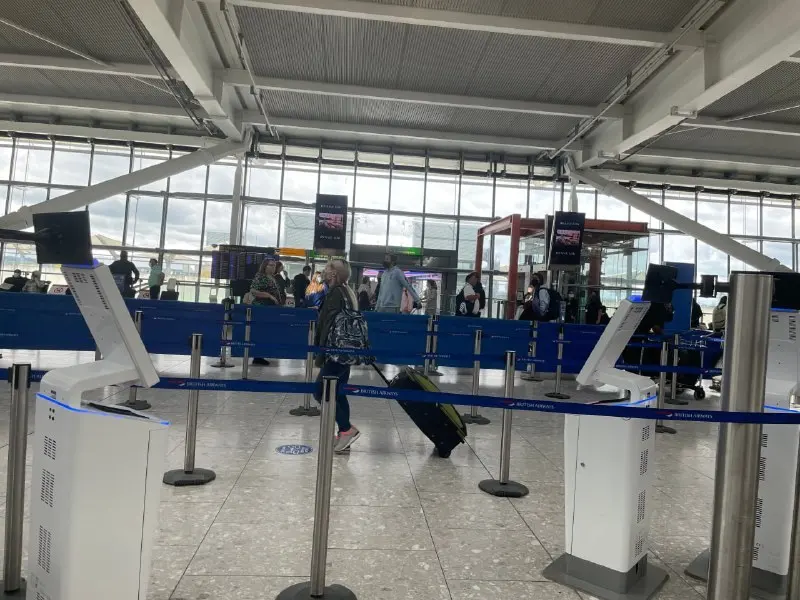
The plane has landed and your phone has found a network — and now comes the part of the trip nobody enjoys: the passport control queue. In reality the British border is built on clear logic, and if you know its rules in advance it passes quickly and calmly. Here is the whole route from jet bridge to exit, step by step.
Who needs a visa — and who needs a £20 ETA?
This part happens before you fly. Citizens of Russia, Belarus and most CIS countries need a visa to enter — these days usually an eVisa, an electronic record linked to your passport through a UKVI account. Citizens of EU countries (including Lithuania, Latvia, Estonia and Poland), the USA, Canada and a number of others need no visa for short visits — but since 2025 they need an ETA, an electronic travel authorisation: £20, applied for online in advance, and — the detail that catches families out — every passenger needs their own ETA, babies included. One visit on an ETA can last up to six months. Apply only on GOV.UK: intermediary websites charge more for the same thing.
 ADV · A003We build websites for tradespeople and sole traders — £219Customers see your work and prices and message you straight away. Ready in 3 days, £219 instead of £438.Advertise here
Who can use the e-gates, and who must see an officer?
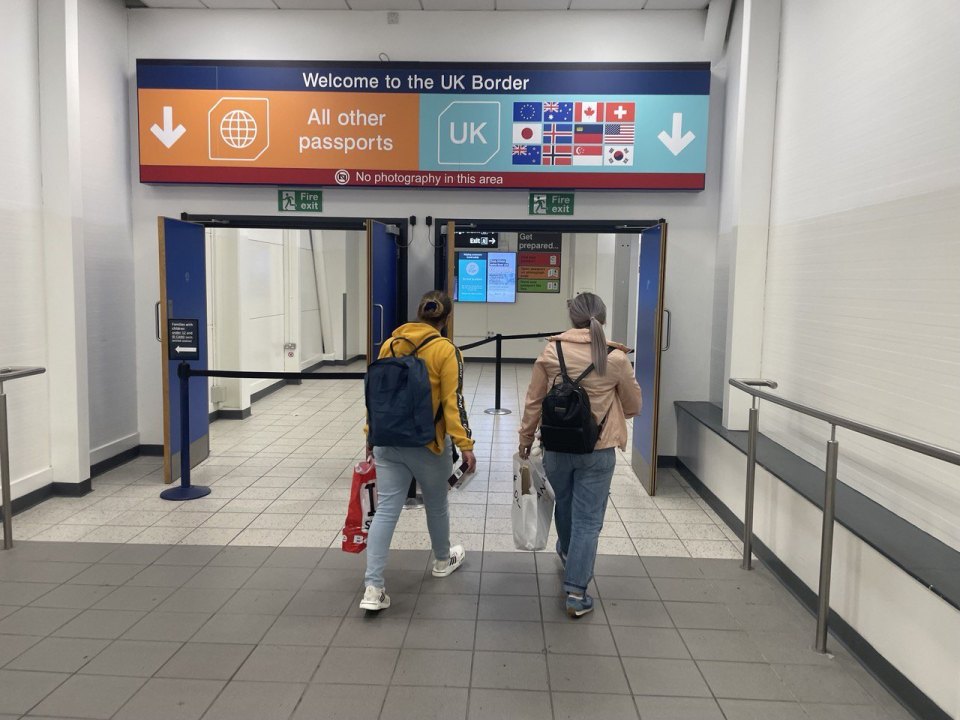
The automatic e-gates are the fastest way through the border, but not everyone is entitled to them. You can use them if all the conditions line up: a biometric passport (the chip symbol on the cover), age 8 or over and at least 120cm tall, and you are a national of the UK, Ireland, an EU country, the USA, Canada, Australia, New Zealand, Japan, South Korea, Singapore, Norway, Iceland, Liechtenstein or Switzerland. Children aged 8-17 go through only with an adult, and the family order matters: adult first, then the children. For visa holders — including most of our readers with Russian and other CIS passports — there is one route: the queue for a Border Force officer. That is not a punishment but the normal procedure: the officer is the one who records your entry on a visa. Before the gate or the desk, take your passport out of its cover, open it at the photo page, put your phone away and take off hats and headphones.
What will the border officer ask, and how should you answer?
The standard set of questions has not changed in decades: purpose of visit, how long you are staying, where you will stay, whether you have a return ticket, what you do at home. The right strategy is short, honest, to-the-point answers: 'tourism, two weeks, hotel in London' works better than any story. Do not joke about working without permission or 'staying forever' — humour does not land at the border. Keep to hand (ideally printed): your accommodation booking with the address, the return ticket, an invitation if you are visiting family, and a clear idea of your budget for the trip. If your English runs out — say so directly: you are entitled to an interpreter, asking for one is normal, and getting tangled up in a language you do not speak is the worst option. Above all: never lie at the border. One inconsistency in a small thing can spoil not just this trip but all the future ones.
Customs: how much can you bring duty-free?
After passport control comes the choice of channel: green for 'nothing to declare' or red. The personal allowances on entry into Great Britain are generous: 200 cigarettes (or 250g of tobacco), 42 litres of beer, 18 litres of wine plus 4 litres of spirits, and other goods — gifts, electronics, perfume — up to £390. The detail few people know: exceed the limit in a category and duty is charged on the whole category, not just the excess. You can declare online from 5 days before arrival, or in the red channel. Food is stricter than people expect: meat, dairy, fish and even fruit and nuts are restricted, while bread, biscuits, chocolate, sweets and pasta without meat filling travel freely. Homemade sausage in the suitcase is the classic way to get to know UK customs better.
What is the £10,000 cash rule?
If you are carrying £10,000 or more in cash, you must declare it: online at least 72 hours before travel, by phone on 0300 322 9434, or in the red channel. Important: the threshold counts for a family or group travelling together, not per person. Undeclared cash can be seized in full by Border Force, with a penalty of up to £5,000 to get it back. The rule works both ways — on entry and on departure.
Which airport services are useful — and which are traps?
Useful and free: wi-fi in every major airport, drinking water fountains after security (bring an empty bottle), and assistance for passengers with reduced mobility — booked in advance through your airline. Now the traps. Airport currency exchange offers reliably the worst rates in the country: change the minimum for the journey or pay by card — we compared the rates in our bureaux de change guide. SIM-card stands charge roughly double the usual tariff — an eSIM bought online before you fly solves it cheaper. And never accept a 'taxi' from people who approach you in arrivals: unlicensed private hire is illegal and uninsured in Britain — how licensing works and how to check a car, we covered here. How to get from any airport into the city cheaply and calmly — in part two of this guide, out tonight. And if your flight was delayed or cancelled — you may be owed compensation.
Thanks for £1If this information was useful and came in time, press the heart. Payment goes through PayPal, with nothing to choose and nothing to fill in, and it pays for the newsroom.
Check whether an employer can sponsor a work visa →
Search the Home Office register on our own site: whether the company holds a sponsor licence, and for which routes.
- Housing Drought: minister lets the Agency take more water to avoid rota cuts
- Travel Jubilee line part suspended to Stanmore after fire alert
- Life Russian-language events in London: verified dates to December 2026
- Travel London Tube and TfL closures in October 2026: the Piccadilly line stops entirely at Halloween, and no Tube to Heathrow on 17–18 October
- Housing Homes in London take 84 days to sell — longest in Britain
- Life A London concert cancelled back in March is still on sale for 4 October — and the full Russian-language listings for October
- Jobs & Business From 1 October, right to work checks reach couriers, subcontractors and platform workers