Currency exchange bureaux in the UK: where the fee hides behind '0% commission', how to check any bureau in a minute — and our verified catalogue
'Best rate in London, 0% commission' is the sign people lose money at most often. Here is how bureaux actually earn, which tricks turn an attractive rate into minus 10%, how to check any outlet against government registers in a minute — and the first level of our catalogue: chains verified against the registers, with banks and the Post Office in a separate list. This is how the 'ONLYWAY.NEWS verified' mark works.
Thanks for £1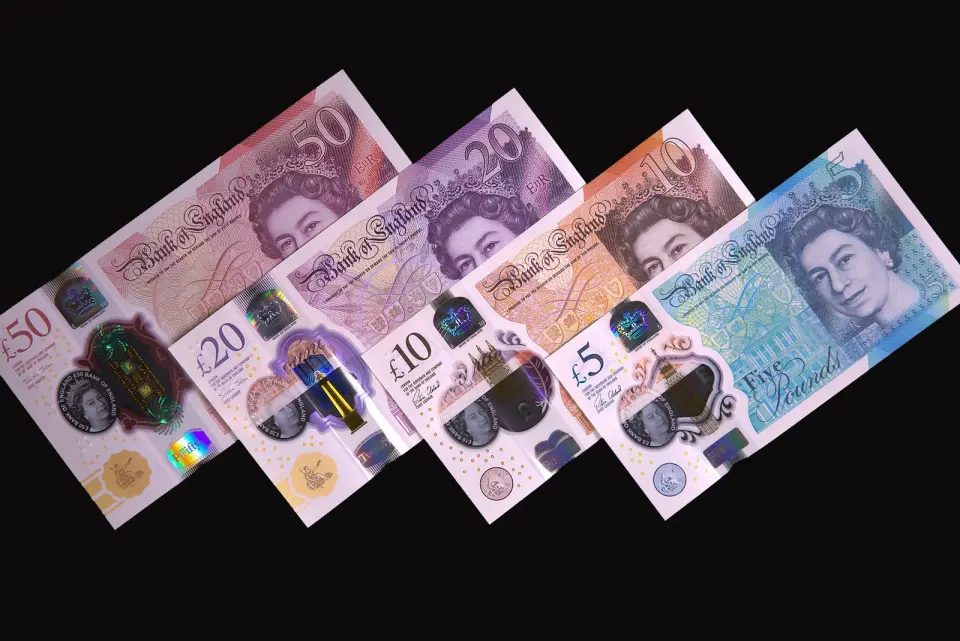
Cash exchange is the last corner of finance where the price is announced by a shop sign rather than a contract. Which is why the tricks of the nineties still work here: bait rates, small print and '0% commission'. Below — how it is built, how to verify any outlet's legality, and where our exchange catalogue starts.
Where does the fee hide when the sign says 0%?
A bureau earns not on commission but on the spread — the gap between the interbank rate and what you are given. '0% commission' is pure marketing: the fee is simply baked into the rate. The only honest comparison is the final amount in hand: how many euros or dollars you get for your £500 here versus next door. Compare against the mid-market rate (any finance site shows it): a 2-3% gap is the market norm; 8-12% is the classic 'tourist' haircut delivered entirely legally.
 ADV · A001ONLYWAY JEWELRY — gold, silver and platinumRings, chains, bracelets, earrings and pendants. Delivery across the UK.Advertise here
What are the most common tricks?
The classics. The bait rate: the window shows the flattering side of the board, or a rate 'from £1,000'; inside, your sum gets a different rate — always ask for the final figure before handing over money. Airports: the worst rates in the country; exchanging there without an online pre-order is a donation. Credit cards: buying currency on one is almost always processed as a cash advance, with interest from day one. And the eternal DCC trap once abroad: the terminal offers to 'charge in pounds' — always choose the local currency, the terminal's conversion is worse than your bank's. A separate plot line — 'exchangers' from community chats offering better-than-market rates: no receipt, no recourse, and, per recent police reports — from Staffordshire Police's January 2026 warning to the seizure of over £100,000 in counterfeit cash in West Mercia — hand-to-hand cash remains the main channel for fake notes.
How do you check a bureau is legal in one minute?
A legal exchange outlet in the UK leaves two mandatory traces. First — HMRC registration as a money service business: running exchange without anti-money-laundering supervision is a criminal offence. HMRC publishes an open Supervised Business Register — a table of names, trading names, registration numbers and postcodes, downloadable from GOV.UK and searchable in a minute. Second — the FCA register, where the outlet also provides payment services (transfers). If a business is not in the HMRC register, that is not 'maybe a delay' — it is your cue to turn around and leave. And always take the receipt: a legal outlet issues one by default; an illegal one has none — and neither will you have any way to get anything back.
The ONLYWAY.NEWS catalogue: chains verified against the registers
Address lists of 'every bureau in the area' go stale faster than they are printed, so our catalogue works differently: level one is nationwide chains with public legal entities, whose outlets are found via their official branch finders. At launch, the chains we have verified against the HMRC/FCA registers: Travelex, eurochange, No1 Currency, International Currency Exchange (ICE), ChangeGroup, Ramsdens (strong in the North and Wales), Thomas Exchange Global and Currency Online Group (London), ACE-FX. A verified chain does not cancel the main rule: compare the rate at the specific outlet on the specific day — legality guarantees a receipt and genuine notes, not the best spread.
Banks and the Post Office — the separate list
The country's biggest seller of foreign cash is not a bank but the Post Office: thousands of branches, online pre-order with branch collection. Supermarket banking brands — Tesco, Sainsbury's, M&S — also run travel money desks. Traditional banks, meanwhile, barely sell cash currency any more: many have wound down branch exchange or serve their own customers only — check with your bank in advance, and do not expect the best rate from it. For non-cash transfers and cards abroad, see our separate guide.
What does the 'ONLYWAY.NEWS verified' mark mean?
Exactly what it says and no more: as of the check date, the business was found in HMRC's supervised register (and, where applicable, the FCA register), with name, number and postcode matched. HMRC itself warns honestly that a register entry is not an endorsement of any transaction — and we hold to the same logic: the mark confirms legality, not a good rate. We will extend the catalogue to individual outlets by area as checks are completed, with the date of the last check against every entry. Cheated at a bureau — write to us: we will check and, if its legality is in doubt, report it to HMRC (there is a form for reporting unregistered businesses). If the money is already lost, the recovery playbook is in our piece on chargebacks and complaints, and note authenticity is covered in the banknotes guide.
Thanks for £1If this information was useful and came in time, press the heart. Payment goes through PayPal, with nothing to choose and nothing to fill in, and it pays for the newsroom.
- Travel Jubilee line part suspended to Stanmore after fire alert
- Life Russian-language events in London: verified dates to December 2026
- Housing Drought: minister lets the Agency take more water to avoid rota cuts
- Travel London Tube and TfL closures in October 2026: the Piccadilly line stops entirely at Halloween, and no Tube to Heathrow on 17–18 October
- Life A London concert cancelled back in March is still on sale for 4 October — and the full Russian-language listings for October
- Jobs & Business From 1 October, right to work checks reach couriers, subcontractors and platform workers
- Life A hundred students walked into an Edinburgh pub? What the viral Reel really shows