London's Royal Parks: what actually happens inside Hyde Park and the other seven — events, dates and what you spend money on
The eight Royal Parks are 5,000 acres of free London: Richmond's deer, St James's pelicans, Hyde Park's concerts and Winter Wonderland, Greenwich's observatory. Entry is free everywhere — but there is plenty to spend on inside, from Serpentine boats to the winter fair's rides. Here is the guide: which park is for what, what happens there through the year, and which of it costs money.
Thanks for £1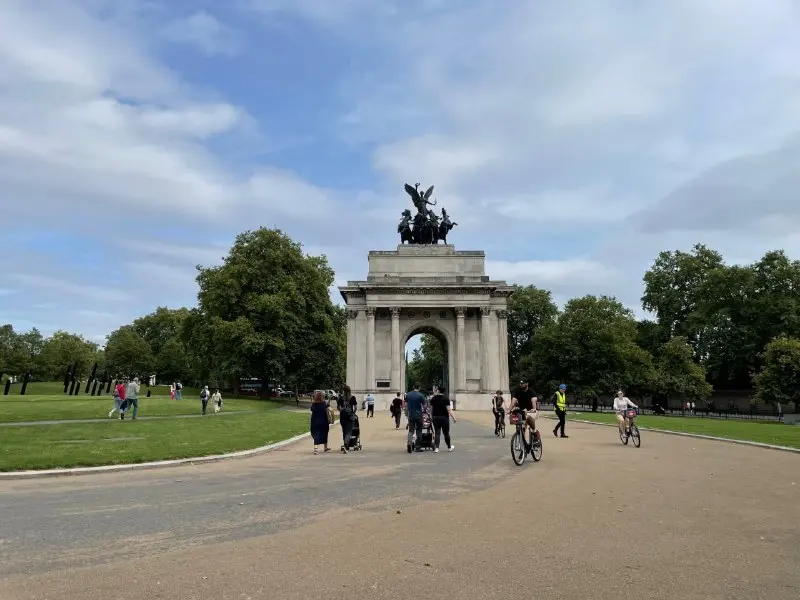
The 'royal' in the name is not decorative: the land historically belongs to the Crown, and the parks are run by The Royal Parks charity — eight parks plus Brompton Cemetery and Victoria Tower Gardens, more than 5,000 acres in all. One rule covers them all: entry is free, always. Here is the map of what happens inside, and what it costs.
Hyde Park: what is there besides the lawns?
The flagship, and London's main events venue: pedestrian gates open from 5am to midnight. In summer it hosts BST Hyde Park — a run of stadium-scale concerts by global stars (ticketed, and not cheap); in winter it becomes Winter Wonderland — a fair with rides and rinks, where peak slots are ticketed and the real spending happens inside: rides, the ice rink, food. Year-round there is the Serpentine — the lake with boat hire and waterside cafés, summer swimming at the Serpentine Lido, tennis and padel courts (paid booking) and the rose garden by Rotten Row, the historic royal riding route. And one free legend: Speakers' Corner by Marble Arch, where since the 19th century anyone may stand up on a box on a Sunday and speak. In October the Royal Parks Half Marathon runs through the parks (11 October in 2026): entry is paid and sells out early; watching is free.
 ONLYWAY NEWSLIVEHousing · 19.10Stamp Duty on buying a home in England: bands, reliefs and the 14-day deadlineJobs & Business · 19.10Notice periods: what you owe and what you are owedImmigration · 19.10British citizenship: five years, 450 days and £1,839Jobs & Business · 19.10Jobs Plans: 22,400 apprenticeships a year for under-25s and 40,000 on siteMoney · 19.10Council Tax discounts: who pays 25% or 50% less and how to claimTax · 19.10Sold a second property: 60 days to report it to HMRCJobs & Business · 19.10Neonatal care leave in the UK: 12 weeks and £187.18 a weekMoney · 19.10UK mobile plans compared: where £8 buys what £25 doesHousing · 19.10Stairs and guarding: England reviews Part K after more than 20 yearsMoney · 19.10Refunds in the UK: 14 days online, less in a shopONLYWAY NEWS · appInstall the ONLYWAY NEWS appFresh UK news, classifieds, key dates and exchange rates on your home screen, one tap away. Free.NewsClassifiedsCalendarRates
Kensington Gardens: how are they different from Hyde Park?
Formally a separate park (265 acres), though only the bridge over the Serpentine divides them. Here are the Albert Memorial, the Peter Pan statue, the Serpentine Galleries with free contemporary art, and Kensington Palace — which does charge, as a working royal residence should. With children, head for the Diana Memorial pirate-ship playground — free, with a queue in season.
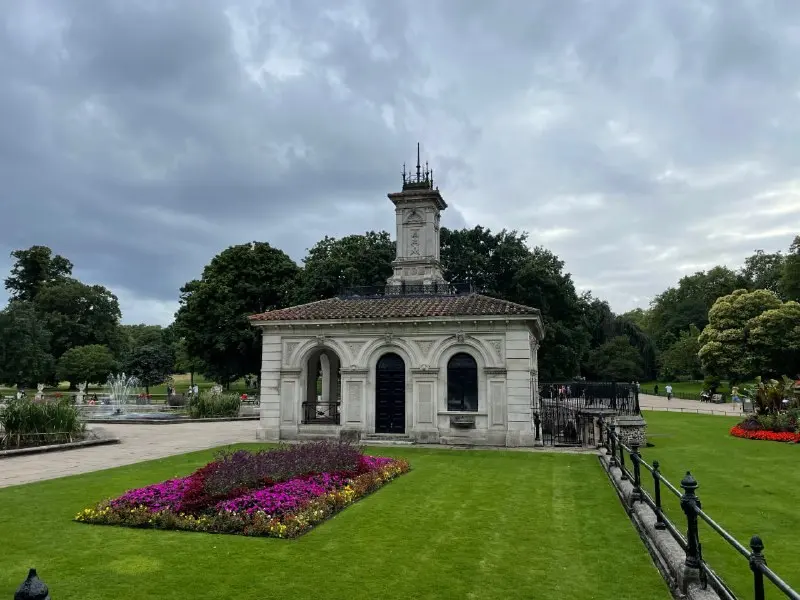
The Italian Gardens in Kensington Gardens: fountains, the 19th-century pump house and flowerbeds — free
Where do you go to see the deer?
Richmond Park — 2,500 acres, the largest of the eight, where herds of red and fallow deer have roamed free since the 17th century. October and November bring the rut: roaring, clashing antlers and the best photographs of the year (keep at least 50 metres away — they are wild animals). The park also holds the Isabella Plantation with its ancient trees and azaleas. The other deer park is Bushy (over 1,000 acres, by Hampton Court): this is where parkrun was born in 2004 — the free Saturday 5k that grew into a worldwide movement; running it 'at home' is a small pilgrimage, and costs nothing.
What about the central parks: St James's, Green Park, Regent's?
St James's is the oldest Royal Park, with the lake, the view of Buckingham Palace and its star free attraction — the pelicans, resident since the 17th century; their daily feeding is a little theatre, check the time on the park's site. Neighbouring Green Park is a quiet triangle of mature trees; together with Hyde Park it stages the King's Troop gun salutes on the major royal dates — the King's birthday, the accession and coronation anniversaries: guns, horses, full dress, free, schedule on the parks' site. Regent's Park means Queen Mary's rose garden, the ticketed Open Air Theatre in summer, wetlands and London Zoo (separate ticket), while adjoining Primrose Hill is that postcard panorama of London, free at sunset.
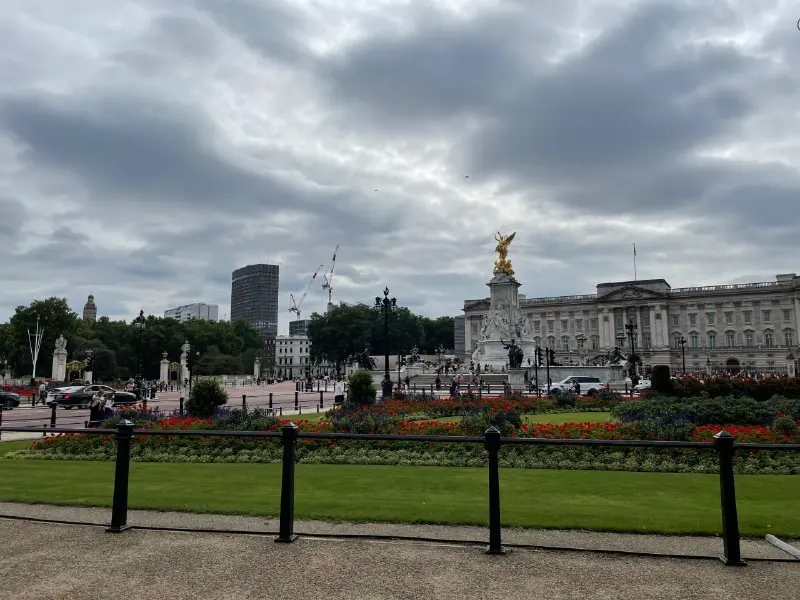
Buckingham Palace and the Victoria Memorial seen from Green Park
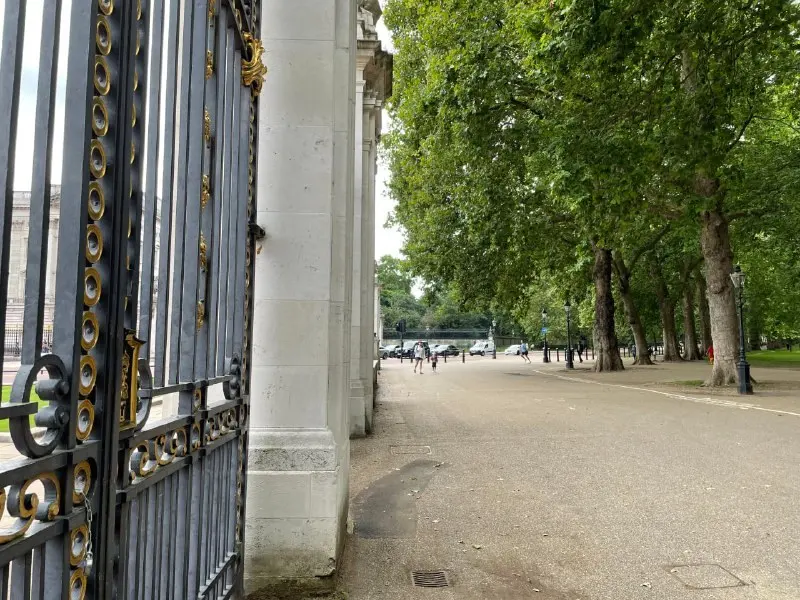
The gilded Canada Gate — the ceremonial entrance to Green Park by the palace
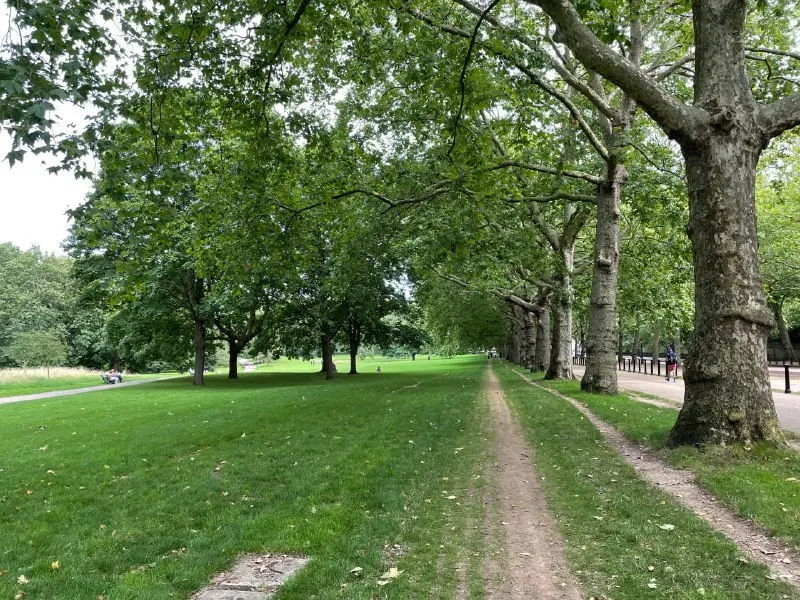
Green Park's plane-tree avenue: a quiet triangle two steps from Piccadilly
Why go to Greenwich?
For a combination found nowhere else: a 17th-century park with Roman history, the free hilltop panorama of Canary Wharf and the City — and, at the top, the Royal Observatory with the Prime Meridian, which is ticketed (the park itself asks nothing). It pairs well with the free National Maritime Museum at the foot of the hill.
So what does the money go on inside?
The pattern is the same in every park: the landscapes, playgrounds, Speakers' Corner, pelicans, deer, gun salutes and parkrun are free; you pay for the pleasures with equipment and tickets — boats and the Lido on the Serpentine, deckchairs in season, courts, cafés, BST concerts, Winter Wonderland rides, the Regent's Park theatre, the zoo, the observatory and the palaces. Current prices and timetables are on royalparks.org.uk; our neighbouring reads: this autumn's deer rut, the winter holidays 2026/27 and what to watch in the autumn sky — also free.
Thanks for £1If this information was useful and came in time, press the heart. Payment goes through PayPal, with nothing to choose and nothing to fill in, and it pays for the newsroom.

- Travel Jubilee line part suspended to Stanmore after fire alert
- Life Russian-language events in London: verified dates to December 2026
- Housing Drought: minister lets the Agency take more water to avoid rota cuts
- Travel London Tube and TfL closures in October 2026: the Piccadilly line stops entirely at Halloween, and no Tube to Heathrow on 17–18 October
- Life A London concert cancelled back in March is still on sale for 4 October — and the full Russian-language listings for October
- Jobs & Business From 1 October, right to work checks reach couriers, subcontractors and platform workers
- Life A hundred students walked into an Edinburgh pub? What the viral Reel really shows