Wheelchair space on a bus: rights
What a driver must do if the wheelchair space is taken, and how to complain.
Thanks for £1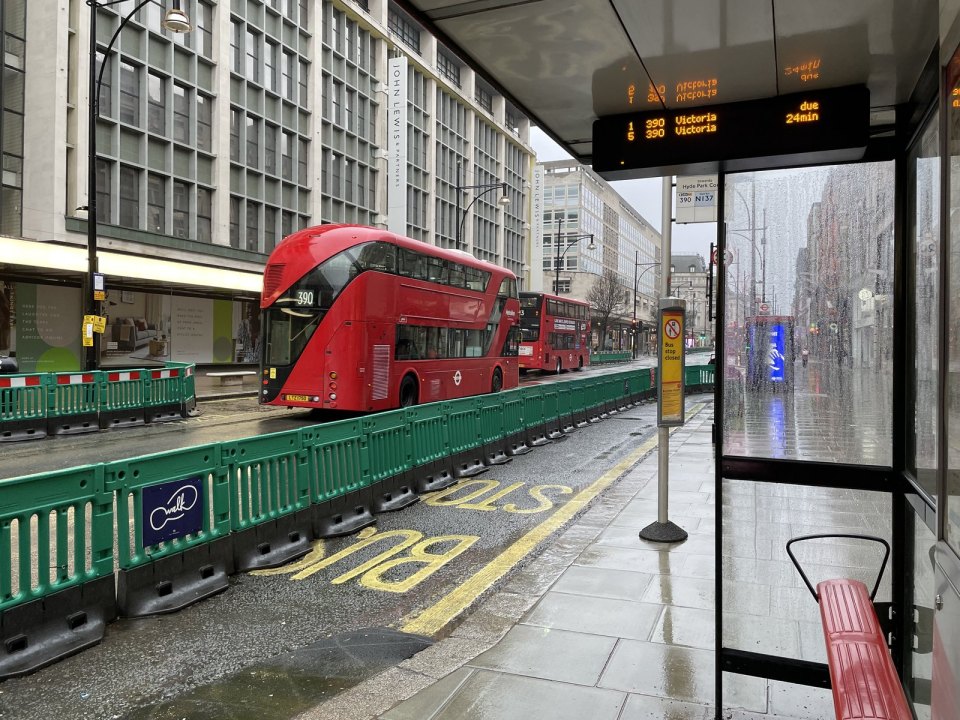
A driver cannot simply shrug if the only wheelchair space on a bus is taken. The Equality Act 2010 and vehicle accessibility rules require the operator to take several concrete steps. Here is what a bus must have, who gets priority, and how to complain.
What must a bus legally have for a wheelchair?
A bus must have at least one space for a standard wheelchair. Under guidance from the DVSA (Driver and Vehicle Standards Agency) the vehicle also needs a working lift or ramp, handrails in a contrasting colour, a slip-resistant floor and lighting for safe boarding.
A standard wheelchair is treated as up to 70cm wide, 120cm long and 1.35m high — the space is designed for that size. The rules cover manual and electric wheelchairs, but not mobility scooters.
How many priority seats must a bus have?
A bus must have an area of at least 4 priority seats near the entrance, with no steps and a clear sign. These seats must not fold or move, and any armrests must swing out of the way. At least one seat must leave room for an assistance dog.
Who has the right to the wheelchair space?
The wheelchair space is for a passenger in a wheelchair first. If other people or their belongings are in the space and the bus is not full, the driver must ask them to move. A driver may refuse a wheelchair only in limited cases: it is larger than standard, it cannot be placed safely, capacity is exceeded, or another wheelchair is already there.
What must the driver do if the space is not cleared?
If passengers refuse to move without a good reason, the driver must tell them they are required to move. The driver has no legal power to move anyone by force. After that it depends on the situation: persuade them, wait before setting off until it is resolved (if that will not delay others), arrange and pay for alternative transport such as a taxi, or apply the operator's conditions of carriage to the offender.
What did the Supreme Court decide in Paulley?
The Supreme Court in FirstGroup v Paulley [2017] UKSC 4 (judgment of 18 January 2017) ruled that a mere request to vacate the space is not enough. Mr Paulley, a wheelchair user, could not board a bus on 24 February 2012: a woman with a sleeping child in a pushchair occupied the space and refused to fold it and move, and the driver did nothing more. The court held that a "first come, first served" policy was unjustified: where a refusal is unreasonable, the driver should consider a further step to pressure the other passenger, even refusing to drive on for a few minutes.
The court did not require drivers to remove passengers by force. The majority declined to restore an earlier £5,500 damages award, though three justices disagreed. For the passenger it was a limited but important win.
 ADV · A001ONLYWAY JEWELRY — gold, silver and platinumRings, chains, bracelets, earrings and pendants. Delivery across the UK.Advertise here
Which buses are not covered?
The rules do not apply to minibuses or vehicles carrying 22 passengers or fewer, nor to private or non-timetabled hire. Some coaches used for home-to-school services have until 10 August 2030 to meet all the rules.
Where do you complain about an inaccessible bus?
You can report a bus, service or driver over access problems to the DVSA using the form on gov.uk. The requirements rest on the Equality Act 2010 and the Public Service Vehicles Accessibility Regulations 2000.
Thanks for £1If this information was useful and came in time, press the heart. Payment goes through PayPal, with nothing to choose and nothing to fill in, and it pays for the newsroom.


- Tax Self Assessment: 31 Jan deadline
- Money Do marketplace warehouses give goods away free? The truth about unclaimed parcels
- Law Yellow and red kerb lines: UK rules
- Life Royal week: Prince George starts at Eton, Prince William at King Harald's funeral
- Immigration UK Standard Visitor Visa in 2026: Rules, Fees and Duration
- Immigration UK visitor visa step by step 2026: timing, cost, biometrics and how long it takes
- Life Use by vs best before dates