Contactless eGates at UK airports: no need to put your passport on the reader
From 6 October 2026 UK airports began switching eGates to contactless: the gate photographs your face, checks it against verified data and opens without a passport on the reader. Testing shows it is up to 25% faster. For now it is British citizens only and East Midlands only; every eGate is due to be upgraded by early 2027.
Thanks for £1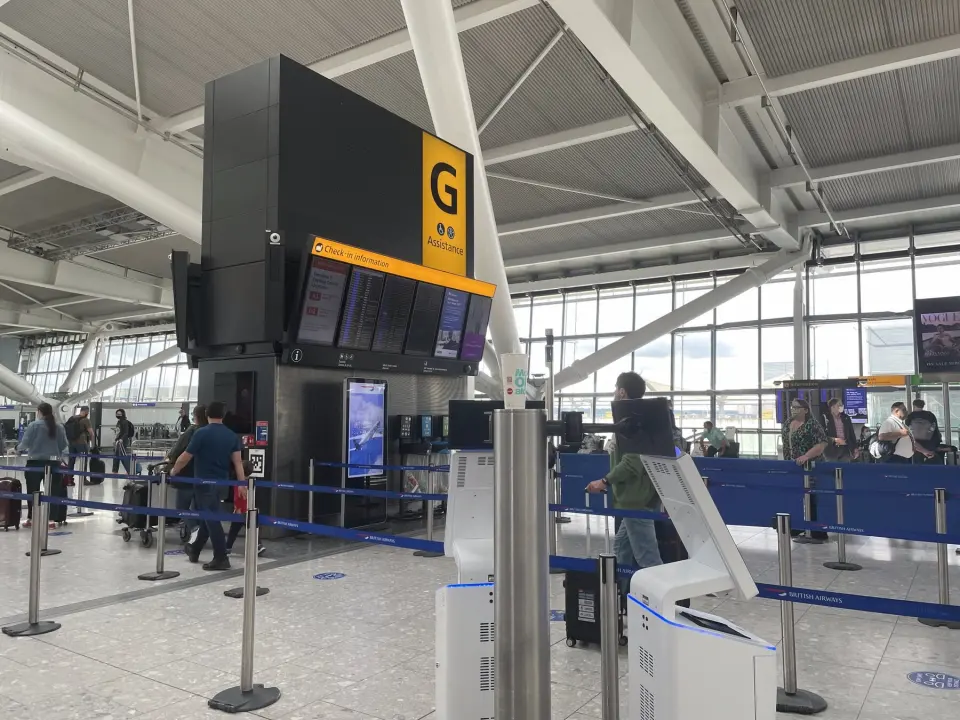
From 6 October 2026 the Home Office began switching airport eGates in the UK to a contactless mode: the gate takes a live photo of your face, checks it against verified immigration, travel and passport information, and opens by itself. You no longer place your passport on the reader — but you still have to travel with it.
What changed on 6 October 2026
Airport eGates are being switched in stages to new facial comparison technology that does not require the passport to be placed on the reader.
 ONLYWAY NEWSLIVEJobs & Business · 26.10How to find a job in the UKMoney · 26.10Debt collectors: what they can and cannot doTechnology · 26.10How to get wrong data about you correctedMoney · 26.10Commuting vs renting closer: what's really cheaperMoney · 26.10Which travel pass to buy for commuting into the CityLife · 26.10Where to spend an evening for two in LondonMoney · 26.10How to save on groceries in London and which shops to avoidLife · 26.10Where to buy good meat in London for home cookingLife · 26.10Where to buy cheap fruit and vegetables in LondonLife · 26.10Where to spend an evening in LondonONLYWAY NEWS · appInstall the ONLYWAY NEWS appFresh UK news, classifieds, key dates and exchange rates on your home screen, one tap away. Free.NewsClassifiedsCalendarRates
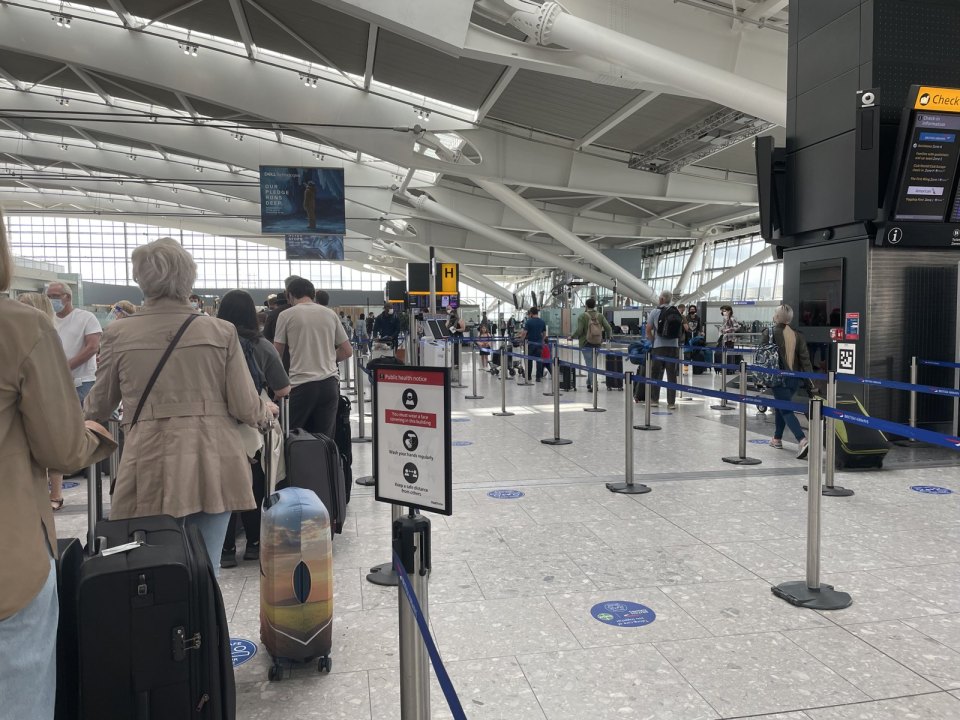
Border Force describes the process like this: the passenger walks up to an eGate and has their photo taken, the system checks the live image against verified immigration, travel and passport data, and the gate opens automatically once the checks are complete. All immigration and security checks continue as normal — only the way the system recognises you has changed.
One technical detail matters: the gates themselves are not being replaced. The software inside the existing eGates is being updated, which is why the change arrives in waves rather than everywhere at once. The Home Office expects every eGate to be upgraded by early 2027.
Testing shows the contactless route is up to 25% faster than using a passport on an eGate.
Who can go contactless right now
At the start, contactless eGates are limited to British citizens travelling on a British passport.
Other nationalities already eligible for eGates will be added later — the Border Force factsheet says "in the future", the press release says "over the coming months", and full rollout is expected by early 2027. So if you hold an eVisa, an ETA or a passport from one of the eGate-eligible countries, you still put your passport on the reader for now.
 ADV · A003We build websites for tradespeople and sole traders — £219Customers see your work and prices and message you straight away. Ready in 3 days, £219 instead of £438.Advertise here
If the contactless check cannot be completed, you will be asked to place your passport on the reader or directed to a Border Force officer — exactly as happens today. Officers continue to monitor all eGates and offer assistance.
Which airports are getting contactless gates
East Midlands Airport is first, with a small number of contactless eGates already in place; the technology then goes to every airport that has eGates.
The airports in the phased rollout are Birmingham, Bristol, Cardiff, East Midlands, Edinburgh, Gatwick, Glasgow, Heathrow, London City, Luton, Manchester, Newcastle and Stansted. There are more than 290 eGates in total across 15 air and rail ports. Any eGate that has not been updated yet works exactly as before.
Do you still need to carry your passport
Yes. The requirement to travel with a valid passport has not been removed, and Border Force asks passengers to keep it with them at all times.
Contactless simply means you do not have to take the document out and put it on the glass. If further checks are needed, you will be asked for the passport — without it you are stuck at the border. A separate warning applies to dual nationals: travel on a valid British passport or hold a certificate of entitlement, otherwise you risk a delay at the border.
Who is allowed to use eGates at all
eGate eligibility has not changed — the update only affects how the check is carried out.
You can normally use an eGate if all of the following apply: your passport has a biometric symbol on the cover; you are 8 or over (8 to 17 year olds must be accompanied by an adult); you are at least 120cm tall; and you are either a British or Irish citizen, or you hold valid immigration status (an ETA, an eVisa or a digital record of exemption) together with a passport from an EU country, Australia, Canada, Iceland, Japan, Liechtenstein, New Zealand, Norway, Singapore, South Korea, Switzerland or the USA. Members of the Registered Traveller Service also qualify.
National identity cards cannot be used at the eGates — you need a passport. Border Force advises EEA citizens to bring a passport rather than an ID card, because it is faster.
What it means if you hold an eVisa or an ETA
Nothing gets easier immediately, but the requirement on the status itself stays strict: it must be valid and linked to your UKVI account.
Border Force lists "digital permission" among the common reasons the gates refuse someone: no ETA, eVisa or digital exemption linked to the UKVI account, or a digital status that is no longer valid. For reference, an ETA for visits costs £20 and covers stays of up to six months; British and Irish citizens, and anyone with permission to live, work or study in the UK, do not need one.
Why an eGate might not let you through
Border Force lists seven common reasons, and most of them have nothing to do with your status being wrong.
They are: further checks on your document, nationality or eligibility; a problem with digital permission; a fault with the gate itself; an identification error, including a changed appearance, or a hat, headphones, face mask or glasses, or not looking at the screen until it turns green; a damaged or worn passport chip; safeguarding checks on the relationship between a child and the accompanying adults; and ordinary user error such as leaving the passport in its cover or not pressing the page down fully. In those cases you are referred to an officer — that is routine, not a refusal of entry.
How to go through as a family
Only one person can use an eGate at a time, and families have a recommended order.
An adult travelling alone with children should go through first. If two or more adults are travelling with children, the order is: first adult, then the child or children, then the second or final adult. Children aged 8 to 17 must be accompanied, and children under 8 or shorter than 120cm cannot use the eGates at all. Access was extended to children aged eight and above over the summer of 2026. If you are travelling with a child who is not yours or who has a different surname, it helps to carry a birth certificate, a marriage or divorce certificate, or a letter from the child's parents — you may be asked.
Who must not use an eGate even if eligible
One group should avoid the gates: people arriving on a Temporary Work — Creative Worker certificate of sponsorship for assignments of up to three months without a visa.
They need a stamp in the passport from a Border Force officer, and eGates do not stamp passports. Without the stamp you cannot carry out the activities you came for. If you used an eGate by mistake, find an officer before leaving the port and get the stamp.
What to do in practice
The most useful rule for the coming months is not to guess which type of gate is in front of you, but to follow the general Border Force advice.
Take the passport out of its cover and open it at the photo page; remove hats, headphones and glasses; put phones away; look straight at the screen until it turns green; and keep the family together and in order. If the gate does not open, go calmly to an officer. And check in advance that your digital status in the UKVI account is valid — that is the most common thing that breaks the crossing.
Read next: the UK ETA: who needs one and what it costs, what to say at UK airport passport control, eVisa replacing BRP: the 31 December 2026 deadline, EES biometrics when entering the Schengen area, renewing a UK passport: cost and timing.
Thanks for £1If this information was useful and came in time, press the heart. Payment goes through PayPal, with nothing to choose and nothing to fill in, and it pays for the newsroom.
- Home Office: Airports to go contactless in major boost for UK passengers (06.10.2026)
- Border Force: Contactless travel using eGates
- Border Force: Guide to faster travel through the UK border
- Border Force: Problems with ePassport gates (eGates)
- GOV.UK: Entering the UK
- GOV.UK: Get an electronic travel authorisation (ETA) to visit the UK
- Jobs & Business Post Your Ad Free
- Money A lost or late parcel: the seller is responsible, not you
- Money Check your lender now
- Money Could that call be a trap?
- Life See London from above for free: four viewpoints and their entry rules
- Life Russian-language events in London: verified dates to December 2026
- Markets UK firms set for more than £330m in export contracts in Guinea and Benin