The Water-Babies by Charles Kingsley — bedtime book: extract, author and a journey to the places
A Victorian fairy tale about Tom the chimney-sweep, who falls into a river and becomes a “water-baby.” The opening line, about the author, and a route from Eversley parish to Malham Tarn — with the places checked today.
Thanks for £1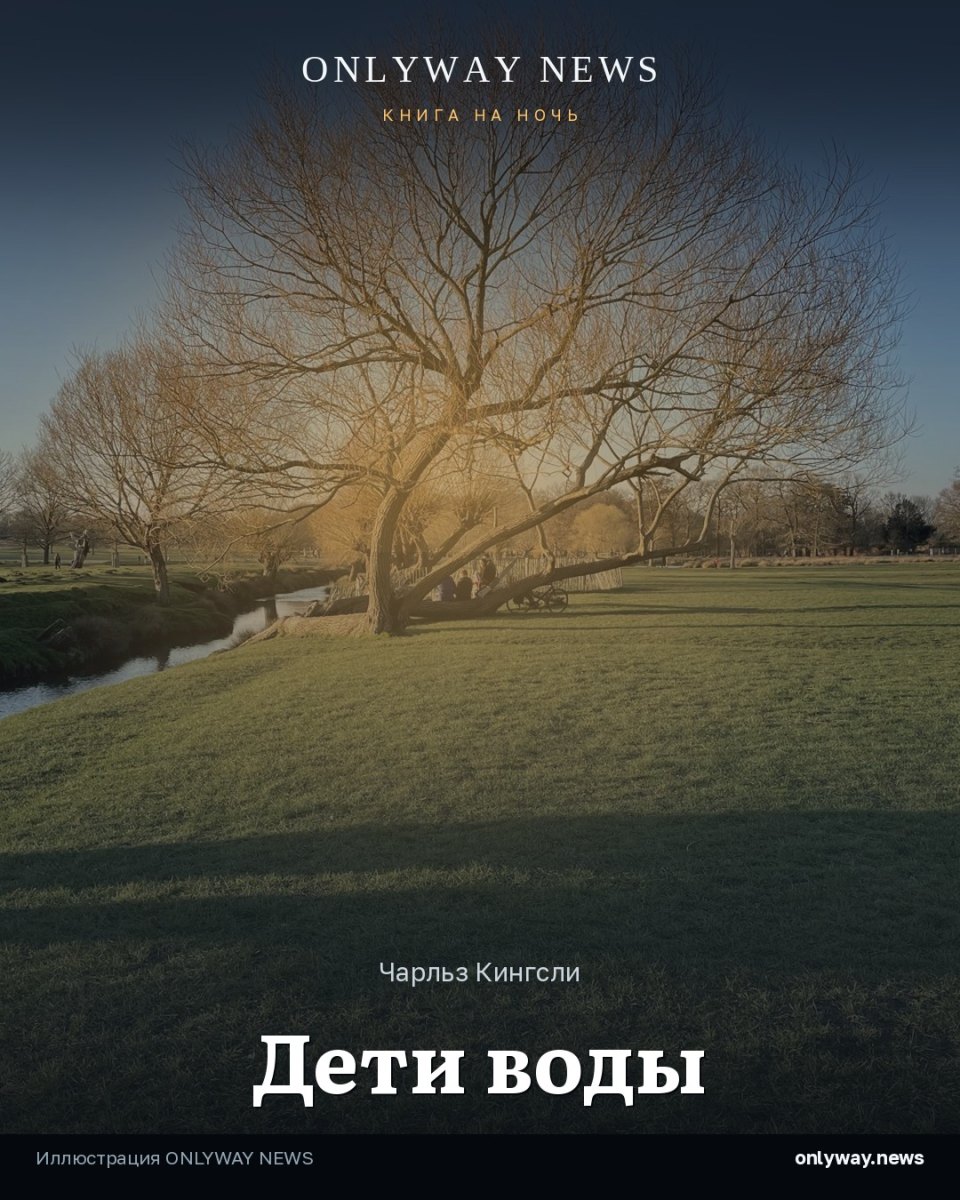
Late in the evening, by water, it is good to read a book that flows like a river — and The Water-Babies is exactly that. It is a strange, tender, very Victorian fairy tale about a little chimney-sweep called Tom, who runs away from his cruel master, falls into a northern river and becomes a “water-baby.” Charles Kingsley wrote it in 1863 for his youngest son and poured everything into it at once: adventure, satire, a lesson in kindness and a real love of streams and creatures. The result is sweet and eccentric in equal measure — and useful, too: the book helped finish off the shameful trade of sending children up chimneys. Today it is read both as a bedtime story and as a monument to its age.
An extract: how the book begins
The tale opens not with the river but with Tom himself — a line you cannot forget. The first sentences:
 ONLYWAY NEWSLIVEMoney · 15.11The missing pension top-up: how to reclaim HRP years for caringMoney · 14.11Energy standing charges: what you pay even at zero usageLaw · 14.11Exchanging a foreign driving licence: who can skip the tests and who cannotBooks · 14.11The Water-Babies by Charles Kingsley — bedtime book: extract, author and a journey to the placesUK & Politics · 14.11King's Award for Voluntary Service: 250 groups honoured across BritainMarkets · 14.11Brexit barriers hit profits for over half of UK food and drink exportersJobs & Business · 14.11Youth Guarantee: Biffa opens up to 2,000 jobs for young peopleLife · 14.11Compare schools online: how to choose your child's school in EnglandTravel · 14.11A quarter more vans, fewer buses: how travel in Britain has changedLife · 14.11Forever chemicals in England’s rivers: PFOS down 30%, and nearly halved in fishONLYWAY NEWS · appInstall the ONLYWAY NEWS appFresh UK news, classifieds, key dates and exchange rates on your home screen, one tap away. Free.NewsClassifiedsCalendarRates
“Once upon a time there was a little chimney-sweep, and his name was Tom. That is a short name, and you have heard it before, so you will not have much trouble in remembering it.”
Our translation (for our Russian readers) keeps the plain, friendly voice of the original. And here is what grown-ups remember the book for: the two fairies who rule the underwater world are named Mrs Bedonebyasyoudid and Mrs Doasyouwouldbedoneby. Their names carry the whole moral of the book, folded into a single word.
Full English text, free and legal, in the public domain: Project Gutenberg, eBook #1018.
Why it is worth reading tonight
The Water-Babies pretends to be a simple story about a boy who turns into a water creature, but inside it is an extraordinary mixture: adventure, satire on prim adults, a lesson in conscience and a primer of natural history by a clergyman who adored rivers. Underwater, Tom is taught not cruelty but that you should treat others as you would be done by — and the other way round. In Kingsley’s hands this is no dull sermon but two living fairies with absurd, long names. The first chapter — Tom’s flight and his fall into the river — takes about fifteen minutes to read aloud and sets the tone at once: now funny, now a little frightening, now heart-breakingly sorry for the grubby boy. How the transformation ends we will not reveal; we will only say that, for such a strange book, the ending is surprisingly bright.
About the author
Charles Kingsley was born on 12 June 1819 at Holne, Devon, and died on 23 January 1875 at Eversley, Hampshire — more than seventy years ago, so his writing is now in the public domain. Three things about him. First, he was a country clergyman: he served thirty-one years as Rector of Eversley and is buried there. Second, he combined the cassock with real learning and literature — Regius Professor of Modern History at Cambridge (from 1860) and Canon of Westminster (from 1873) — while his fame rested on the historical novels Westward Ho! and Hereward the Wake. Third, Kingsley was a Christian Socialist and reformer who campaigned for sanitation in the slums and against child labour; The Water-Babies is part of that fight, not only a fairy tale.
A journey to the places
Kingsley’s route runs from a quiet Hampshire parish to the high Yorkshire lake where the book was born. The details below were checked today.
St Mary’s Church, Eversley, Hampshire. Here Kingsley was Rector for thirty-one years, and here is his grave — a white stone Celtic cross on two steps, with the Latin motto “AMAVIMUS AMAMUS AMABIMUS” (“we have loved, we love, we shall love”) and the name of his wife, Fanny; the tomb is listed by Historic England (Grade II). It is a working village church on a quiet country lane; the churchyard is open and you can see the grave free of charge.
Malham Tarn and Tarn House, Yorkshire Dales (near Settle, BD24 9PU). England’s highest lake and, according to the National Trust and Historic England, the place where the book was born: Kingsley stayed at Tarn House with the philanthropist Walter Morrison and is thought to have conceived The Water-Babies here. The limestone dales and becks around it are Tom’s underwater world in real life. The moor and the lake shore are open for walking, free, at any time; parking is at the Waterhouses, Quarry or Watersinks car parks. Tarn House itself has stood empty since autumn 2023 and is not open inside.
Westminster Abbey, Poets’ Corner, London. Here stands a white marble bust of Kingsley by the sculptor Thomas Woolner (1876); in 2014 it was moved to Poets’ Corner, by Chaucer’s monument, inscribed “Charles Kingsley, Canon of Westminster.” The Abbey is open Monday to Saturday, 9.30am–3.30pm; admission is £32 for an adult, £29 for 65+ and students, £14 for children 6–17 and free under 6 (prices checked today on the Abbey’s site).
Where to get it
Free. The full English text is in the public domain: Project Gutenberg, eBook #1018. To find it in British libraries, use the Library Hub Discover catalogue.
In print. The Water-Babies is widely available in English (Penguin Classics and Puffin editions); ordinary British bookshops keep it, and Russian-language shops in Britain — Notre Locus and Bookashka — carry Russian translations. Check stock and price on the shop’s own site.
Thanks for £1If this information was useful and came in time, press the heart. Payment goes through PayPal, with nothing to choose and nothing to fill in, and it pays for the newsroom.
- The Water-Babies: A Fairy Tale for a Land-Baby by Charles Kingsley (1863) — Project Gutenberg, eBook #1018 (полный текст; первые фразы; имена волшебниц)
- Charles Kingsley — Westminster Abbey (биография, канон Вестминстера, беломраморный бюст Т. Уолнера в Уголке поэтов)
- Churchyard Tomb of Charles Kingsley, Eversley — Historic England, List Entry 1339838 (кельтский крест, надпись AMAVIMUS AMAMUS AMABIMUS, Grade II)
- Malham Tarn House — National Trust (Кингсли гостил у У. Моррисона и, как считается, задумал здесь «Детей воды»; парковки, статус усадьбы)
- Westminster Abbey — prices & entry times (вход и часы, проверено 12.11.2026)
 Books
The Man Who Was Thursday by G. K. Chesterton — a book for the night: the opening, the author and a London trail
 Books
English Fairy Tales by Joseph Jacobs — a book for the night: the Whittington tale and a London trail
 Books
Frankenstein by Mary Shelley — a book for the night: the opening, the author and a London trail
- Life Russian-language events in London: verified dates to December 2026
- Life Where to buy the food you grew up with in London: Russian, Ukrainian, Polish and Baltic shops
- Immigration UK immigration rules change on 8 October 2026: what is new
- Travel England's railways move into public ownership: who has transferred and what it means for tickets
- Jobs & Business Post Your Ad Free
- Life Free English with a native speaker: how Russian speakers can find a language partner
- Immigration UK visa waiting times in 2026: the official UKVI timelines and how to get a decision in a day