Empty shopfronts on the high street: £210m to revive them, and how a small business can win a unit at a rental auction
MHCLG announced a £210m package on 25 September, £10m of it for High Street Rental Auctions — a council's power to force a landlord to let premises empty for over a year. An ordinary cafe or shop can win the lease. The conditions: 12 months vacant, 22-24 weeks of process, a 1-5 year tenancy, and one sealed bid only.
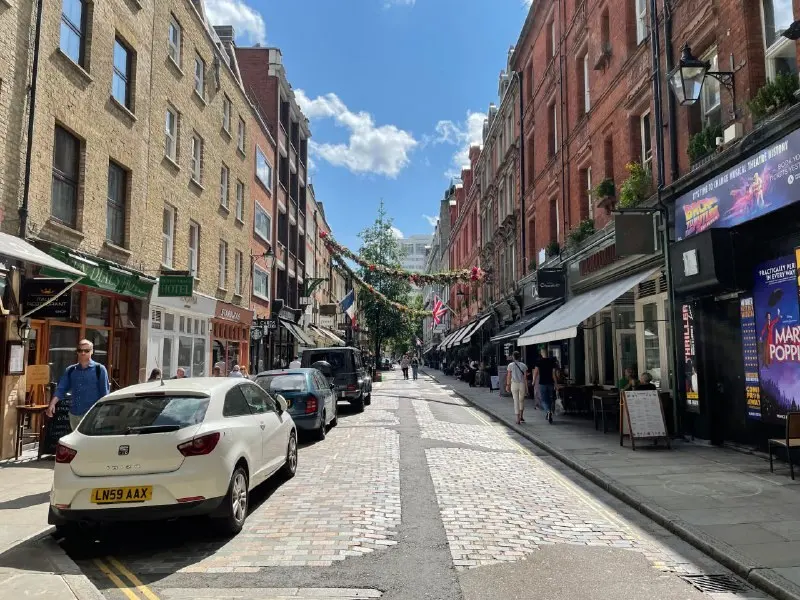
On 25 September the Ministry of Housing, Communities and Local Government announced a £210m package to revive England's high streets: boarded-up shops, disused cinemas and vacant shopping centres are to become shared workspaces, cafes and community hubs.
For most readers the interesting part is not the money but the tool that gets £10m of it — High Street Rental Auctions. This is a council's power to force a landlord to let premises that have stood empty for over a year, and to auction the lease. An ordinary small business can win one: a cafe, a barber, a shop, a workshop, a community group. Here is how it works and what you need to take part.
 ADV · A001ONLYWAY JEWELRY — gold, silver and platinumRings, chains, bracelets, earrings and pendants. Delivery across the UK.Advertise here
What exactly was announced on 25 September?
The £210m splits like this:
— £125m for a new Derelict Buildings Fund: money for councils to turn derelict buildings into what their community needs, from health centres to civic spaces.
— £65m to rescue and revamp buildings and businesses at risk of closure — pubs, sports clubs and the like. It builds on the Pride in Place programme, under which locals took over the youth centre in Ramsgate and redeveloped the former Brunswick Shopping Centre in Scarborough.
— £20m split equally between High Street Rental Auctions and a new regional Co-operative Development Programme — £10m each.
The money is not new: MHCLG confirms it comes from funding already earmarked for high street support and regeneration. A full high streets strategy is promised later this year.
How bad is the vacancy problem?
On the government's own figures, from the Local Data Company, one in every seven high street shops in England was closed in the final quarter of 2023. The average vacancy rate is 13.5%. The North East is worst at 17.9% — nearly one in five — with the West Midlands at 16.2%.
What is a rental auction, in plain terms?
It is a power councils received under the Levelling-up and Regeneration Act 2023 (Part 10) and the 2024 Regulations. Where high street premises have been empty a long time and the landlord is doing nothing, the council can put the lease out to auction and pick a new tenant. The landlord stays the owner — what they lose is the option of keeping the shutters down indefinitely.
Which premises qualify?
Two conditions must be met.
The vacancy condition: the premises have been unoccupied continuously for 12 months, or for at least 366 days (not necessarily continuous) within a 24-month period.
The local benefit condition: the council must be satisfied that occupation for a suitable high-street use would benefit the local economy, society or environment.
Before any of this, the council has to designate the street or area where auctions can be used, including a community engagement period of at least 28 days.
How long does the process take?
From start to a tenant moving in: 22 to 24 weeks. Two stages sit inside that — a notice period of 10 to 12 weeks and an auction period of 12 weeks.
The council first serves an initial letting notice on the landlord. The landlord then has 8 weeks to arrange a tenancy themselves — and that is a perfectly good outcome, indeed the point of the exercise. If nothing happens, the council serves a final letting notice. The landlord can serve a counter-notice and appeal. If the notice survives, the auction begins.
How do you find out a unit is up?
The council prepares an "auction pack" and a marketing brochure and opens a marketing period, which by the rules runs for a minimum of 5 weeks (weeks 5 to 9 of the auction period). Watch your own council's website: each sets up its own registration process for bids, and some run a dedicated bidding portal. Viewings are arranged where possible — if the landlord permits access.
What makes a bid valid?
You bid once. You cannot revise the figure afterwards, and another bidder may outbid you — so name the number you are content to win or lose with.
A valid bid must include:
— the annual rent, exclusive of VAT;
— a description of your proposed use of the premises, which must fall within the suitable high-street use the council set out in the brochure;
— the tenancy contract, validly signed, with your name and address correctly entered;
— proof of identity, where the council reasonably requires it.
That is the formal minimum. But the decision is the landlord's, and they are not obliged to take the highest bid — they may accept any valid one. So the guidance explicitly suggests adding what is not on the required list: a description of your plans, a business plan showing you can sustain the rent, and evidence you can pay the deposit. A bid without these is still valid, but a landlord will likely prefer one that has them.
One more thing in your favour: the council may help bidders submit a valid bid and answer questions throughout the marketing period. If a bid is invalid, the council should tell you as soon as possible so you can submit a valid one.
How long is the lease?
A tenancy granted through the auction runs for 1 to 5 years.
Who does the works?
Before the tenancy starts the landlord must bring the premises up to the "Minimum Standard": safe, stable and secure, with any significant occupational risks removed or managed. That is written into the tenancy contract and happens before the lease begins. Fit-out is then the tenant's job.
What about planning permission for a change of use?
You will not need a separate planning application. A specific permitted development right supports the scheme: if your intended use is not in the same planning use class as the building's existing use, the change is covered automatically for the duration of your tenancy. The guidance states the purpose plainly — to free bidders from the uncertainty of whether a change-of-use application would succeed, and to avoid speculative applications.
Another usual blocker is removed too: a tenancy entered into through a rental auction is treated as having the deemed consent of the landlord's lender.
What will it cost the winner?
On top of rent: legal costs, search fees and the cost of the survey. The council must set these out on the auction form in advance so bidders can factor them into a bid. Read that section before you name a figure.
Where do you start?
Start with your own council's website: look for High Street Rental Auctions, designated streets, and a vacancy register — many councils keep one. If the scheme is not being used in your area yet, that does not put it out of reach: designating a street is the council's own decision, and an approach from a local business is a perfectly workable way to draw its attention to a particular boarded-up unit.
The full guidance, including every form, is public on GOV.UK — link in the sources. It is written for councils, for landlords and for anyone looking for commercial space.
What else is worth reading before starting a business?
If you are at the beginning: registering as self-employed and the tax side, what Companies House now requires of directors, and how council tax works. For living examples of small businesses run by Russian speakers, we have guides to food shops and cafes and restaurants in London.
- Travel London Tube and TfL closures in October 2026: the Piccadilly line stops entirely at Halloween, and no Tube to Heathrow on 17–18 October
- Life Free English with a native speaker: how Russian speakers can find a language partner
- Life A London concert cancelled back in March is still on sale for 4 October — and the full Russian-language listings for October
- Life Primary school applications close on 15 January: only 85% of Inner London children get their first choice
- Life A hundred students walked into an Edinburgh pub? What the viral Reel really shows
- Tax HMRC visits: how to check an officer's identity under the rules updated on 7 October
- Life Russian-language events in London: verified dates to December 2026