HC 584: what changes in the UK Immigration Rules from 8 October — a breakdown by date and route
The Home Office has laid another package of amendments before Parliament. It carries four commencement dates, a dozen affected routes, and one significant piece of news about what is not in it. Here is what changes, who it touches, and which amendments come with transitional protection — and which do not.
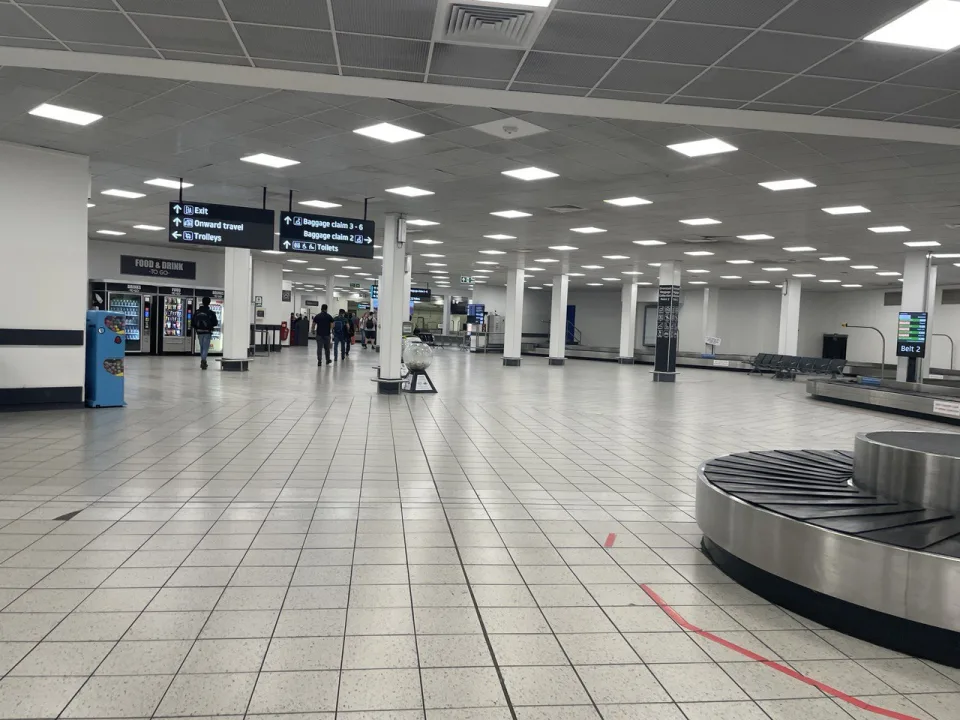
UK immigration rules do not change by act of Parliament. They change through a document with a dull name — a Statement of changes in Immigration Rules. The Home Office lays it before Parliament, a few weeks later it commences, and from that day applications are assessed against the new text. The September package is numbered HC 584 and was laid on 3 September 2026.
The first thing to know about it: there are four commencement dates, and confusing them is expensive.
 ONLYWAY NEWSLIVEHousing · 15.10Short on rent: what replaced Discretionary Housing Payments in England on 1 April 2026Money · 15.10Gaps in your National Insurance record: £18.40 a week and only six years backLife · 15.10Free UK GHIC: state healthcare in Europe and 15 working days for deliveryLife · 15.10Great British Railways HQ confirmed for Derby with 600 apprenticeship placesLaw · 15.10Subject access requests: getting your records, emails and CCTVHousing · 15.10Noise from neighbours: what the council must do and what the fines areLaw · 15.10Freedom of information requests: how to get data from a public bodyLaw · 14.10Bailiffs at the door: what they cannot do and cannot takeLife · 14.10Brain cancer: government speeds up the route from lab to patientLife · 14.10SORN explained: taking a car off the road and getting your tax backONLYWAY NEWS · appInstall the ONLYWAY NEWS appFresh UK news, classifieds, key dates and exchange rates on your home screen, one tap away. Free.NewsClassifiedsCalendarRates
Which four dates should you note?
- 8 October 2026 — the bulk of it. Introduction, Appendix A, administrative review (AR and AR EU), Appendix EU and EU Family Permit, Skilled Worker, Start-up, Hong Kong BN(O), Child Relative, Long Residence, and the Victim of Domestic Abuse route.
- 8 October 2026, with transitional provisions — Visitor and the permitted activities list, Student and Child Student, Government Authorised Exchange, Private Life.
- 29 October 2026 — Minister of Religion and Religious Worker.
- 30 November 2026 — student maintenance figures.
- 9 December 2026 — Appendix EU16: which identity documents are accepted from third-country nationals.
What is not in the package, and why does it matter more?
HC 584 does not introduce a new general salary threshold for Skilled Worker. The changes on that route are procedural: how an application is made, checked and counted. The salary figures are untouched.
And HC 584 does not implement the earned settlement reform — the one behind a year of argument over stretching the path to indefinite leave from five years to ten. This package does not deliver it. For anyone currently accruing time towards settlement, that means the uncertainty is deferred by one more cycle of amendments. No more, no less.
What changes for students from 30 November?
The most tangible item for the wallet. The funds an applicant must show rise to 1,570 pounds a month in London, from 1,529, and to 1,203 outside London, from 1,171. Across nine months that is 14,130 and 10,827 pounds.
It is assessed on the date of application, not the course start date, and the money must still sit untouched in the account for 28 consecutive days. The 28-day rule, the deduction for tuition already paid and the exemptions are covered in a separate piece.
The student rules also pick up Erasmus+ as a block of its own: participants get their own basis to come, and for under-18 participants a placement is capped at 30 days.
 ADV · A001ONLYWAY JEWELRY — gold, silver and platinumRings, chains, bracelets, earrings and pendants. Delivery across the UK.Advertise here
What changes on the religious routes?
From 29 October the minimum pay requirements change for Minister of Religion and Religious Worker. A mechanism appears that did not exist before: a sponsor may provide accommodation in place of paying the full minimum salary. For parishes and communities where the minister already lives on site, that removes an artificial problem. Permission for a Minister of Religion runs up to three years, or 14 days after the contract ends, whichever comes first.
What changes for BN(O), Long Residence and the rest?
On the Hong Kong BN(O) route the continuous period calculation is clarified: five years for settlement, with a carve-out for under-18s.
Long Residence — the ten-year path — gains a welcome small mercy: an application can be varied to the family or Private Life routes without a fresh fee. Previously that switch meant a new application and new money.
Start-up appears technically only: the route closed to new applicants on 13 July 2023, and the edits concern those still inside it.
Who has transitional protection?
This is the fine print that catches people. The package is drafted so that some 8 October changes apply to every application decided after that date, while others apply only to applications made after it. An application filed on 7 October may therefore be decided under the old rules in one category and the new ones in another.
The practical lesson is simple. If your filing lands in the late-September to early-October window, check whether your specific category carries transitional provisions. In some cases the gap between 7 and 9 October decides the outcome.
What should you do before the rules take effect?
- Find your route in the calendar above and hold on to your date — each block has its own.
- Filing in September or October: confirm whether transitional protection reaches your category.
- Students: budget the new figures if your filing could slip past 30 November. Setting aside another 300 to 400 pounds is cheaper than a refusal and a second fee.
- Do not plan on earned settlement staying away. It is absent from this package; it may appear in the next.
All the upcoming filing deadlines, bank holidays and decision dates are gathered in the ONLYWAY calendar, day by day with explanations.
Read next: Settlement in the UK: what ILR really is, and why the… · UK visitor visa step by step 2026: timing, cost, biometrics…
Check whether an employer can sponsor a work visa →
Search the Home Office register on our own site: whether the company holds a sponsor licence, and for which routes.
 Immigration
UK immigration rules change on 8 October 2026: what is new
Immigration
UK immigration rules change on 8 October 2026: what is new
 Immigration
The UK airport border: what to tell the officer, who can use the e-gates, and what you can bring in your suitcase
Immigration
The UK airport border: what to tell the officer, who can use the e-gates, and what you can bring in your suitcase
 Immigration
UK visa waiting times in 2026: the official UKVI timelines and how to get a decision in a day
Immigration
UK visa waiting times in 2026: the official UKVI timelines and how to get a decision in a day
- Travel London Tube and TfL closures in October 2026: the Piccadilly line stops entirely at Halloween, and no Tube to Heathrow on 17–18 October
- Life Free English with a native speaker: how Russian speakers can find a language partner
- Life A London concert cancelled back in March is still on sale for 4 October — and the full Russian-language listings for October
- Life Primary school applications close on 15 January: only 85% of Inner London children get their first choice
- Life A hundred students walked into an Edinburgh pub? What the viral Reel really shows
- Tax HMRC visits: how to check an officer's identity under the rules updated on 7 October
- Life Russian-language events in London: verified dates to December 2026